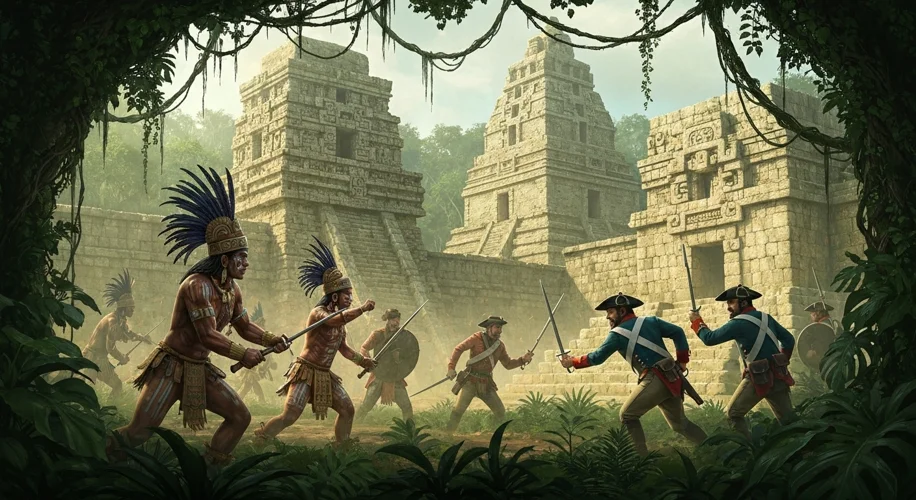
In the dense, verdant heart of Mexico’s Yucatan Peninsula, archaeologists have unearthed a testament to enduring spirit: Sak-Bahlán, a Maya rebel stronghold that resisted Spanish colonization for over a century. This isn’t just a collection of stones and pottery; it’s a narrative of defiance, a chronicle of a people who refused to yield their ancestral lands and way of life.
The Spanish conquest of the Maya was not a swift, monolithic event. Instead, it was a protracted, brutal process that stretched for decades, even centuries, as resilient Maya city-states and communities held out against the technologically superior European invaders. While many Maya centers fell, succumbing to disease, warfare, and political maneuvering, others retreated, forming pockets of resistance in the untamed wilderness. Sak-Bahlán stands as a powerful symbol of this prolonged struggle.
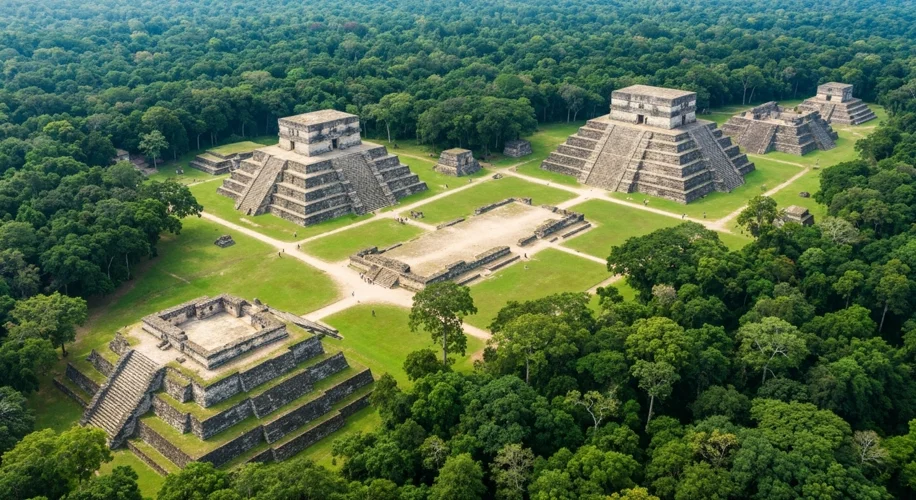
The story of Sak-Bahlán is intertwined with the broader Maya resistance, particularly in the northeastern Yucatan. After the fall of major centers like Mayapan, the Maya world fractured into numerous polities. When the Spanish arrived in the 16th century, they encountered a complex political landscape, but one that was ultimately overwhelmed by European ambition and the devastating impact of Old World diseases. Yet, pockets of fierce opposition persisted. The Itzá Maya, for instance, maintained their independent kingdom of Tayasal (modern-day Flores, Guatemala) until 1697.
Sak-Bahlán, meaning “White Path” in the Maya language, emerged as a crucial refuge and strategic stronghold during this turbulent period. Its location, deep within the jungle, offered natural defenses. The inhabitants were not merely hiding; they were actively organizing, building fortifications, and continuing their cultural practices. Archaeological evidence points to a highly organized society that maintained a degree of self-sufficiency and a strong martial spirit. The discovery of ballcourts within the stronghold suggests the continuation of important cultural rituals, even amidst the constant threat of Spanish incursions.
Key figures in the Maya resistance, though often unnamed in historical records, are brought to life through the artifacts and structures at Sak-Bahlán. These were leaders who understood the Spanish tactics, who could rally their people, and who possessed the deep knowledge of the jungle necessary for survival and warfare. Their perspective was one of defending their heritage, their families, and their very existence against an alien force that sought to subjugate and transform them.
The Spanish chroniclers of the era often depicted the Maya resistance as barbaric or fanatical. However, from the Maya perspective, it was a fight for freedom and cultural survival. The prolonged resistance at sites like Sak-Bahlán forced the Spanish to dedicate significant resources and manpower to pacification efforts, delaying their complete control over the Yucatan.
The archaeological findings at Sak-Bahlán paint a vivid picture of daily life under siege, yet imbued with resilience. Elaborate pottery, stone tools, and remnants of Maya script hint at a society that, while facing immense pressure, continued to innovate and maintain its cultural identity. The defensive structures, including strategic placement of buildings and potential earthworks, underscore the constant state of alert.
The impact of such prolonged resistance was significant. It demonstrated the Maya’s enduring strength and adaptability. While Sak-Bahlán eventually fell, its century-long defiance meant that Maya culture and traditions were not entirely extinguished by the initial wave of conquest. It provided a space where Maya identity could be preserved and transmitted to future generations, influencing the dynamics of colonization in the region and contributing to the rich tapestry of Maya heritage that persists to this day.
Sak-Bahlán is more than just a historical site; it is a powerful reminder of the human capacity for resistance in the face of overwhelming odds. It challenges simplistic narratives of conquest and highlights the agency of Indigenous peoples in shaping their own destinies, even within the brutal confines of colonial expansion. The “White Path” of Sak-Bahlán leads us not only to the past but also to a deeper understanding of resilience and the enduring echoes of Maya civilization.