
For eons, the story of Earth’s continents has been etched in stone, a geological saga passed down through generations of scientists. We’ve pictured a young planet, a fiery crucible, where molten rock flowed and eventually cooled, giving rise to the vast landmasses we know today. But what if that story is fundamentally wrong? What if the grand architecture of our continents began to take shape not hundreds of millions of years ago, but billions of years earlier, in a chaotic dawn we can barely comprehend?
Recent groundbreaking research, published in the prestigious journal Nature Geoscience, is shaking the very foundations of planetary science. Geologists, armed with sophisticated analytical techniques, have delved into the deep past, examining ancient rock formations that hold clues to Earth’s primordial days. Their findings suggest that the processes responsible for forming continental crust were active far earlier than previously thought, pushing the timeline back by a staggering amount.
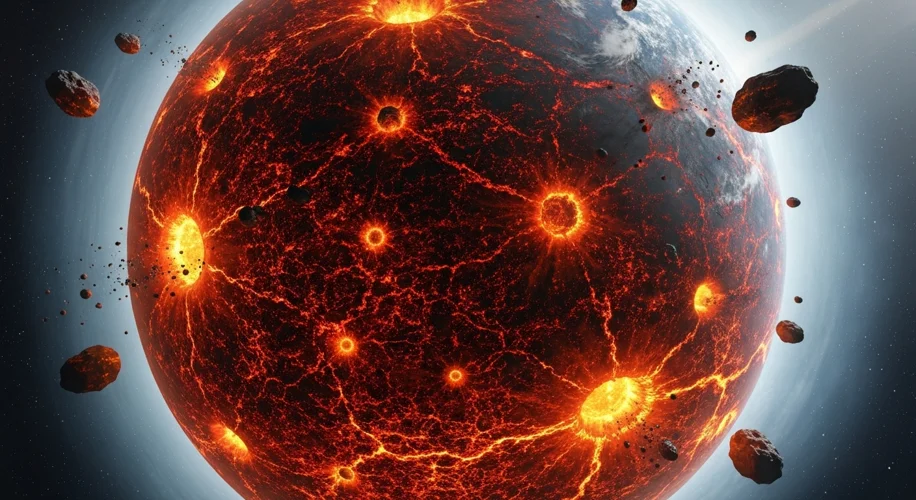
Imagine Earth as a mere toddler, a mere 100 million years old, or perhaps even younger. This is an era when the planet was still largely a molten sphere, constantly bombarded by asteroids and wrestling with the immense heat generated from its formation and radioactive decay. It was a time of unimaginable violence and transformation.
Traditionally, the prevailing theory held that the formation of stable continental crust—the thicker, less dense material that makes up our continents—only began in earnest around 3 billion years ago, during the Archean Eon. This was when the planet was thought to have cooled sufficiently for more complex geological processes, such as plate tectonics, to really get going. But this new evidence paints a radically different picture.
The key lies in analyzing the isotopic composition of ancient zircons. These incredibly durable minerals, often found in some of the oldest rocks on Earth, act like tiny time capsules. By studying the ratios of different isotopes of elements like hafnium within these zircons, scientists can infer the conditions under which they formed. The specific isotopes they examined in rocks from Western Australia, which are among the oldest on the planet, tell a story of early differentiation and crustal growth.
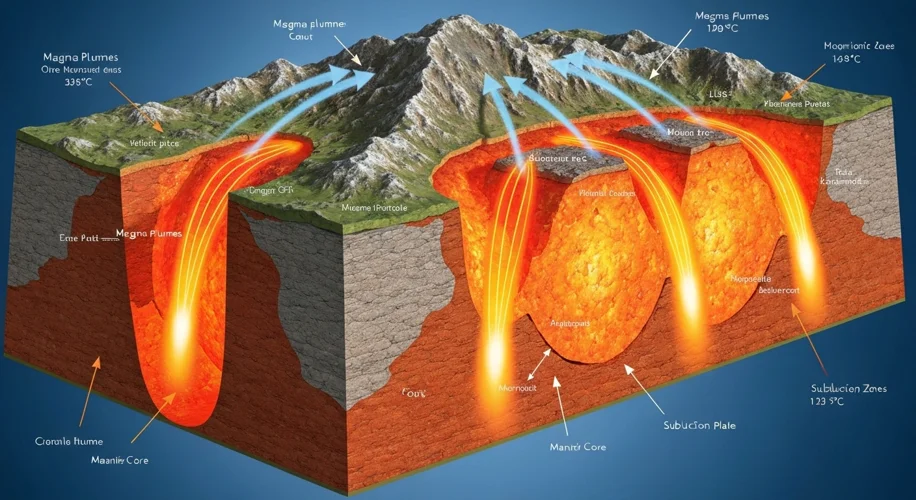
Dr. Arindam Roy, lead author of the study, explained the significance of their findings: “We found signatures that indicate the presence of water and the process of subduction—where one tectonic plate slides beneath another—much earlier than we had evidence for. This means that the fundamental processes that build continents were already underway in Earth’s infancy.”
This revision challenges our understanding of how planets form and evolve. If continents began forming so early, it suggests that the conditions for life might have arisen much sooner than we imagined. The presence of water and early crustal differentiation are crucial ingredients for life as we know it. It implies that the window for life to emerge and evolve on Earth might have been open for a significantly longer period.
Think about the implications. If continental formation began when Earth was still in its fiery, chaotic adolescence, it suggests a much more rapid transition from a molten ball to a planet capable of supporting life. It means that the building blocks for continents, and subsequently, for life itself, were being assembled during a period we typically consider too extreme for such complex geological and biological processes to occur.
This discovery doesn’t just rewrite textbooks; it forces us to reconsider our place in the universe. If the Earth’s continental architecture is an ancient phenomenon, it raises questions about whether similar processes could occur on other planets. Could other worlds have started building their landmasses billions of years earlier than we’ve accounted for in our search for exoplanetary life?
The scientific community is buzzing with this revelation. While the findings are robust, they will undoubtedly spur further research, with geologists eager to examine other ancient rock formations across the globe. The quest to understand our planet’s deepest past is a continuous journey, and with discoveries like these, the echoes of Earth’s very beginning are resonating louder than ever before, revealing a history far more ancient and complex than we ever dared to believe.
So, the next time you look at a mountain range or a vast plain, remember that its origins might stretch back not just millions, but billions of years, to a time when Earth was a very different, and perhaps even more extraordinary, place.