
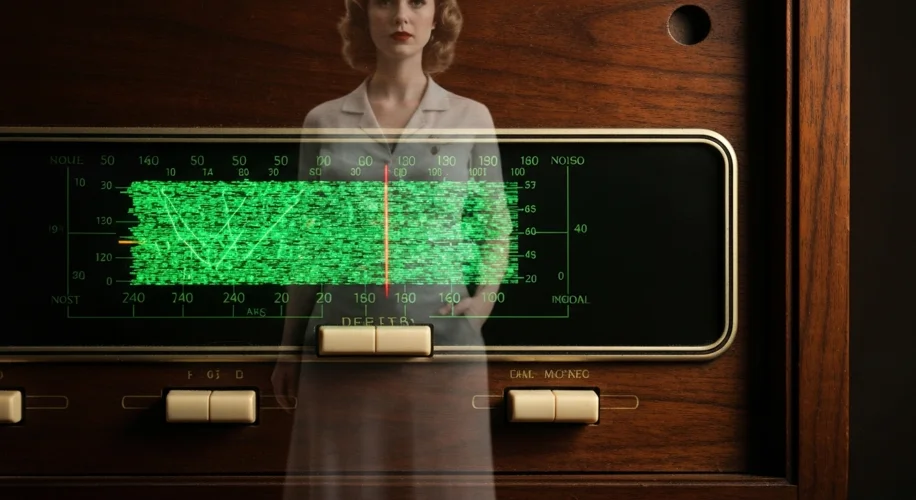
In the vast, ethereal expanse of the shortwave radio spectrum, a signal has persisted for decades, a phantom in the airwaves that has defied explanation. It is known by its call sign, UVB-76, but to the legion of amateur radio enthusiasts and online investigators who have tracked its enigmatic broadcasts, it is simply “The Buzzer.” For years, this mysterious station has captivated minds with its relentless, monotonous drone, punctuated by cryptic sequences of numbers and names, fueling a global fascination bordering on obsession.
What is UVB-76? The question hangs in the digital ether, a tantalizing enigma that has spawned countless theories, from clandestine espionage operations to secret military commands, and even whispers of the truly bizarre. Its origins are shrouded in the Cold War’s cloak-and-dagger atmosphere, a period rife with coded messages and hidden agendas. Was it a relic of Soviet-era operations, a dormant espionage tool still faithfully executing its programmed directives? Or did it evolve, its purpose shifting with the geopolitical tides?
The broadcast itself is disarmingly simple, yet deeply unsettling. At its core is the hypnotic, oscillating “buzz.” This low-frequency hum, a steady pulse in the static, has been the station’s constant companion. But the true mystery unfolds when this buzzing is interrupted. For decades, at irregular intervals, a human voice, often male, would emerge from the electronic hum. These broadcasts typically consisted of sequences of numbers, spoken in Russian, followed by names. For example, a common pattern might be “Ya UAL 480… 132. PUSH. 82. 63. 132. Ya UAL 480… 132.”
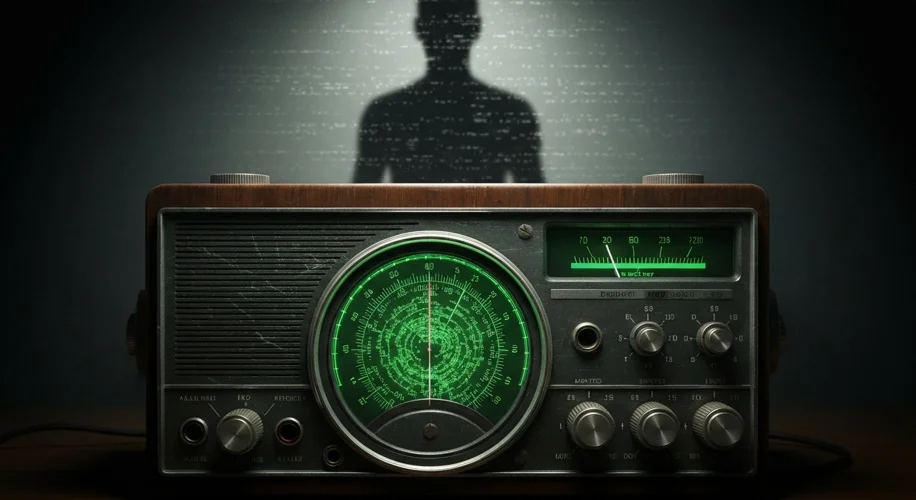
The numbers and names were never accompanied by any context, leaving listeners to speculate wildly about their meaning. Were they identifying agents? Directing clandestine movements? Or were they simply random data points, a sophisticated form of radio interference designed to mask a more sinister purpose?
The station’s geographical location has also been a subject of intense debate and investigation. Initially believed to be broadcasting from somewhere near Moscow, a significant event in 2010 shifted the focus. A group of urban explorers documented the remnants of a military base in Naro-Fominsk, Russia, that was believed to house the broadcasting equipment. They discovered a dilapidated building with antennas and equipment that seemed to align with the characteristics of UVB-76’s transmission.
However, the story took another turn. Reports emerged of the buzzer ceasing its transmissions from that location, only to reappear elsewhere, or to alter its broadcast patterns. This chameleon-like behavior only deepened the mystery. Was it being relocated? Was there more than one transmitter? The very nature of shortwave radio, which can bounce signals off the ionosphere, allows for vast geographical reach and difficult pinpointing.
The impact of UVB-76 extends beyond the realm of radio enthusiasts. It has become a cultural touchstone, a subject of urban legends, conspiracy theories, and even artistic inspiration. Online communities dedicated to monitoring and deciphering the broadcasts have sprung up, sharing audio recordings, analyzing transmission patterns, and debating the potential meanings of the numbers and names. The station’s persistent, unyielding presence in a world of rapid technological change and constant information flow makes it an anomaly, a testament to the enduring allure of the unknown.
As of September 9, 2025, UVB-76 continues its mysterious vigil. The buzzer still buzzes, the numbers are still spoken, and the questions linger. Perhaps its true purpose will never be fully revealed, forever existing in the liminal space between fact and speculation, a constant reminder that even in our hyper-connected world, some whispers from the past remain profoundly, tantalizingly, silent.