

The roar of a jet engine is more than just sound; it’s the pulse of national defense, a symbol of technological prowess, and a vital component of military self-sufficiency. For decades, South Korea has harbored an ambitious dream: to develop its own advanced fighter engine, a feat that requires not just engineering genius, but also immense economic investment, unwavering political will, and a deep understanding of the intricate dance between technology, industry, and global geopolitics.
The Genesis of a Dream: A Nation’s Resolve
South Korea’s journey toward indigenous fighter engine development is deeply rooted in its post-Korean War history. Emerging from the ashes of conflict, the nation was heavily reliant on foreign military aid, particularly from the United States. While this support was crucial for survival and rebuilding, it also highlighted a strategic vulnerability. The desire for true military independence, for the ability to design, build, and maintain its own advanced weaponry, became a persistent undercurrent in South Korean defense policy.
This ambition wasn’t merely about pride; it was a pragmatic recognition of the limitations of being a client state. In an era of shifting global alliances and potential adversaries, possessing indigenous technological capabilities meant greater flexibility, reduced dependency, and a more robust deterrent. The ultimate prize? A fighter jet that not only looked Korean but was powered by a heart forged in Korean soil.
The Technological Tightrope Walk
Developing a modern fighter engine is akin to building a miniature sun. It involves mastering complex aerodynamics, advanced metallurgy capable of withstanding extreme temperatures and pressures, sophisticated fuel systems, and intricate control electronics. The challenges are immense, even for established aerospace giants. For a nation like South Korea, which had to build its aerospace industry from the ground up, the task was monumental.
Early efforts focused on licensed production and technology transfer. The T-50 Golden Eagle, South Korea’s first indigenous supersonic trainer and light attack aircraft, was a testament to this approach. While a significant achievement, it was powered by the American F404 engine. The next logical step, however, was to move beyond assembly and towards true design and manufacturing.

The path forward wasn’t smooth. The development of the KF-21 Boramae, a next-generation multirole fighter, presented a pivotal moment. Initially, the plan was to co-develop the engine with Indonesia, but technological hurdles and differing strategic priorities led to a recalibration. South Korea ultimately opted to rely on foreign engine suppliers for the initial phases of the KF-21, while simultaneously intensifying its pursuit of an indigenous powerplant.
This strategy allowed the KF-21 program to progress while the more challenging engine development continued in parallel. It’s a testament to the country’s phased approach, understanding that a leap too far, too fast, could jeopardize the entire project. The focus shifted to building foundational technologies, nurturing domestic expertise, and meticulously planning for a future where Korean engines would power Korean skies.
Key Actors and the Strategic Chessboard
The pursuit of an indigenous fighter engine involved a complex interplay of government agencies, defense contractors, and international partners. The Agency for Defense Development (ADD) has been at the forefront of South Korea’s military R&D, guiding and executing these ambitious projects. Hanwha Aerospace and other domestic companies have played crucial roles in developing components and acquiring manufacturing capabilities.
Politically, the project has enjoyed bipartisan support, recognizing its strategic importance. However, it also navigates the delicate balance of international relations. South Korea’s reliance on the U.S. for technology and security means that any indigenous engine development must be carefully coordinated to avoid friction. The pursuit of self-sufficiency is not about severing ties, but about strengthening its position as a capable and independent ally.
The Unfolding Saga of the KF-21 Engine
The core of South Korea’s current engine ambition lies in developing a powerplant for the KF-21. While initial KF-21 prototypes are equipped with engines from GE Aviation, the long-term vision is to integrate a domestically developed engine. This would not only reduce reliance on foreign suppliers but also open up new export opportunities for South Korean aerospace technology.
This ambitious undertaking requires overcoming significant obstacles. The technological gap in high-performance jet engines is substantial, and the investment needed is astronomical, running into billions of dollars over many years. Moreover, the global aerospace market is fiercely competitive, with established players holding decades of experience and entrenched supply chains.
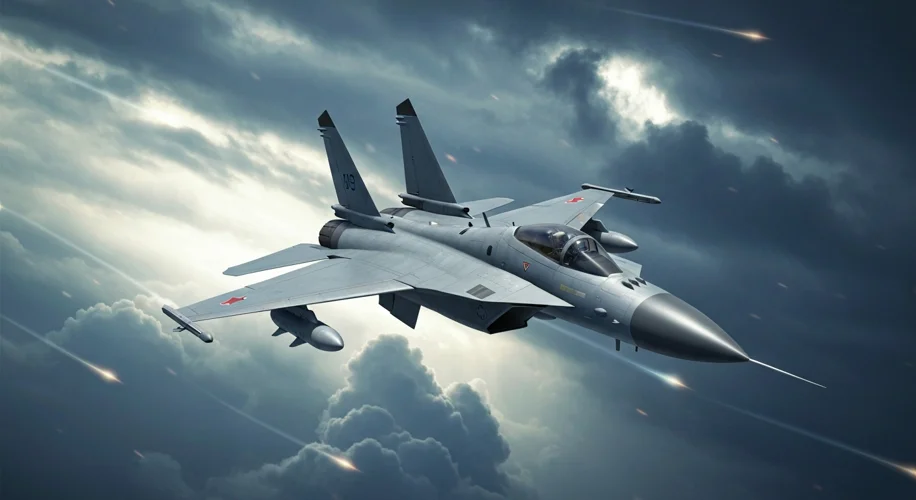
Despite these challenges, South Korea has demonstrated remarkable resilience and innovation in other high-tech sectors, from semiconductors to shipbuilding. This track record fuels optimism that it can eventually achieve its fighter engine dream. The development process involves a long-term commitment, starting with fundamental research, progressing to component development, and eventually culminating in full engine testing and integration.
Consequences and Future Implications
Should South Korea succeed in developing its own advanced fighter engine, the implications would be far-reaching. It would cement its status as a major aerospace power, capable of competing on the global stage. This would likely translate into increased export opportunities, not just for engines but for entire aircraft platforms.
Strategically, it would enhance South Korea’s defense posture, providing greater autonomy and resilience. It could also influence regional power dynamics, potentially offering a new option for countries seeking advanced military hardware from a reliable, technologically sophisticated partner.
From a historical perspective, this endeavor represents a continuation of South Korea’s remarkable post-war transformation. It’s a narrative of a nation that, against considerable odds, has consistently pushed the boundaries of technological and economic development, driven by a powerful vision of self-reliance. The quest for its own fighter engine is not just about hardware; it’s about the enduring spirit of innovation and the unwavering commitment to shaping its own destiny in the complex theater of global security.
The journey is far from over. The roar of the engines South Korea dreams of may still be some years away, but the dedication, investment, and ingenuity being poured into this endeavor suggest that this ambitious quest is one that will define the nation’s technological and military future.