The air in Seoul, December 1979, hung thick with a tension that had been building for decades. South Korea, a nation forged in the crucible of war and division, found itself once again at a precipice. The assassination of President Park Chung-hee, the iron-fisted leader who had steered the country through a period of rapid economic growth but at the cost of democratic freedoms, had plunged the nation into uncertainty. In the vacuum that followed, a specter from the past began to stir: martial law.
For years, President Park had wielded immense power under the guise of national security. His authoritarian rule, while credited with industrializing South Korea, was also characterized by suppression of dissent, political imprisonment, and the systematic erosion of civil liberties. The notorious National Security Law and the Yusin Constitution were tools of control, ensuring his grip on power remained absolute. Many South Koreans yearned for democracy, their voices often silenced by the omnipresent threat of state retribution.
It was in this charged atmosphere that General Chun Doo-hwan, the commander of the Hanahoe, a secret military society, saw his opportunity. Following Park’s assassination, Chun orchestrated a rapid ascent to power, first through his role in investigating the assassination and then, crucially, by seizing control of the military. In May 1980, citing a grave national security crisis, Chun declared nationwide martial law, effectively suspending the constitution and all political activities.
The imposition of martial law was not a passive event. It was met with fierce resistance, most notably in the city of Gwangju. Students and citizens, emboldened by the promise of democracy that seemed within reach after Park’s death, took to the streets. Their peaceful protests against martial law were met with brutal force by the military, under Chun’s command. The Gwangju Uprising, as it came to be known, was a bloody confrontation that resulted in hundreds, possibly thousands, of civilian deaths. The images of tanks rolling into the city and the desperate pleas of its citizens became a searing indictment of the military regime.
With Gwangju crushed and the democratic aspirations of many seemingly extinguished, Chun Doo-hwan consolidated his power, eventually becoming president. For nearly a decade, South Korea lived under his authoritarian rule. However, the spirit of resistance, though suppressed, never died. The memory of Gwangju, the calls for justice, and the unwavering desire for democracy continued to simmer beneath the surface.
The tide began to turn in the late 1980s. Growing public pressure, fueled by student activism and a burgeoning middle class, forced the government to concede to democratic reforms. In 1987, South Korea finally transitioned to a full democracy, with the direct election of its president.
Yet, the ghosts of the martial law era continued to haunt the nation. The crimes committed under Chun’s regime, particularly the brutal suppression of the Gwangju Uprising, could not be forgotten. The struggle for justice, for accountability, was a critical part of the nation’s healing process.
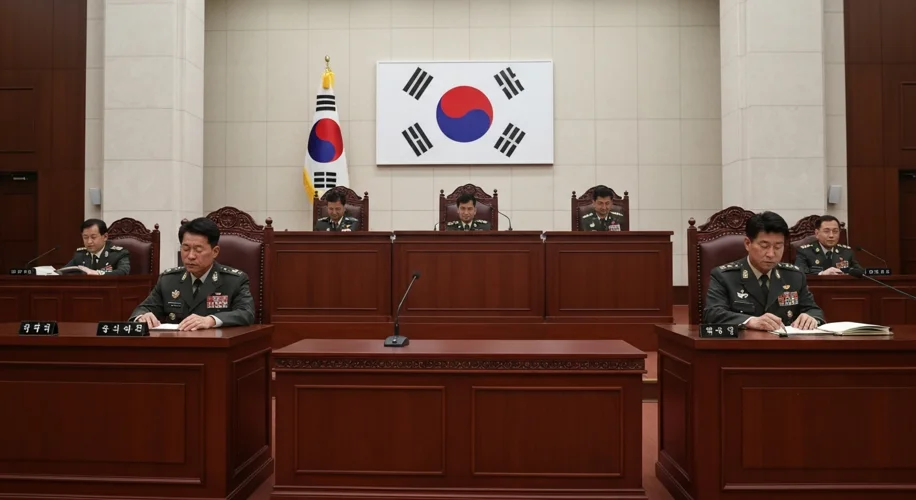
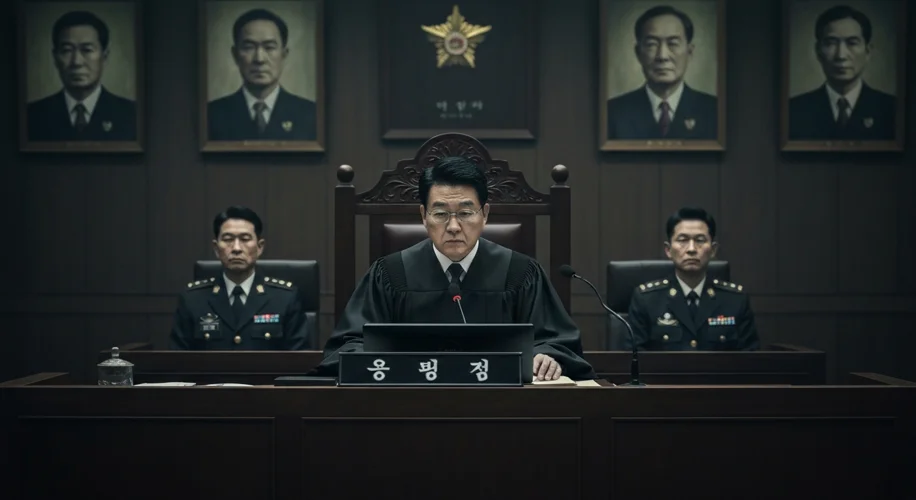
This long-delayed reckoning culminated in the historic trials of former presidents, including Chun Doo-hwan and Roh Tae-woo, who had succeeded Chun and was also implicated in the abuses of power. In 1995, they were indicted for their roles in the 1979 coup and the subsequent massacre of Gwangju citizens. The trials were a watershed moment, not just for South Korea, but for the global struggle for accountability in the face of authoritarianism. The legal proceedings brought to light the brutal realities of martial law, the systemic human rights violations, and the immense suffering inflicted upon the Korean people.
The verdicts, delivered in 1996, saw Chun Doo-hwan sentenced to death (later commuted to life imprisonment) and Roh Tae-woo sentenced to 17 years in prison. While these sentences were a significant victory for justice, they also highlighted the complex legacy of South Korea’s path to democracy. The trials were a painful but necessary confrontation with the nation’s past, a stark reminder of the sacrifices made in the pursuit of freedom.
It is crucial to note that the concept of martial law and its subsequent legal ramifications are not unique to South Korea. History is replete with instances where governments, under the pretext of national emergencies, have suspended civil liberties and imposed military rule. The trials of former South Korean leaders serve as a potent reminder of the fragility of democracy and the enduring importance of holding those in power accountable for their actions, even decades later. They underscore the power of the people’s voice, the resilience of the democratic spirit, and the fundamental human right to live in a society free from oppression and fear. The Korean martial law trials, therefore, are not merely a chapter in South Korean history; they are a universal testament to the unyielding struggle for justice and freedom.