

In the heart of a relentless conflict, a colossal structure stands as a stark reminder of humanity’s dual capacity for innovation and destruction: the Zaporizhzhia Nuclear Power Plant. Once a symbol of Soviet ambition and a vital energy source for millions, it has become a focal point of grave concern, its very existence a precarious gamble in the face of war. This isn’t just about a single facility; it’s about the chilling history of nuclear safety in conflict zones and the existential threat posed when the atom meets the battlefield.
A Legacy Forged in the Cold War
Born from the ambitious energy plans of the Soviet Union, Zaporizhzhia was inaugurated in 1984, a testament to the era’s drive for nuclear power. Situated on the banks of the Dnipro River in southeastern Ukraine, it was designed with immense capacity, eventually housing six VVER-1000 reactors, making it the largest nuclear power plant in Europe. For decades, it hummed with the controlled power of the atom, generating a significant portion of Ukraine’s electricity and serving as a crucial link in the region’s energy infrastructure.
However, the shadow of Chernobyl, a mere 150 kilometers away, loomed large over the Soviet nuclear program. The catastrophic 1986 disaster served as a grim, albeit incomplete, lesson in the inherent risks of nuclear technology, especially when coupled with human error and the challenges of stringent safety protocols. While designs evolved and safety measures were supposedly bolstered, the fundamental vulnerability of nuclear facilities to external threats, particularly in times of political instability, remained a stark reality.
The Unforeseen Crucible of War
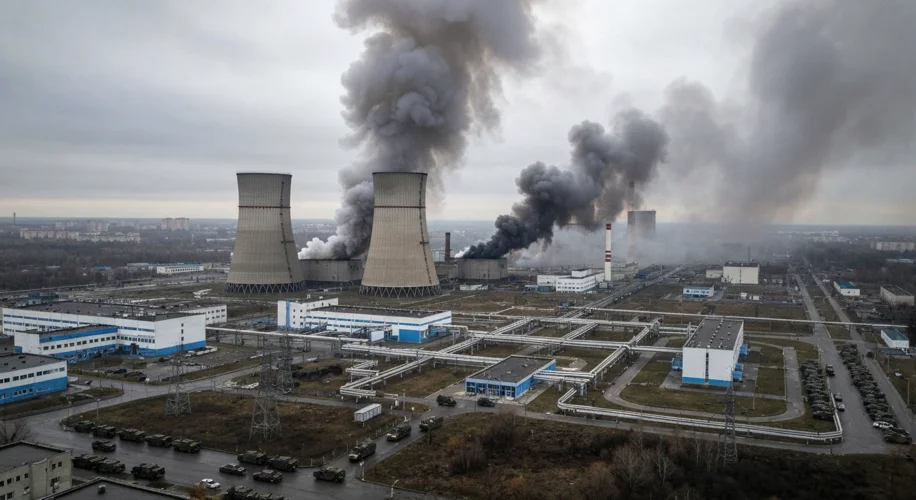
The full-scale Russian invasion of Ukraine in February 2022 thrust Zaporizhzhia into an unimaginable nightmare. Its strategic location, coupled with its immense power, made it a prize and a potential weapon. Russian forces quickly seized control of the plant and the surrounding city of Enerhodar in March 2022, transforming a complex designed for peaceful energy generation into a contested frontline.
The consequences were immediate and terrifying. Reports began to surface of shelling near the plant, damaging power lines and substations, and threatening the critical cooling systems that keep the reactors stable. The very act of fighting in and around a nuclear facility introduced a level of risk previously confined to the theoretical worst-case scenarios of disaster preparedness.
Key Actors and Their Stakes
The primary actors in this unfolding drama are Russia and Ukraine, each with profoundly different objectives and perspectives. For Ukraine, Zaporizhzhia represents a vital national asset and a constant, terrifying reminder of potential catastrophe. Its occupation is a violation of sovereignty and a source of immense anxiety for its people and the international community.
Russia, on the other hand, has been accused of using the plant as a shield, stationing troops and heavy weaponry within its perimeter, thereby deterring Ukrainian counteroffensives. Its actions have been widely condemned as reckless and a direct threat to global nuclear safety. International bodies, particularly the International Atomic Energy Agency (IAEA), have been central to mediating access and attempting to establish a demilitarized zone around the plant, though their efforts have been fraught with challenges.
A Tightrope Walk on the Brink
The immediate concern is the risk of a meltdown. Nuclear reactors, even when shut down, require a constant supply of electricity to power cooling systems. Any prolonged interruption of power, whether from shelling or other combat-related damage, could lead to the overheating of spent fuel rods and potentially a release of radiation. The IAEA has repeatedly warned of the extreme danger, noting that the plant has experienced multiple