
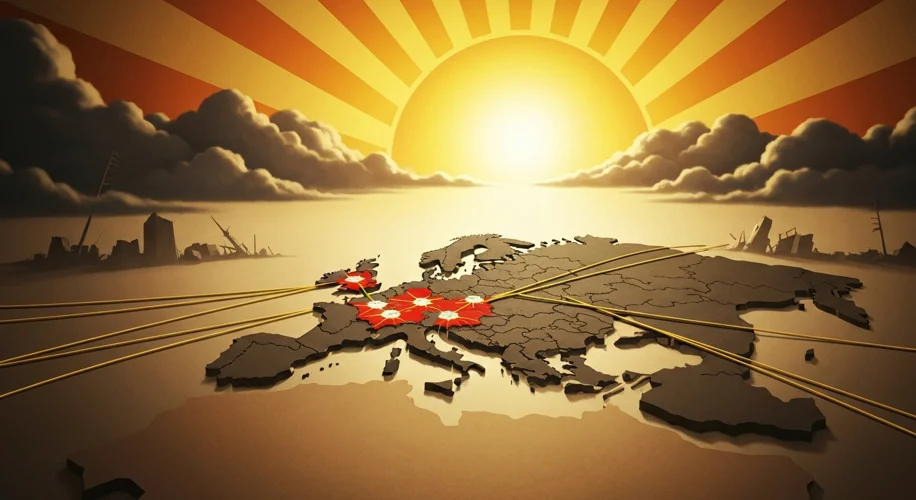
The year is 1950. Europe, a continent still reeling from the devastating blows of two World Wars, lay fractured and scarred. The very ground seemed to echo with the cries of millions lost, and the air was thick with the ashes of cities reduced to rubble. Amidst this profound despair, a flicker of hope began to ignite – a radical idea born from the bitterest of lessons: that lasting peace could only be forged through cooperation, not conflict.
This wasn’t a sudden revelation, but a slow, arduous process. The architects of this new vision looked back to the cycle of rivalries that had plunged Europe into darkness time and again. They saw how centuries of competition for resources, territory, and influence had ultimately led to self-destruction. The post-war era, therefore, demanded a fundamental shift in thinking.
At the forefront of this movement were visionary figures like Robert Schuman, the French Foreign Minister, and Jean Monnet, a French political economist. Schuman, in his groundbreaking declaration on May 9, 1950, proposed an audacious plan: to pool France’s and West Germany’s coal and steel production under a single, supranational authority. “The proposal,” he stated, “will be directed to all countries of Europe willing to take part.” This was not merely an economic arrangement; it was a deliberate act of binding former enemies together, making war between them “not merely unthinkable, but materially impossible.”
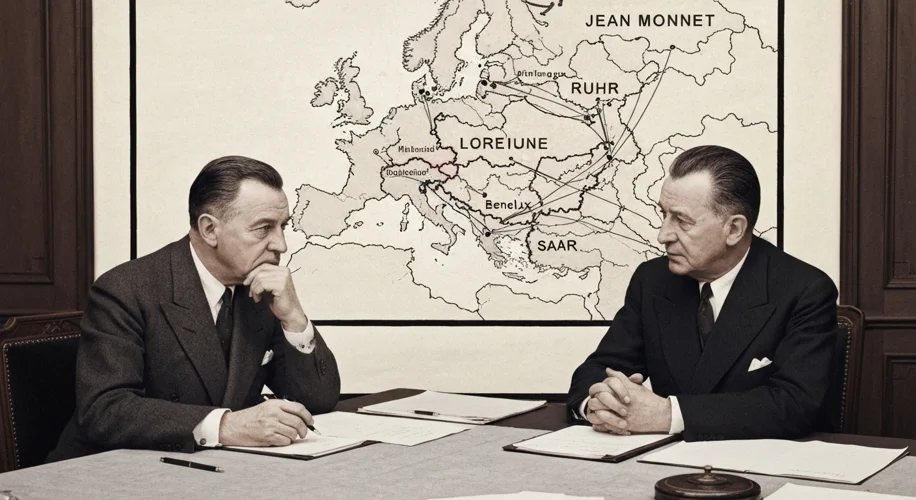
Imagine the scene: men who had, just years before, been on opposing sides of brutal battlefields now sat across tables, not with weapons, but with ledgers and blueprints. Their shared goal was not to win a war, but to build a lasting peace. The logic was simple yet profound: if the very industries that fueled war – coal and steel – were jointly managed, then the capacity for conflict would be irrevocably diminished.
This bold initiative led to the signing of the Treaty of Paris in 1951, establishing the European Coal and Steel Community (ECSC). Six nations – France, West Germany, Italy, Belgium, the Netherlands, and Luxembourg – bravely stepped forward, laying the foundation for what would eventually become the European Union. It was a testament to their collective will to break free from the chains of the past.
But the path forward was far from smooth. The early years of European integration were fraught with significant hurdles. The ECSC, while a monumental step, was just the beginning. The ambition grew: why stop at coal and steel? Why not expand cooperation to other sectors? The dream was a truly unified market, where goods, services, capital, and people could move freely across borders, fostering economic prosperity and mutual understanding.
This led to the Treaties of Rome in 1957, which established the European Economic Community (EEC). The EEC aimed to create a common market, dismantling trade barriers and harmonizing economic policies among its member states. This was a period of intense negotiation and compromise. Skepticism and nationalistic sentiments remained, and the practicalities of integrating diverse economies were daunting.
One of the most significant early challenges was agricultural policy. Each nation had its own established farming practices and subsidies, and finding a common ground that satisfied everyone proved to be a bitter pill to swallow for some. The “Empty Chair Crisis” of 1965, sparked by French President Charles de Gaulle’s opposition to the supranational powers of the European Commission, particularly concerning agricultural funding, nearly shattered the nascent community. For months, French representatives boycotted EEC meetings, threatening to unravel years of progress.
De Gaulle, a towering figure of French nationalism, believed that the EEC was encroaching too much on French sovereignty. He famously declared that Europe could not be built by a “technocratic supranationality.” His resistance highlighted a fundamental tension that would continue to shape European integration: the delicate balance between national sovereignty and the benefits of collective action.
Despite these deep-seated disagreements, the economic benefits of the common market began to materialize. Trade flourished, and the member states experienced unprecedented economic growth. This success, coupled with the continued threat of the Cold War, provided the impetus to overcome internal divisions.
The successful resolution of the Empty Chair Crisis, through the Luxembourg Compromise of 1966, allowed for a return to more integrated decision-making, albeit with a greater emphasis on national consensus for sensitive issues. This compromise, while patching over the immediate crisis, underscored the ongoing negotiation required to build a united Europe.
The early decades of European integration were a masterclass in resilience and compromise. They were forged not in grand pronouncements alone, but in the painstaking details of treaties, the heated debates in council chambers, and the willingness of leaders to prioritize a shared future over past grievances. The journey from the ashes of war to the formation of the EEC was a testament to the enduring power of human cooperation, proving that even the deepest scars could be the foundation for a stronger, more peaceful union.