
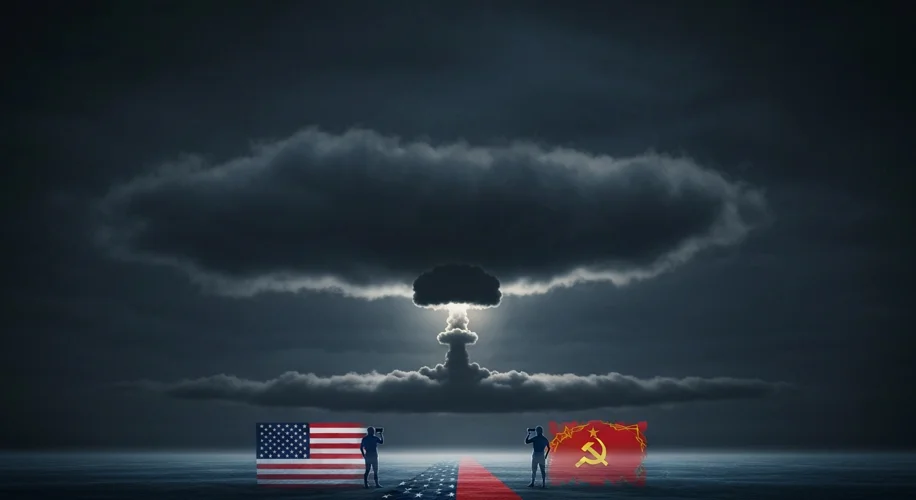
The air crackled with a new kind of fear. It wasn’t the fear of invading armies or famines, but a chilling, existential dread that hung over the globe like a perpetual storm cloud. The year is 1945, and the world had just witnessed a terrifying testament to human ingenuity and its potential for self-destruction: the atomic bomb.
For centuries, humanity had grappled with conflict, but now, a new weapon had emerged, one that held the power to obliterate cities, nations, and perhaps, life itself. This was the dawn of the nuclear age, and it irrevocably altered the course of history, ushering in an era defined by suspicion, rivalry, and the ever-present threat of annihilation – the Cold War.
The Genesis of the Ultimate Weapon
The seeds of the atomic bomb were sown in the fertile ground of scientific discovery. In the early 20th century, physicists like Albert Einstein, Enrico Fermi, and J. Robert Oppenheimer were unraveling the mysteries of the atom. The discovery of nuclear fission – the splitting of an atom’s nucleus, releasing immense energy – in 1938 by Otto Hahn and Fritz Strassmann, with the theoretical explanation provided by Lise Meitner and Otto Frisch, sent shockwaves through the scientific community. It became clear that this newly understood power could be harnessed, for good or for unimaginable ill.
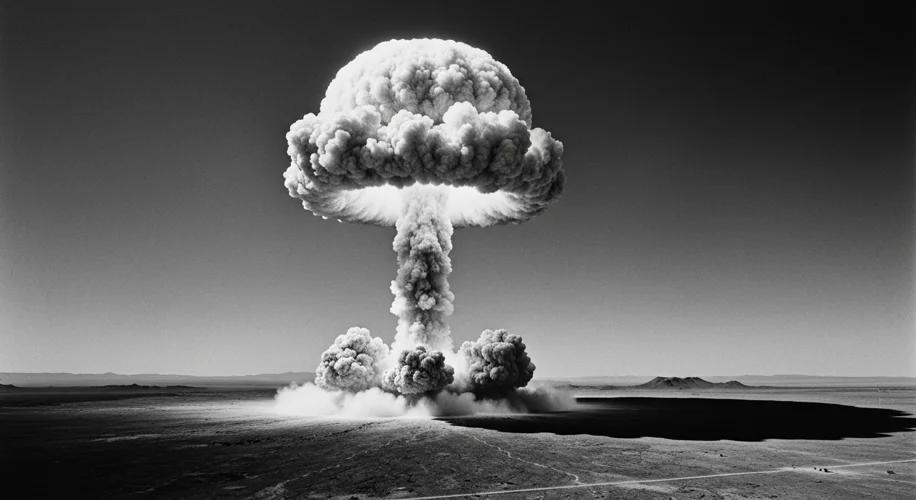
As World War II raged, the specter of Nazi Germany developing such a weapon spurred the United States into action. The Manhattan Project, a top-secret undertaking of unprecedented scale and complexity, was launched in 1942. Thousands of scientists, engineers, and technicians, working in clandestine facilities across the US, raced against time. The culmination of their efforts was the Trinity test in July 1945, a blinding flash and a deafening roar in the New Mexico desert that confirmed the successful detonation of the world’s first atomic bomb. Oppenheimer, witnessing the blinding light, famously recalled a line from the Bhagavad Gita: “Now I am become Death, the destroyer of worlds.”
The Two Titans and the Shadow of Suspicion
By the end of World War II, the United States stood as the sole possessor of the atomic bomb. However, this monopoly was short-lived. The wartime alliance between the US and the Soviet Union, strained by ideological differences and mutual distrust, quickly dissolved. Joseph Stalin, the iron-fisted leader of the USSR, was determined to match America’s nuclear might. Soviet spies had infiltrated the Manhattan Project, and by 1949, the unthinkable happened: the Soviet Union detonated its own atomic bomb, shattering the American monopoly and plunging the world into an even deeper state of anxiety.
The Cold War had truly begun. It was a conflict waged not on traditional battlefields, but through proxy wars, espionage, propaganda, and an ever-escalating arms race. The two superpowers, the United States and the Soviet Union, viewed each other with profound suspicion. Each side believed the other sought global domination, and the atomic bomb became the ultimate deterrent and the ultimate threat.
An Ever-Escalating Game of Brinkmanship
From the late 1940s through the 1980s, the nuclear arms race consumed vast resources and fueled a pervasive sense of dread. Scientists, once lauded for their discoveries, now found themselves at the forefront of developing increasingly destructive weapons. The development of the hydrogen bomb, a thermonuclear weapon far more powerful than the atomic bombs dropped on Hiroshima and Nagasaki, marked a terrifying new threshold. The arms race became a relentless cycle: one side developed a new weapon or delivery system, and the other responded in kind.
Missile technology advanced rapidly. Intercontinental Ballistic Missiles (ICBMs) were developed, capable of delivering nuclear warheads across continents in mere minutes. This led to the concept of Mutually Assured Destruction (MAD), the chilling realization that a nuclear attack by one superpower would inevitably result in the complete annihilation of both. This terrifying doctrine, paradoxically, became a cornerstone of preventing direct conflict between the US and the USSR.
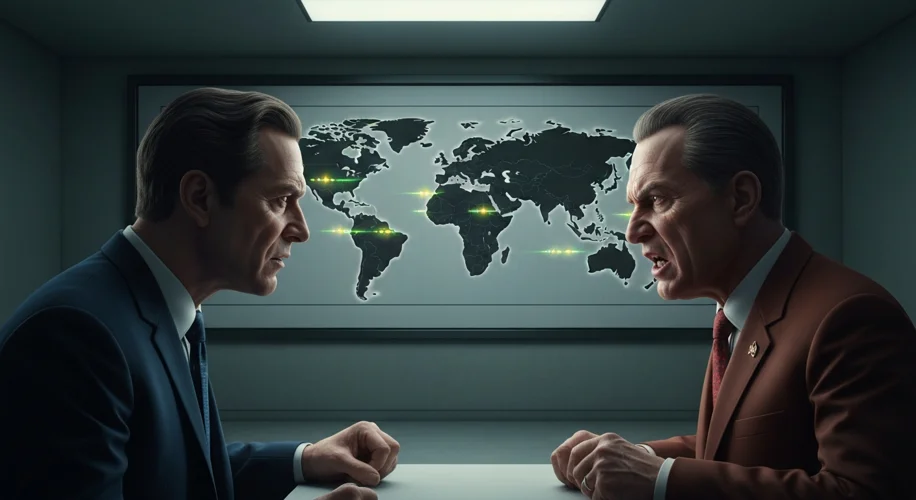
Crucial moments of near-catastrophe punctuated this era. The Cuban Missile Crisis of 1962 brought the world to the very precipice of nuclear war. For thirteen harrowing days, the US and the Soviet Union stood eyeball to eyeball, with nuclear arsenals poised. Ultimately, a diplomatic resolution was found, but the crisis served as a stark reminder of how quickly the world could be plunged into an unthinkable conflict.
The Global Ramifications
The nuclear arms race wasn’t just a duel between two superpowers; it had profound implications for the entire world. Nations aligned themselves with either the US or the USSR, creating a bipolar global order. The threat of nuclear war influenced foreign policy, fueled proxy conflicts in places like Korea and Vietnam, and led to the proliferation of nuclear technology, albeit often under strict control.
Cultural landscapes were also shaped by this fear. Literature, film, and art grappled with the anxieties of nuclear annihilation. The ubiquitous presence of bomb shelters, the chilling imagery of mushroom clouds, and the constant undercurrent of dread became part of the collective consciousness of the latter half of the 20th century.
A Legacy of Fear and Resilience
The Cold War, and the nuclear arms race that defined it, eventually drew to a close with the dissolution of the Soviet Union in 1991. While the immediate threat of superpower nuclear war diminished, the legacy of this era remains. Thousands of nuclear weapons are still in existence, and the specter of proliferation continues to be a global concern. The development of nuclear technology also opened doors to its peaceful applications in energy and medicine, a complex duality that continues to define its role in the 21st century.
The dawn of the nuclear age was a turning point for humanity, a moment when our capacity for creation and destruction reached an unprecedented peak. It was an era of profound fear, but also a testament to human resilience and the enduring pursuit of peace, even in the shadow of the mushroom cloud.