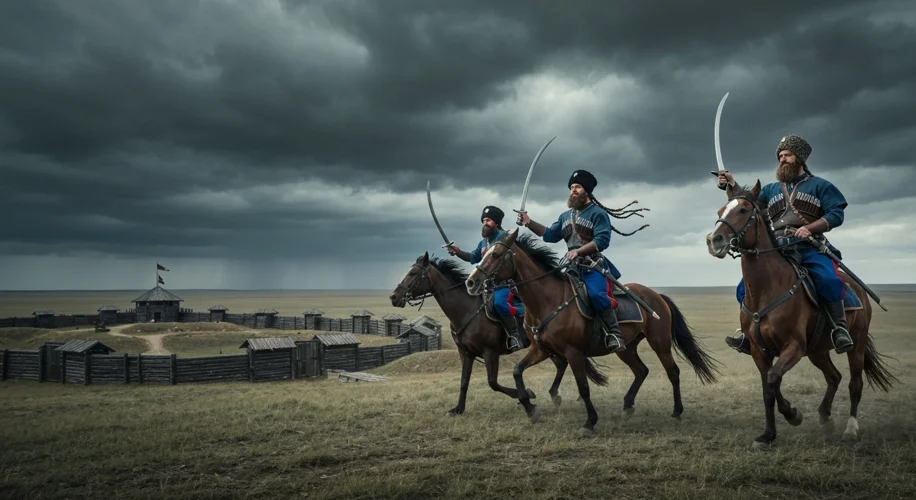
The vast steppes of Eastern Europe have always been a stage for ambition, conflict, and the unyielding desire for freedom. For centuries, a unique people, the Cossacks, carved their existence from this rugged landscape, their very spirit forged in the crucible of independence. Their story is one of legendary warriors, passionate leaders, and a persistent dream of self-determination, most powerfully embodied in the Cossack Hetmanate.
Imagine a time when the very concept of borders was fluid, and power flowed through cavalry charges and astute political maneuvering. This was the world that the Cossacks inhabited. Emerging as distinct communities from the 15th century onwards, they were often refugees, runaway serfs, or adventurers seeking a life beyond the rigid social structures of their neighbors. Primarily settling in the wild lands north of the Black Sea, known as the Wild Fields, they formed a brotherhood that valued courage, loyalty, and, above all, liberty.
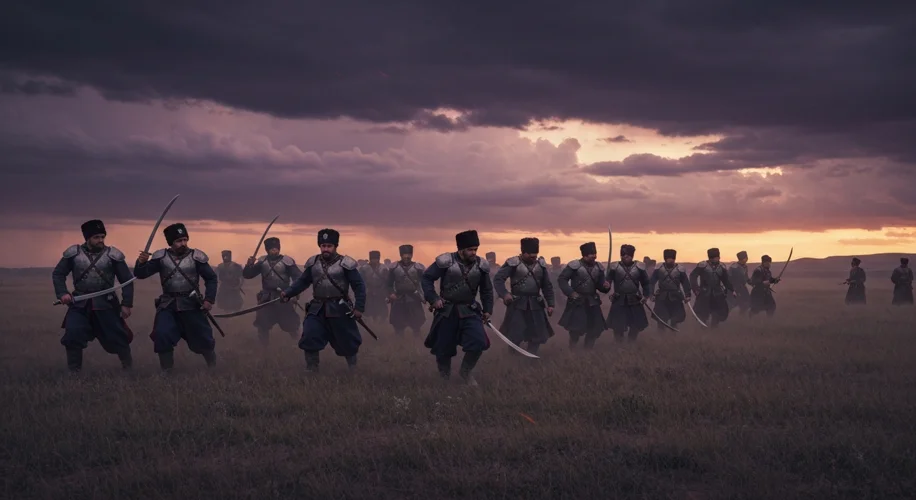
Their early existence was characterized by their formidable military prowess. Organized into a highly effective fighting force, they became renowned for their horsemanship, their daring raids, and their unwavering commitment to defending their hard-won freedoms. They were the untamed frontier, a buffer between the expanding Ottoman Empire and the burgeoning powers of Poland-Lithuania and Muscovy (later Russia).
The pivotal moment in their quest for autonomy arrived with the Khmelnytsky Uprising in the mid-17th century. Led by the charismatic Hetman Bohdan Khmelnytsky, the Cossacks rose up against the Polish-Lithuanian Commonwealth, which sought to impose greater control and restrict their liberties. This rebellion was more than just a revolt; it was a declaration of Ukrainian aspirations for self-governance. Khmelnytsky, a man of noble birth but deeply rooted in Cossack ideals, sought to create a state that would protect the Orthodox faith and the unique identity of the Ukrainian people.
In 1649, the Treaty of Zboriv recognized the Cossack Hetmanate, a semi-autonomous entity within the Polish-Lithuanian Commonwealth. This was a monumental achievement, a tangible expression of Ukrainian statehood. The Hetmanate, centered around the city of Chyhyryn, became the nucleus of Ukrainian aspirations. Its leaders, the Hetmans, wielded significant power, managing military affairs, administering justice, and conducting foreign policy. Figures like Ivan Vyhovsky and Petro Doroshenko continued Khmelnytsky’s legacy, navigating the treacherous waters of international politics.
However, this period of nascent statehood was fraught with peril. The Hetmanate was caught in a geopolitical vise, constantly pressured by its powerful neighbors. Poland-Lithuania sought to reassert its authority, while Muscovy, initially a protector, gradually began to exert its own dominion. The Cossacks found themselves in a desperate balancing act, seeking alliances and employing shrewd diplomacy to preserve their autonomy.
This struggle for survival intensified throughout the late 17th and 18th centuries. The Treaty of Pereyaslav in 1654, initially seen as an alliance with Muscovy, ultimately proved to be a turning point towards Russian dominance. Subsequent Hetmans fought valiantly to resist growing Muscovite interference, but the sheer power of the Russian Empire proved overwhelming. By the late 18th century, Catherine the Great systematically dismantled the Hetmanate’s autonomy, eventually abolishing it altogether in 1764, and the office of the Hetman was finally suppressed in 1775.
Despite the formal dissolution of the Hetmanate, the spirit of Ukrainian self-governance it represented endured. The Cossack legacy became a potent symbol of national identity and resistance, a reminder of a time when Ukrainians fought fiercely for their own destiny. It laid the groundwork for future movements striving for independence and continues to inspire a deep-seated desire for autonomy within Ukraine to this day.
The story of the Cossack Hetmanate is not merely a historical footnote; it is a vibrant testament to the enduring human spirit’s quest for freedom. It speaks of a people who, against all odds, dared to forge their own path, leaving an indelible mark on the tapestry of Eastern European history.