
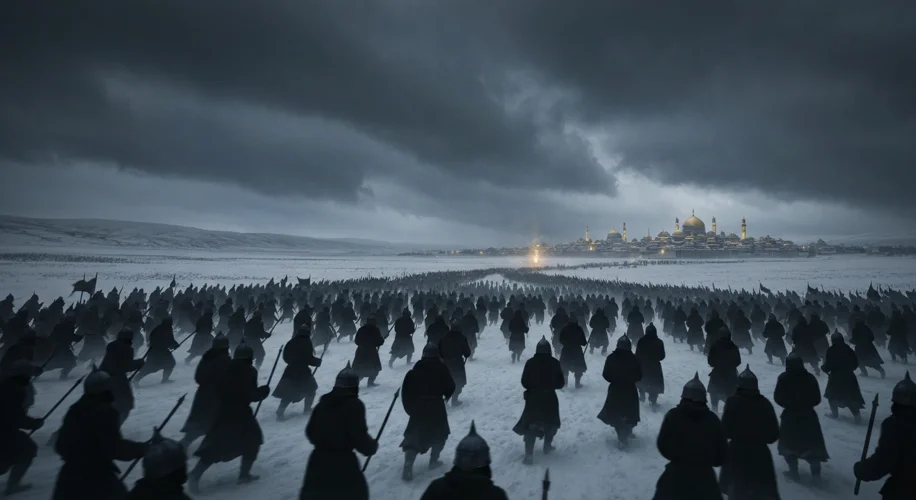
The year is 1237. A chill wind, far colder than any winter frost, sweeps across the vast plains of Eastern Europe. It carries with it the thunder of hooves, the clang of steel, and the guttural war cries of an empire forged in the crucible of the steppes – the Mongol Empire.
For centuries, the principalities of Kievan Rus’, a sprawling federation of East Slavic tribes centered around the magnificent city of Kyiv, had known a semblance of peace and prosperity. Churches, adorned with golden domes, pierced the skyline, a testament to their burgeoning Orthodox Christian faith and rich cultural heritage. Merchants plied their trade along the Dnieper River, connecting bustling city-states like Novgorod, Vladimir, and of course, Kyiv, the “Mother of Rus’ Cities.” It was a world of princes, boyars, and bustling marketplaces, a world that, unbeknownst to its inhabitants, was about to be irrevocably shattered.
From the east came the storm. Led by Batu Khan, grandson of the legendary Genghis Khan, a colossal Mongol army, numbering in the tens of thousands, descended upon the unsuspecting lands. These were not mere raiders; they were the disciplined, ruthless harbingers of an empire that had already humbled empires far to their east. Their tactics were brutal and efficient: swift cavalry charges, devastating archery, and the terrifying use of siege engines and engineers, often captured from conquered peoples, to breach even the strongest fortifications.
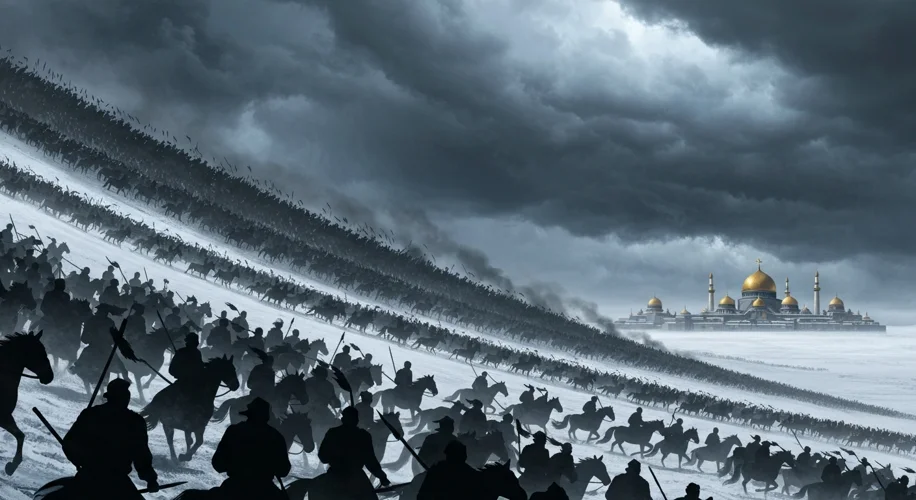
The first blow fell on Ryazan in December 1237. The city offered a defiant resistance, but the Mongols were relentless. For six days, they besieged the city, employing fire and battering rams. When they finally breached the walls, the devastation was absolute. Accounts from the time speak of a massacre so complete that “no one was left alive, neither moving nor breathing.” This was not an isolated incident; it was a chilling prelude to what was to come.
Throughout 1238, the Mongol tide swept through the principalities. Cities like Vladimir, Suzdal, and Tver fell one by one. The invaders were masters of psychological warfare as much as military conquest. Their sheer numbers, their terrifying reputation, and the sheer brutality of their methods often broke the will of their enemies before the first arrow was even loosed. The Rus’ princes, often divided by internal squabbles and unable to unite against the common enemy, faced annihilation.
The year 1240 marked a turning point, a date seared into the memory of Eastern Europe. The Mongols turned their gaze upon Kyiv, the jewel of Rus’. For months, the city endured a brutal siege. The defenders, led by Prince Danylo of Galicia, fought with desperate courage, but the overwhelming might of the Mongol army, aided by the deployment of sophisticated siege weaponry, proved insurmountable. When the walls finally crumbled, the city was subjected to a destruction that echoed across the centuries. Chroniclers described the city being “utterly destroyed,” its magnificent churches, including Saint Sophia Cathedral, desecrated and burned, its people slaughtered or taken into slavery.
The Mongol conquest was not merely a military campaign; it was a cataclysm that brought an end to the Kievan Rus’ era. The once-vibrant Rus’ principalities were not simply conquered; they were subjugated. The Mongol Empire, later known as the Golden Horde, established a system of indirect rule. Princes were allowed to retain their titles, but only after swearing fealty to the Khan and paying heavy tribute. This tribute, often extracted through brutal means, drained the wealth and resources of the land for over two centuries.
The impact was profound and far-reaching. Politically, the old Kievan federation was replaced by a fragmented landscape dominated by Mongol overlords. The rise of Moscow as a new center of power, initially a minor principality that expertly navigated the complex political landscape and collaborated with the Mongols, was a direct consequence of this new order. Socially, the constant demand for tribute, the disruption of trade routes, and the loss of life left deep scars. Many skilled artisans were taken east, weakening the local economy and craftsmanship.
Culturally, the Mongol yoke stifled some aspects of development while, paradoxically, fostering others. The isolation imposed by Mongol rule, coupled with the Mongol appreciation for skilled artisans and administrators, led to a period of relative stagnation in some areas. However, the cultural exchange, though often forced, did introduce new administrative practices and military technologies into the region. The Orthodox Church, while sometimes persecuted, also emerged as a unifying force and a symbol of resistance.
The Mongol conquest of Kievan Rus’ was more than just a historical event; it was a defining moment that reshaped the trajectory of Eastern Europe. It marked the end of one era and the dawn of another, ushering in centuries of Golden Horde domination that would influence the development of Russia, Ukraine, and Belarus for generations to come. The echoes of that Mongol storm, though centuries old, continue to resonate in the historical consciousness of the region, a stark reminder of the devastating power of conquest and the enduring resilience of the human spirit.