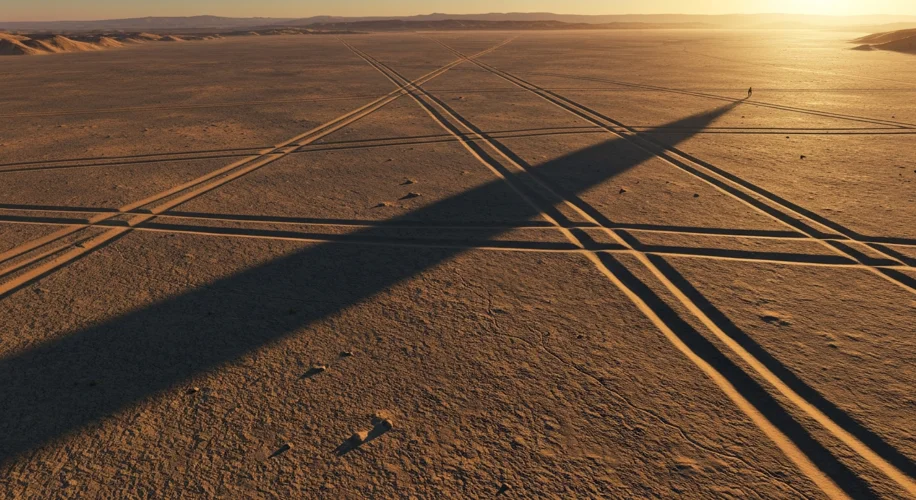
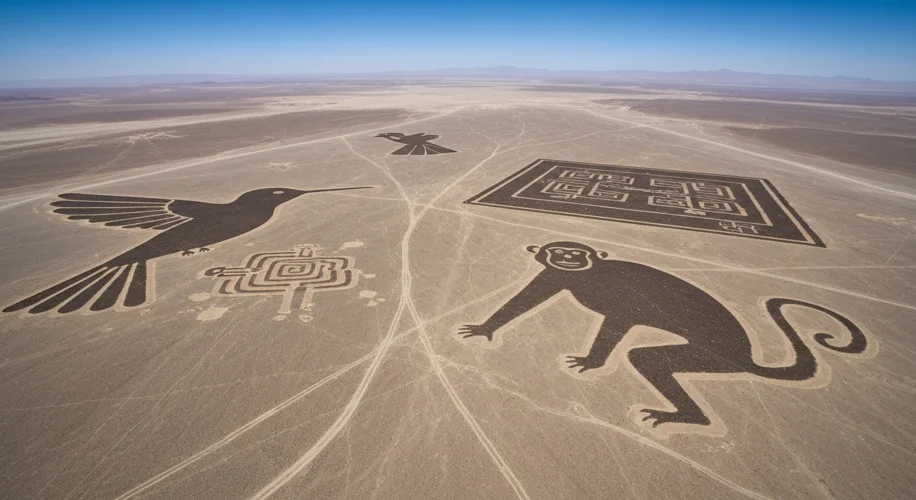
The stark, arid plains of Peru’s Nazca Desert hold a secret that has baffled scholars and captivated imaginations for centuries. Etched into the earth by an ancient civilization, vast geoglyphs stretch across the landscape, depicting a menagerie of animals, geometric shapes, and what appear to be stylized human figures. These are the Nazca Lines, a UNESCO World Heritage site and a testament to the ingenuity and mystery of a people long gone.
For millennia, the Nazca culture flourished in this unforgiving environment, mastering sophisticated irrigation systems to coax life from the desert. But it is their enigmatic creations on the surface of the earth, visible in their entirety only from a great height, that truly set them apart. Created between 500 BCE and 500 CE, these lines were formed by removing the reddish-brown pebbles that cover the desert surface, revealing the lighter-colored earth beneath.
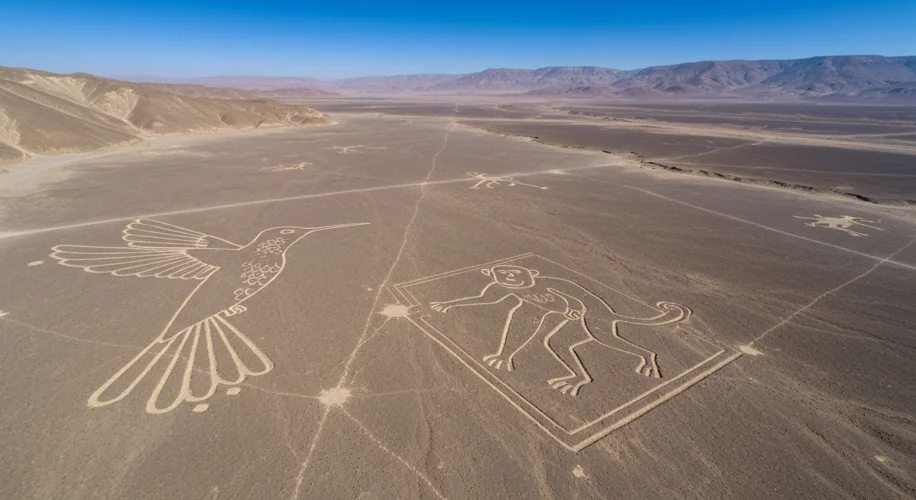
The sheer scale of these geoglyphs is staggering. The spider, spanning an impressive 150 feet, the hummingbird, a delicate rendition of avian grace, and the bizarrely proportioned monkey, all reveal an artist’s hand, albeit one working on a colossal canvas. Interspersed among these zoomorphic figures are hundreds of straight lines, some stretching for miles, and complex geometric patterns like spirals and trapezoids. The precision with which they were created, especially without the benefit of aerial perspective, is a marvel of ancient engineering and astronomical knowledge.
Who were the Nazca people, and why did they create these monumental drawings? Theories abound, each offering a different lens through which to view these ancient wonders. Some suggest they were part of a complex astronomical calendar, aligning with solstices and equinoxes, helping the Nazca people track the seasons vital for their agrarian society. Others propose they were ritualistic pathways, walked by priests or shamans during ceremonies, perhaps to appease deities or ensure good harvests.
The most intriguing theories, however, involve communication with the divine. Maria Reiche, a German mathematician and archaeologist who dedicated much of her life to studying and preserving the Nazca Lines, believed they were a form of astronomical map or a celestial calendar. Her meticulous work and unwavering dedication brought these ancient designs to international attention.

Another prominent researcher, Paul Kosok, suggested that some lines pointed to astronomical events, a theory that gained traction but has also been challenged. More speculative ideas, fueled by their visibility from afar, include communication with extraterrestrial beings, a notion popularized by Erich von Däniken. While captivating, these theories lack concrete evidence and are generally dismissed by mainstream archaeology.
The purpose of these lines remains one of history’s most enduring mysteries. The Nazca people themselves left few written records, and the arid climate has not been kind to organic materials that might offer further clues. What is undeniable is the immense effort and coordinated labor required to create them. This suggests a society with a strong social structure, capable of mobilizing a significant workforce for a common, albeit enigmatic, purpose.
The Nazca Lines continue to inspire awe and wonder. They are a tangible link to a lost civilization, a silent testament to human creativity, and a puzzle that beckons us to unravel its secrets. As we gaze upon these ancient etchings, we are reminded of the vastness of human history and the enduring power of the unknown, whispered across the sands of time.