
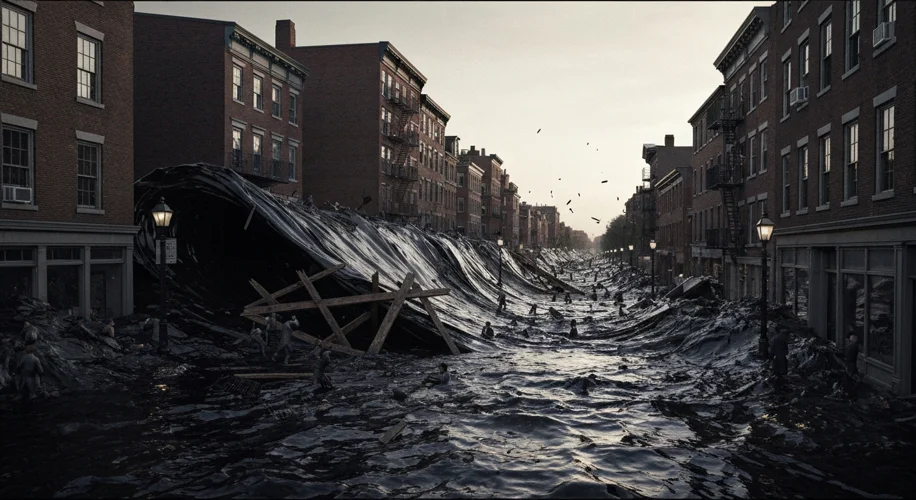
The air in Boston’s North End on January 15, 1919, was thick with the usual winter chill and the salty tang of the harbor. But as the afternoon sun began its descent, a far more sinister aroma began to permeate the streets – the cloying, sweet scent of molasses.
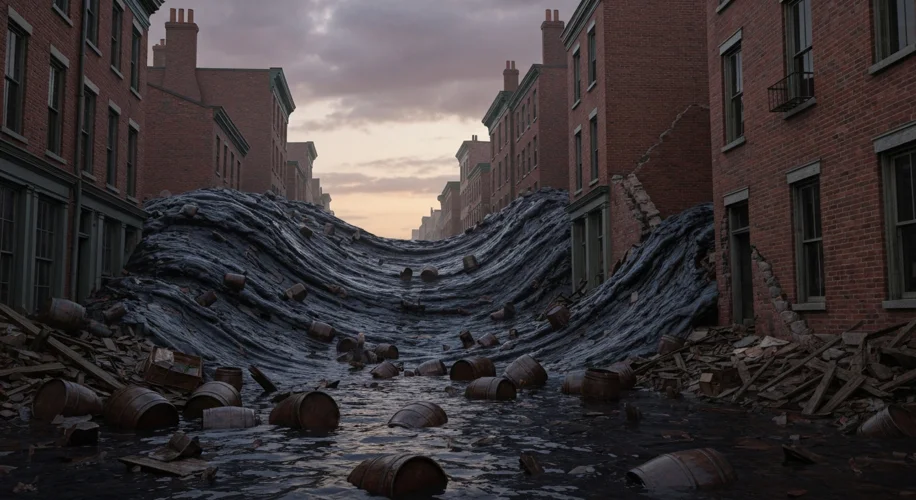
At approximately 12:30 PM, a massive storage tank, owned by the Purity Distilling Company, burst open. This wasn’t just any tank; it was a colossal metal cylinder, standing 50 feet tall and 40 feet in diameter, holding an estimated 2.3 million gallons of molasses. The immense pressure, exacerbated by a recent warm spell and potentially faulty construction, unleashed a destructive force unlike anything the city had ever witnessed.
A wave of molasses, reportedly moving at 35 miles per hour and reaching heights of 15 to 25 feet, roared through the narrow streets. It wasn’t just a sticky mess; it was a deadly tsunami. Buildings were ripped from their foundations, horses were drowned, and people were swept away, suffocated, or crushed by the sheer force and weight of the viscous liquid. The sound, according to survivors, was a terrifying roar, a deafening boom followed by the groaning and splintering of metal and wood.
Witnesses described a scene of utter chaos and horror. A horse, pulling a wagon, was seen struggling, its legs disappearing into the brown tide. Children playing in the street were instantly engulfed. The molasses, warm from fermentation, made rescue efforts incredibly difficult and gruesome. Rescuers waded through waist-deep goo, their efforts hampered by the sticky, suffocating substance.
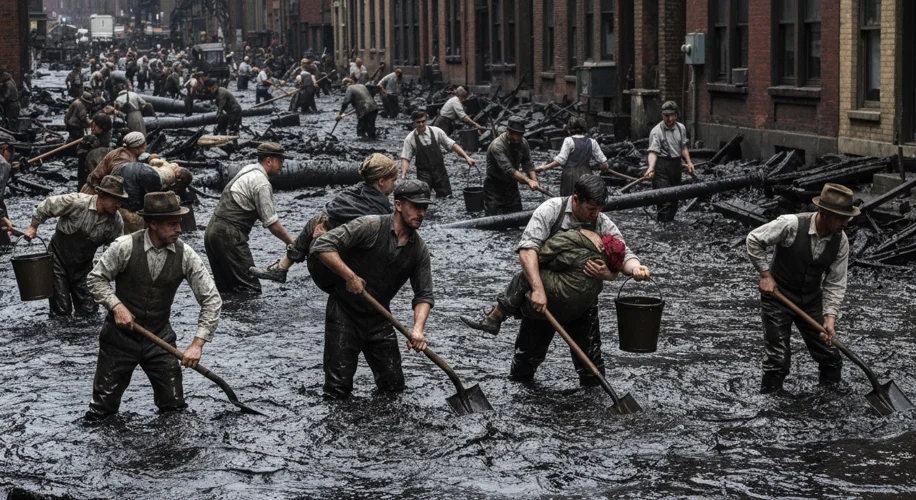
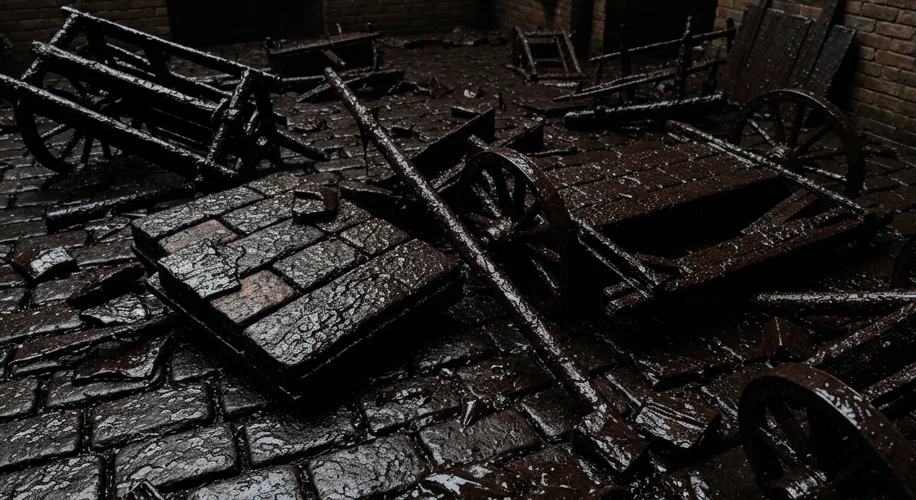
The aftermath was devastating. The official death toll climbed to 21, with over 150 people injured. The clean-up operation took weeks, with firefighters using salt water from the harbor to try and wash away the molasses, a task made even more difficult by the cold weather. The entire neighborhood was coated in a sticky brown residue, and the smell lingered for months, a grim reminder of the tragedy.
The disaster was not just a random accident. Investigations revealed a litany of negligence. The tank had been hastily constructed, poorly maintained, and allegedly leaked for years – a fact known to the company but seemingly ignored. The molasses itself was intended for industrial alcohol, a key component in munitions production during World War I, a fact that added a grim irony to the disaster. The company, United States Industrial Alcohol (USIA), faced numerous lawsuits. While they initially tried to blame anarchists for bombing the tank, the evidence of their own culpability was overwhelming.
Ultimately, the court found USIA responsible, ordering them to pay out millions in damages. The Great Molasses Flood became a landmark case, highlighting the importance of corporate responsibility and workplace safety. It led to stricter regulations on industrial construction and storage, forever changing how such operations were managed. The tragedy, though a dark chapter in Boston’s history, served as a brutal, sticky lesson that left an indelible mark on the city and on industrial safety standards across the nation.
To this day, locals sometimes claim that on hot summer days, the sweet scent of molasses can still be detected in the North End, a ghostly echo of Boston’s sticky, deadly disaster.