
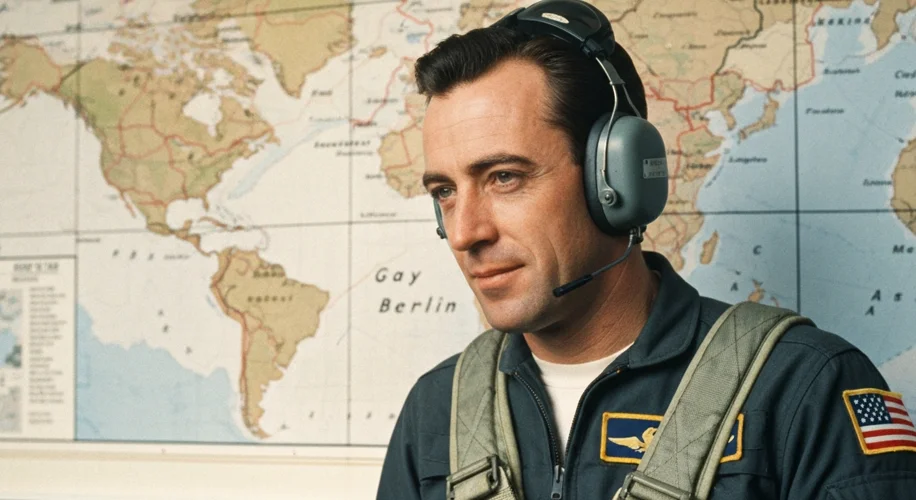
The year is 1960. The Cold War is a chilling reality, a geopolitical chess game played with nuclear arsenals and ideological fervor. Espionage is its silent, deadly currency. On a crisp May morning, a sleek, silver U-2 spy plane, a marvel of American engineering designed to fly higher than any Soviet missile could reach, soared over enemy territory. Its mission: to gather photographic intelligence on Soviet missile bases. Its pilot: Francis Gary Powers, a man who would soon become a household name, a symbol of Cold War tension.
Powers, a decorated pilot with the CIA’s clandestine U-2 program, was no stranger to danger. He had flown numerous missions over the Soviet Union, collecting invaluable data that shaped American defense strategy. The U-2, nicknamed the ‘Dragon Lady,’ was built for high-altitude reconnaissance, its advanced cameras capable of capturing details from 70,000 feet. It was considered virtually invincible, a ghost in the sky that could elude detection.
On May 1, 1960, Powers embarked on what he believed would be another routine mission. He took off from Peshawar, Pakistan, heading towards Siberia. As he flew over the Ural Mountains, something went terribly wrong. A Soviet surface-to-air missile, a SA-2 Guideline, streaked into the sky, detonating beneath his plane. The U-2, ripped apart by the explosion, plummeted towards the earth. Powers, in a desperate bid for survival, ejected from the disintegrating aircraft, his parachute deploying just in time to save him from the fiery descent.
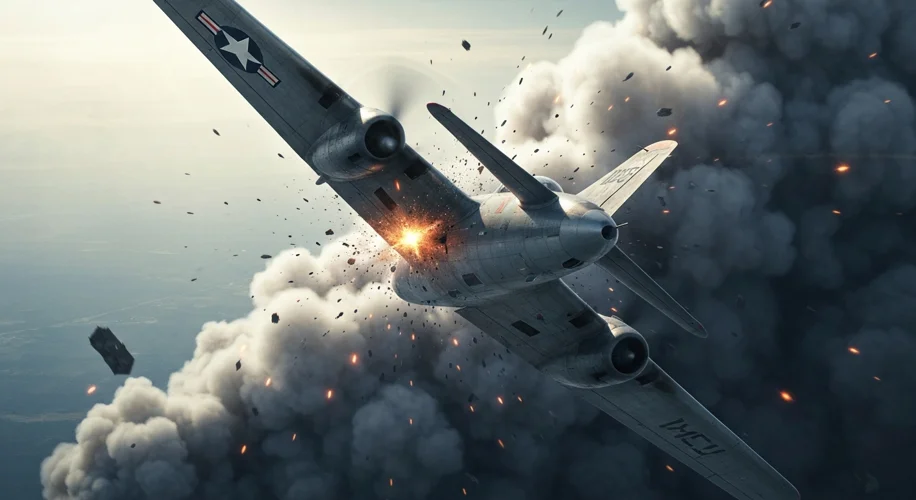
He landed in a farmer’s field, disoriented but alive. His mission was compromised, his plane destroyed. But he had one final duty: to activate the U-2’s self-destruct mechanism, ensuring the sensitive equipment and intelligence did not fall into enemy hands. He pressed the button, but whether it worked as intended would become a point of contention.
Soviet authorities quickly apprehended Powers. The world was thrown into a frenzy. Initially, the United States government, caught off guard, denied the U-2’s mission, claiming it was a weather plane that had strayed off course. This charade, however, was short-lived. The Soviets presented wreckage of the U-2, along with evidence that Powers had survived, including documents and even his pilot’s suit.
The capture of Francis Gary Powers and the downed U-2 spy plane sent shockwaves through the international community. It shattered the illusion of American aerial invincibility and plunged the world into a diplomatic crisis. President Eisenhower was forced to admit the truth, a humiliating blow to American prestige. The incident derailed an eagerly anticipated summit between Eisenhower and Soviet Premier Nikita Khrushchev in Paris, effectively freezing any hope of thawing the Cold War at that moment.
Powers himself became the unwilling center of global attention. He was put on trial in Moscow for espionage. His trial was a carefully orchestrated spectacle, a propaganda tool for the Soviet Union. Powers, a man trained for covert operations, not public defense, faced the charges with a quiet dignity that, ironically, garnered him a degree of sympathy even in the West.
He was found guilty and sentenced to 10 years in a Soviet labor camp. However, his time in captivity was relatively short. In February 1962, after nearly two years of imprisonment, Powers was exchanged for Rudolf Abel, a Soviet spy who had been arrested in the United States. The swap took place on the Glienicke Bridge, famously known as the ‘Bridge of Spies,’ connecting East and West Berlin.
The U-2 incident had profound consequences. It exposed the lengths to which both superpowers would go in their pursuit of intelligence. It heightened mutual suspicion and distrust, further entrenching the Cold War’s ideological divide. For Powers, the return to America was not the triumphant homecoming he might have expected. He faced scrutiny and suspicion, some even questioning his actions during his capture. Despite being a national hero in the eyes of many, he struggled to shake off the shadow of his ordeal.
Ultimately, the U-2 incident serves as a stark reminder of the perilous nature of espionage and the constant tension that defined the Cold War. It highlights the human cost of geopolitical struggle, the lives caught in the crossfire of ideological warfare. Francis Gary Powers, the pilot who flew too high, became an enduring symbol of that era, his story a chilling testament to the dangers lurking in the skies above a divided world.