
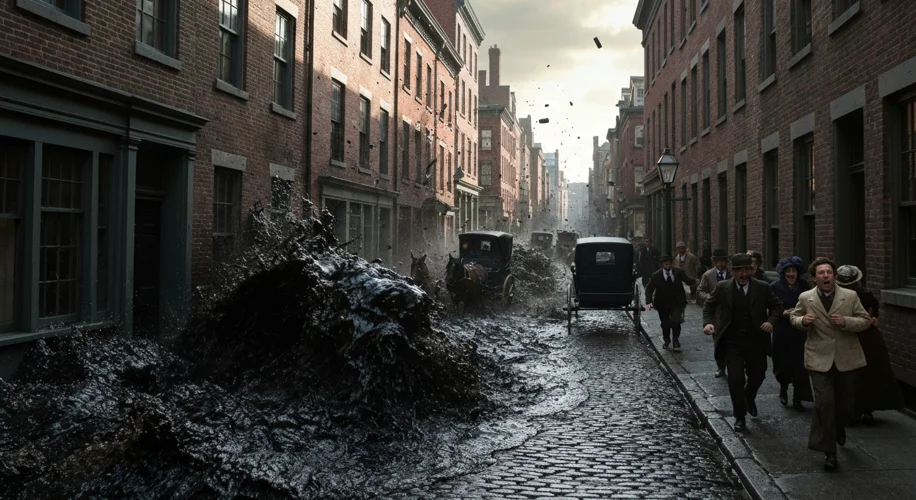
The air in Boston on January 15, 1919, was unusually warm for a winter day. A crisp chill was expected, but instead, a peculiar mildness hung over the North End. Unbeknownst to the bustling city, this deceptive warmth was merely a prelude to a disaster so bizarre, so sticky, and so deadly, it would forever sear itself into Boston’s collective memory: The Great Molasses Flood.
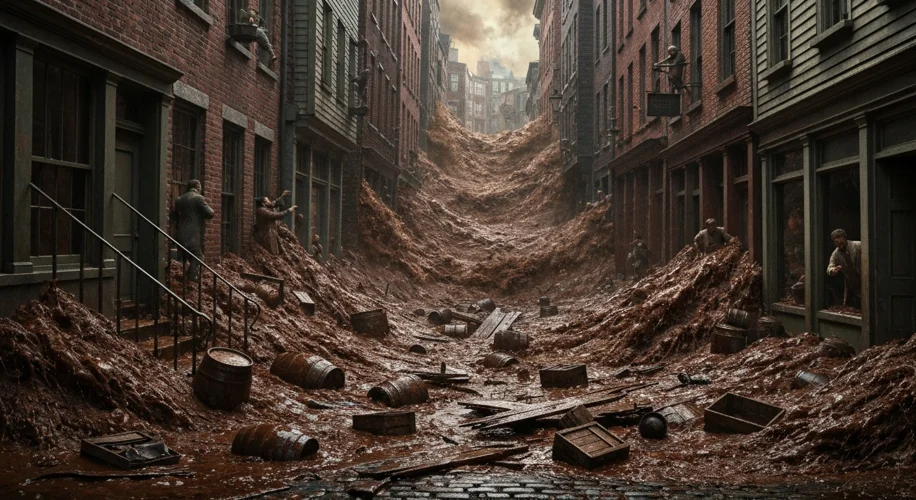
In the heart of the North End, a densely populated neighborhood teeming with immigrants, stood a colossal storage tank. Owned by the Purity Distilling Company, this tank was a behemoth, standing 50 feet tall and 90 feet in diameter, capable of holding over 2.3 million gallons of molasses. This sweet, syrupy substance was destined to be fermented into rum, a lucrative product in post-World War I America.
The tank, however, was a ticking time bomb. Constructed hastily and with shoddy materials, it had a history of leaks. Locals often reported hearing groans and whistles from within its metal confines, and some even claimed to have collected the leaking molasses in buckets for their own use. Despite these ominous signs, the tank was filled to capacity just days before the disaster. The pressure on the already compromised structure was immense.
Around 12:30 PM, a sound, described by witnesses as a deafening roar, a thunderclap, or the frantic firing of machine guns, ripped through the North End. The tank burst. Not with a gentle sigh, but with a violent explosion that sent a tidal wave of 1.5 million gallons of thick, dark molasses hurtling through the streets.
The wave, estimated to be between 15 and 25 feet high and moving at an estimated 35 miles per hour, was a terrifying force of nature. It ripped buildings from their foundations, twisted steel girders like paper, and sent horse-drawn wagons flying. The sheer weight and viscosity of the molasses made escape nearly impossible. People and animals were caught in its suffocating grip, unable to break free from the viscous mire. The scene was one of utter devastation and surreal horror.
Rescuers, braving the sticky, suffocating tide, rushed to the scene. The molasses clung to everything, making movement treacherous and rescue efforts agonizingly slow. Many of the injured were trapped in their homes, their streets transformed into sticky rivers. The sweet smell of molasses, usually a sign of industry and commerce, now carried the stench of death and destruction.
The immediate aftermath was grim. The official death toll eventually rose to 21, with over 150 people injured. The economic damage was substantial, with buildings destroyed, infrastructure crippled, and the Purity Distilling Company facing massive lawsuits. The disaster prompted one of the first class-action lawsuits in Massachusetts history.
But the story doesn’t end with the immediate tragedy. The cleanup effort was monumental. The molasses coated everything, and it took weeks of frantic work, using saltwater from fireboats to wash away the sticky residue, to even begin to restore normalcy. The legend has it that on hot summer days, the North End still carries a faint scent of molasses, a ghostly reminder of the day the city was submerged in a sweet, deadly flood.
The Great Molasses Flood stands as a stark testament to the dangers of cutting corners and prioritizing profit over safety. It serves as a potent reminder that even the most innocuous substances can become instruments of destruction when handled with negligence. It’s a story of a city’s resilience, a community’s spirit in the face of unimaginable disaster, and a chillingly sweet nightmare that continues to echo through Boston’s history.