

In the heart of Boston, on a crisp January day in 1919, a disaster of sticky, sweet proportions unfolded. It wasn’t a confectionery mishap or a culinary catastrophe. It was the Great Molasses Flood, a bizarre and tragic event that remains etched in the city’s history.
A Sweet Business with a Bitter Secret
The Purity Distilling Company, a subsidiary of United States Industrial Alcohol (USIA), operated a massive molasses tank at its distillery in the North End. This tank, a colossal cylinder standing 50 feet tall and 40 feet in diameter, held an astounding 2.3 million gallons of molasses. This viscous, dark syrup was destined to be fermented into industrial alcohol, a key ingredient for munitions during World War I.
The North End, a densely populated neighborhood, was a vibrant tapestry of immigrant communities, their lives interwoven with the daily operations of the distillery. Children played in its shadow, workers toiled nearby, and residents lived in close proximity to the towering tank, oblivious to the dangerous pressures building within.
The Cracks Appear
Months before the fateful day, whispers of trouble had begun. Residents complained of groaning sounds emanating from the tank, and a reddish-brown liquid was seen seeping from its rivets. Some even reported hearing ominous creaks and squeaks. The company, however, eager to avoid costly repairs and maintain its production schedule, largely ignored these warnings. They even painted the tank brown to better conceal the leaks, a grim foreshadowing of the disaster to come.
January 15, 1919: A Day of Reckoning
Boston had been experiencing an unseasonably warm spell. The previous day, the molasses had been heated to facilitate its transfer, a common practice. This heating, combined with the warmer ambient temperature, caused the molasses to expand, increasing the pressure within the already compromised tank. Around 12:30 PM, as workers enjoyed their lunch and children played nearby, the inevitable occurred.
With a deafening roar, the tank ripped apart. A colossal wave of molasses, estimated to be 15 to 25 feet high, surged through the streets at an estimated 35 miles per hour. It was a tsunami of sticky, dark goo, carrying with it debris from the collapsed tank and the surrounding buildings.
A City Engulfed
The force of the wave was unimaginable. It smashed through buildings, buckling elevated railway tracks, and sweeping away everything in its path. People were engulfed, struggling to breathe in the thick, suffocating syrup. Horses and carts were tossed about like toys. The sheer weight and viscosity of the molasses made escape near impossible.
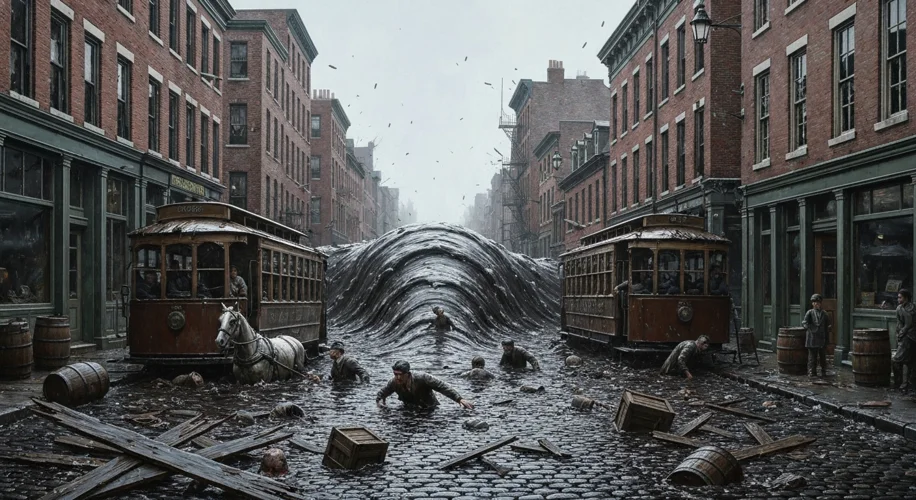
Rescue efforts were hampered by the thick, sticky substance. Firefighters, police, and volunteers waded through waist-deep molasses, their efforts to pull survivors from the sticky mire a race against time and the chilling January air. The sweet smell of molasses, once a comforting aroma of industry, now became a sickeningly sweet stench of death and destruction.
The Aftermath: A City Cleans Up
When the sticky tide finally receded, the toll was devastating. Twenty-one people had lost their lives, and over 150 were injured. The North End was a scene of utter devastation, coated in a thick, treacherous layer of molasses.
Cleaning up the mess was a monumental task. The molasses clung to everything, making streets, buildings, and even the harbor sticky for months. It took weeks to clear the streets, and the salty air of Boston Harbor was said to carry the faint scent of molasses for years to come.
Justice and Legacy
The disaster led to one of the first major class-action lawsuits in Massachusetts. USIA was found liable for the tragedy, largely due to the company’s negligence in maintaining the tank. They were ordered to pay $628,000 in damages, a significant sum at the time. The Great Molasses Flood served as a stark reminder of the dangers of industrial negligence and the importance of prioritizing safety over profit.
Today, the Great Molasses Flood is remembered as a peculiar but potent tragedy. It stands as a testament to the power of nature, even in its most unlikely forms, and the resilience of a city that, despite being covered in a sticky, sweet disaster, managed to rise from the syrupy ashes.