
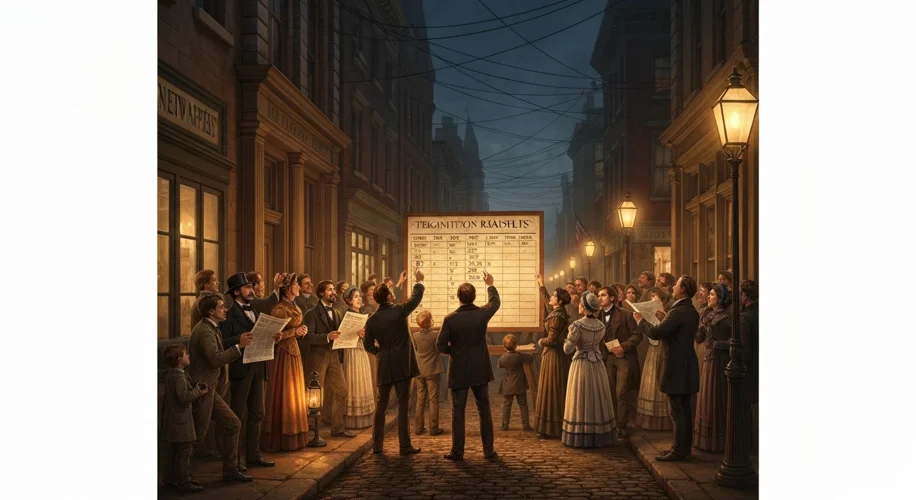
The Electric Spark That Ignited American Democracy: How the Telegraph Revolutionized Elections
The crackle of static, the rhythmic tap-tap-tap of a key – these were the sounds that began to reshape American democracy. Before the mid-19th century, news traveled at the pace of a horse or a steam train. Election results, especially from distant states, could take days, even weeks, to reach the public. This agonizing wait not only fueled speculation but also limited the immediate impact of political discourse on the electorate. Then came the telegraph, a revolutionary invention that didn’t just speed up communication; it fundamentally altered the pulse of American elections.
The World Before the Wire
Imagine this: it’s November 1840. William Henry Harrison, the Whig candidate, is locked in a fierce battle against the incumbent, Martin Van Buren. News of polling closures, preliminary results, and public sentiment trickled in through newspapers, often weeks old by the time they reached far-flung communities. Campaign rallies were vital, but their influence was geographically bound. The ability to sway public opinion on a national scale, in near real-time, was a distant dream. Information was a precious commodity, hoarded by those who could afford swift couriers or who lived along major communication routes.
This slow dissemination of information meant that voters often made decisions based on incomplete or outdated knowledge. Rumors could fester, and the impact of late-breaking scandals or revelations could be blunted by the sheer time it took for them to travel. The national conversation was more a series of regional dialogues, slowly converging rather than immediately interacting.
Morse’s Marvel: A Wire Across a Continent
Samuel Morse’s invention of the electric telegraph in the 1830s, and its successful demonstration between Washington D.C. and Baltimore in 1844, was nothing short of a miracle. Suddenly, information could traverse hundreds of miles in mere minutes. The implications for politics were seismic. The first real test of the telegraph’s electoral impact came in the 1844 presidential election, a race between James K. Polk and Henry Clay. While not fully deployed nationwide, the telegraph was beginning to weave its web across the country, and its potential was palpable.
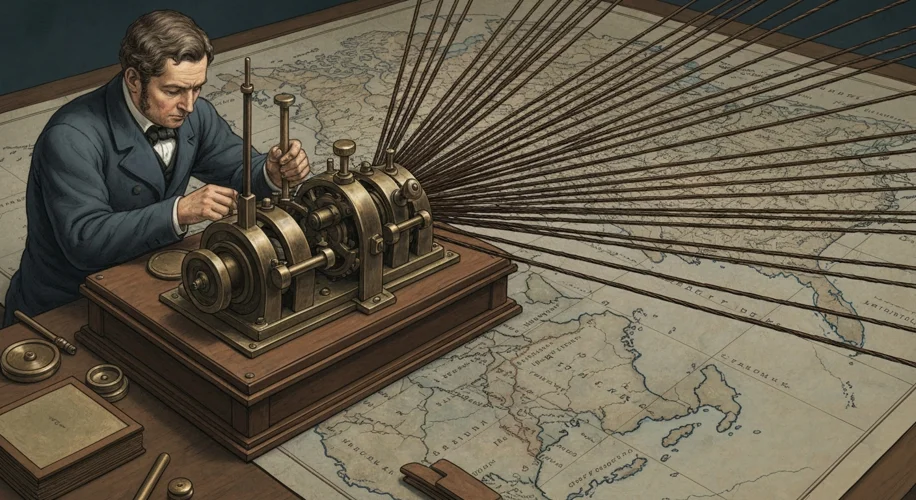
As telegraph lines expanded in the 1850s, they became the arteries of political information. Presidential election results, once a slow drip, became a torrent. Newspapers, which had previously relied on laborious printing processes and slow delivery, now had access to a constant stream of incoming dispatches. This allowed for near-simultaneous reporting of results across the nation, creating a shared, immediate experience of election night.
The Voter’s New Reality: Speed, Scope, and Participation
The telegraph didn’t just speed up the reporting of elections; it influenced how people engaged with them. News of a candidate’s stance on a key issue, or a dramatic campaign speech, could now spread like wildfire. This meant that voters in different parts of the country were reacting to the same information at roughly the same time, fostering a more unified national dialogue.
Consider the election of 1860, a deeply fractured contest that preceded the Civil War. Abraham Lincoln, the Republican candidate, faced Stephen Douglas, John C. Breckinridge, and John Bell. The telegraph allowed for the rapid dissemination of poll numbers and early results. Voters, even in remote areas, could receive updates, fostering a sense of immediacy and engagement. While voter turnout was already increasing in the antebellum period, the telegraph undoubtedly contributed to this trend by making elections feel more immediate and consequential.
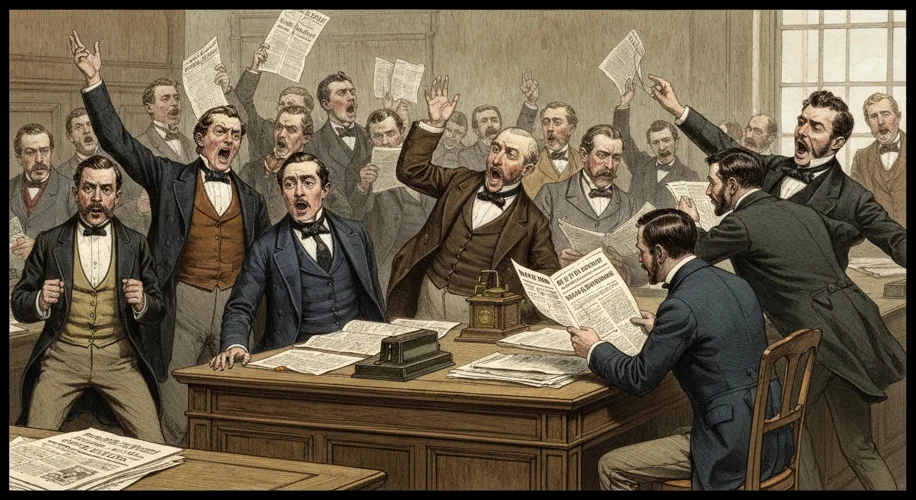
Furthermore, the telegraph democratized information to an extent. While newspapers still held sway, the ability for reporters to file dispatches directly from polling places or party headquarters meant that the news was less reliant on the interpretations of local editors. This created a more direct conduit of information from the event to the public.
Consequences and Ripples
The telegraph’s impact extended beyond mere speed. It influenced campaign strategies. Candidates and their strategists could now gauge public reaction to events and adjust their messaging accordingly, albeit with the limitations of the technology. It also intensified the drama of election nights. The agonizing wait for results from key states, now measured in hours rather than days, became a national spectacle.

However, the telegraph was not without its limitations. The cost of sending messages meant that information was still more readily available to wealthier individuals and organizations. The potential for misinformation and bias, inherent in any communication medium, was also present. Reporters and editors had to grapple with verifying the accuracy of incoming dispatches, and the pressure for speed could sometimes compromise thoroughness.
A New Era of Political Discourse
In conclusion, the electric telegraph was more than just a technological marvel; it was a catalyst for democratic evolution in 19th-century America. By collapsing the vast distances of the nation into near-instantaneous communication, it fundamentally changed how Americans received political news, engaged with their leaders, and participated in elections. The rapid dissemination of information fostered a more unified national conversation, increased voter awareness, and transformed election nights into thrilling, shared experiences. The steady tap-tap-tap of the telegraph key didn’t just transmit messages; it echoed the growing heartbeat of a modernizing American democracy.