
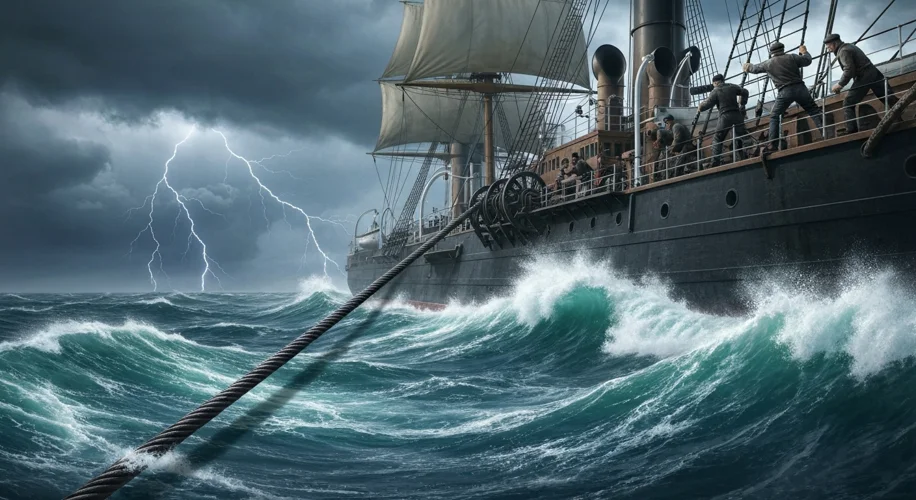
Before the blink-and-you’ll-miss-it speed of fiber optics and the ubiquitous hum of Wi-Fi, a silent revolution was taking place beneath the waves. It was a revolution woven from thousands of miles of insulated wire, a network of vital arteries that secretly connected continents and peoples, laying the groundwork for the hyper-connected world we inhabit today. We’re talking about the age of the submarine communications cable, a history as dramatic and intricate as any landlocked conflict.
Imagine a world where communication across oceans took weeks, carried by steamships laden with mail and sensitive telegrams. News from Europe to America, or vice versa, was a slow, deliberate trickle. The desire to accelerate this process was palpable, especially as global trade and political ties grew more intertwined in the mid-19th century. The stage was set for a daring engineering feat.
The first ambitious attempts to lay cables across the Atlantic were, frankly, disastrous. The Anglo-American Telegraph Company, driven by the vision of Cyrus West Field, embarked on a monumental task in the 1850s. Their early efforts were plagued by broken cables, equipment failures, and a sheer lack of experience. One famous attempt in 1857 snapped just hours after the cable began its descent, a heartbreaking testament to the immense challenges involved. The ocean floor, a vast, uncharted, and unforgiving territory, proved to be a formidable opponent.
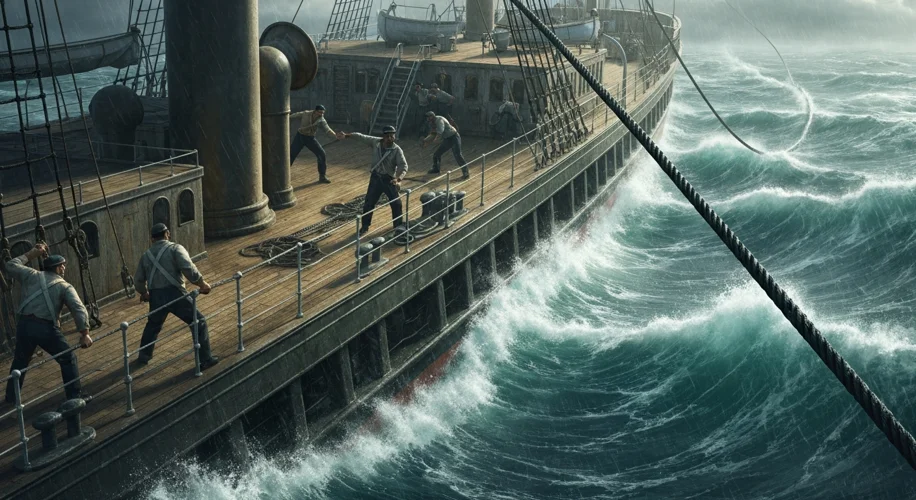
But the pioneers of this era possessed a tenacious spirit. Field, undeterred by repeated failures, rallied investors and engineers. The breakthrough came in 1866. After yet another attempt, the SS Great Eastern, a colossal steamship designed for this very purpose, successfully laid a continuous cable from Ireland to Newfoundland. The moment the final connection was made, a jubilant cheer reportedly echoed across the waves. For the first time, messages could traverse the Atlantic in mere minutes, not weeks. This wasn’t just a technological leap; it was a fundamental shift in human connection.
The impact was immediate and profound. Businesses could conduct transactions with unprecedented speed, stock markets became more integrated, and news traveled with remarkable alacrity. Diplomacy and international relations were transformed, as leaders could communicate and react to events in near real-time. It was the dawn of globalization, powered by the silent, submerged network.
But the story of undersea cables isn’t just about technological triumph. It’s also a tale of espionage, innovation, and geopolitical maneuvering. During the World Wars, these cables became strategic assets, fiercely guarded and, at times, deliberately cut by enemy forces to disrupt communication. The development of more robust cable designs, including better insulation and armor, was driven by the need to withstand the harsh marine environment and the threat of sabotage.
As technology advanced, so did the cables. From the early copper wires carrying simple telegraph signals, we progressed to fiber optic cables capable of transmitting vast amounts of data at the speed of light. These modern marvels, often no thicker than a human thumb, carry the backbone of the internet, powering our video calls, streaming services, and global financial systems. Entire economies now depend on the uninterrupted flow of data through these underwater conduits.
The construction and maintenance of these cables are engineering feats in themselves. Specialized ships, equipped with sophisticated cable-laying machinery and repair tools, navigate the world’s oceans. Divers and remotely operated vehicles (ROVs) work in the crushing depths to mend breaks caused by ship anchors, earthquakes, or even the curious jaws of sharks (though this is largely a myth).
Today, the global network of undersea cables is more extensive than ever, a complex web connecting every corner of the planet. They are the invisible lifelines of our modern age, facilitating not just commerce and communication, but also scientific research, cultural exchange, and personal connections. The next time you send an email or watch a video online, take a moment to appreciate the silent, submerged marvels that make it all possible – the unseen architects that truly wove the modern world together, one submerged strand at a time.