
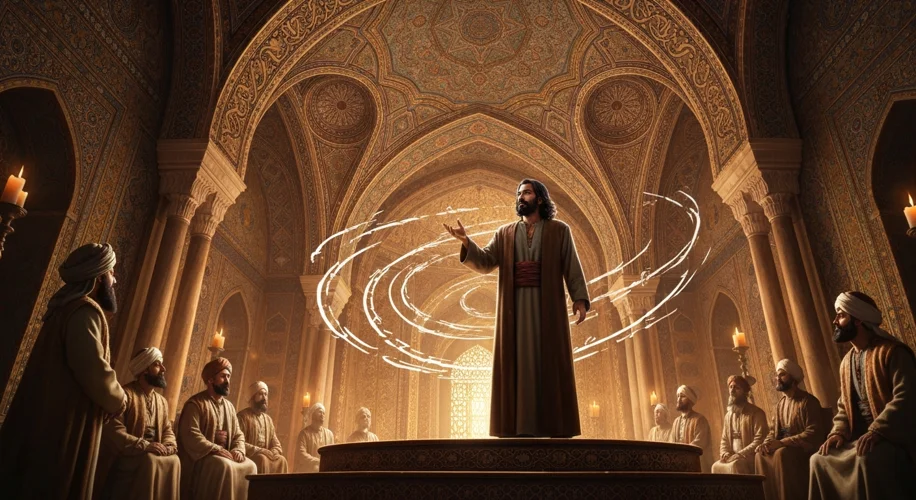
In the bustling heart of the 10th-century Abbasid Caliphate, a figure emerged whose words would echo through the ages, shaping not just Arabic literature but the very way people contemplated life, fate, and ambition. His name was Abu al-Tayyib Ahmad ibn Al-Husayn, but the world knows him as Al-Mutanabbi – “The One Who Claims to Be a Prophet.” A bold moniker, perhaps, but one that hinted at the extraordinary self-belief and soaring vision that fueled his revolutionary poetry.
Born in Kufa, Iraq, around 915 CE, Al-Mutanabbi’s early life is shrouded in a mist of legend. Some tales paint him as a prodigy, learning the Quran and poetry by heart at a young age, while others speak of a more turbulent youth, perhaps even involving a Qarmatian rebellion. This ambiguity only adds to the mystique of a man whose life was as dramatic and profound as the verses he penned.
What is undeniable is his unparalleled mastery of the Arabic language. He didn’t merely write poetry; he sculpted it, infusing it with a philosophical depth that transcended mere description. His work grappled with the fundamental questions that have plagued humanity since time immemorial: the capricious nature of fate, the burning fire of ambition, the very essence of human character, and the sting of betrayal. He was a poet who dared to look into the abyss of existence and articulate its profound, often unsettling, truths.
Al-Mutanabbi’s life was a testament to his ambitious spirit. He craved recognition, patronage, and power. He traversed the vast landscapes of the medieval Islamic world, seeking favor from rulers in Syria, Egypt, and Persia. His most celebrated period was spent in the court of Sayf al-Dawla, the Hamdanid ruler of Aleppo. Here, his poetry reached its zenith, capturing the glory of Sayf al-Dawla’s military campaigns against the Byzantine Empire. These verses are not just odes to victory; they are intricate explorations of leadership, courage, and the fleeting nature of glory.
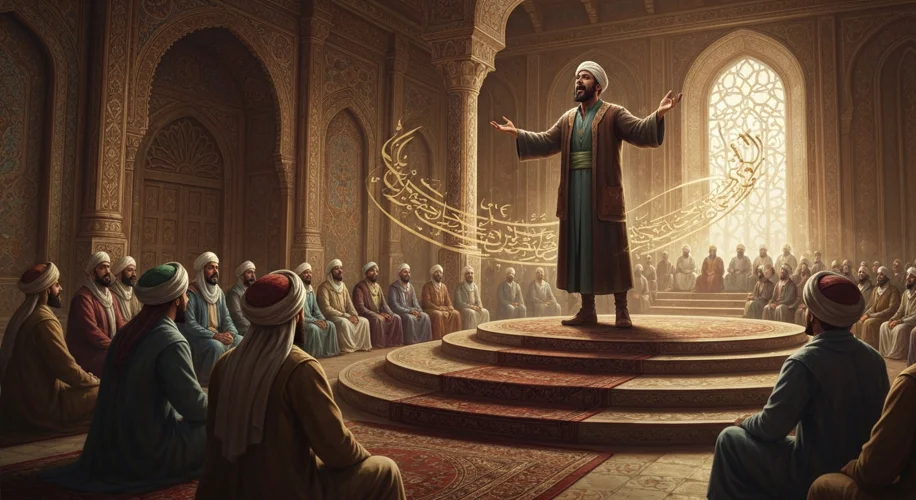
Consider these lines, a reflection on ambition and the human condition:
“I am the one who… if I have a desire, / I pursue it with the strength of my own will.
Do you believe I am a man who, when he sees / a goal, hesitates to reach for it?”
These are not the words of a passive observer. They are the declarations of a man driven by an insatiable hunger for greatness, a theme that resonates through his entire body of work. He spoke of the struggles of life, the envy of others, and the isolation that often accompanies extraordinary talent. His philosophy was one of self-reliance, of facing destiny head-on, and of finding meaning in the struggle itself.
His keen observations extended to human nature. He dissected the flaws of humanity with the precision of a surgeon, particularly the sting of betrayal and the fickleness of fortune. He wrote with raw emotion about the pain of being misunderstood or wronged, yet always with an underlying stoicism that suggested a profound understanding of life’s inherent difficulties.
Yet, Al-Mutanabbi’s ambition also led to his downfall. His confidence, bordering on arrogance, often alienated those around him. After leaving Sayf al-Dawla’s court, he found himself in Egypt under the patronage of the Ikhshidid dynasty. His poems here, however, often took on a more personal and less martial tone, a shift that perhaps reflected his own internal struggles. His eventual departure from Egypt and his return to Iraq were marked by continued attempts to secure a powerful position, a quest that ultimately proved fatal. In 965 CE, near Baghdad, Al-Mutanabbi was ambushed and killed, reportedly by bandits, though some legends whisper of a more politically motivated assassination. His dying words, according to some accounts, were a defiant challenge to his killers, echoing his lifelong pursuit of glory even in the face of death.
Al-Mutanabbi’s legacy is immense. He is not just a poet; he is a philosopher of the Arabic world. His verses, rich with proverbs and profound insights, have been memorized, quoted, and studied for over a millennium. They offer a window into the complex socio-political landscape of the Abbasid era, but more importantly, they provide timeless reflections on the human spirit. His poetry challenges us to confront our own ambitions, our own fears of fate, and our own understanding of what it means to be human.
In his words, we find not just beauty and eloquence, but a rugged philosophy that reminds us that life, in all its trials and triumphs, is a grand and often perilous poem waiting to be lived.