
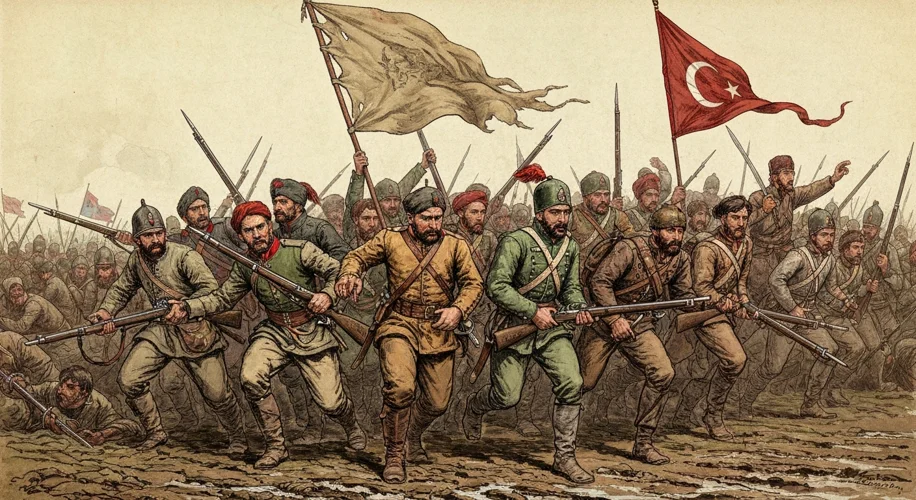
The year is 1912. The air in the Balkans, a region often described as Europe’s powder keg, crackled with an old, familiar tension. For centuries, the mighty Ottoman Empire had held sway over this complex tapestry of peoples and cultures, but its grip was weakening, and the ambitions of its neighbors were growing.
Imagine a land where ancient grievances simmered beneath a fragile peace, where national aspirations clashed with imperial control, and where the great powers of Europe watched with a mixture of apprehension and calculation. This was the Balkans on the eve of the Balkan Wars, a pair of conflicts that would dramatically redraw the map and, in doing so, cast a long shadow towards the global conflagration of World War I.
The Crumbling Empire and the Rising Nations
For over 500 years, the Ottoman Empire had been a dominant force in the Balkans. However, by the early 20th century, the empire was the “sick man of Europe,” weakened by internal strife and external pressures. Revolutions and nationalist movements had already stripped away vast territories in North Africa and the Middle East. In the Balkans, pockets of Ottoman rule remained, but the desire for independence among Serbs, Bulgarians, Greeks, and Albanians was a powerful, irrepressible force.
These newly independent or aspiring nations were a volatile mix. Serbia, emboldened by its recent territorial gains and fueled by a pan-Slavic ideal, dreamed of uniting all South Slavs under its banner. Bulgaria, aspiring to restore the glory of its medieval empire, sought to liberate its brethren still under Ottoman rule. Greece yearned to reclaim territories with historical Hellenistic ties, and Albania, a region with a distinct identity, sought to break free from both Ottoman and Balkan neighbors’ influence.
The First Balkan War: The Balkan League Strikes
The stage was set by an unlikely alliance: the Balkan League. Comprising Serbia, Bulgaria, Greece, and Montenegro, this coalition, despite their own rivalries, found common ground in their shared desire to expel the Ottomans from Europe. The casus belli was often debated, but the spark ignited in October 1912 when Montenegro declared war, quickly followed by the other League members.
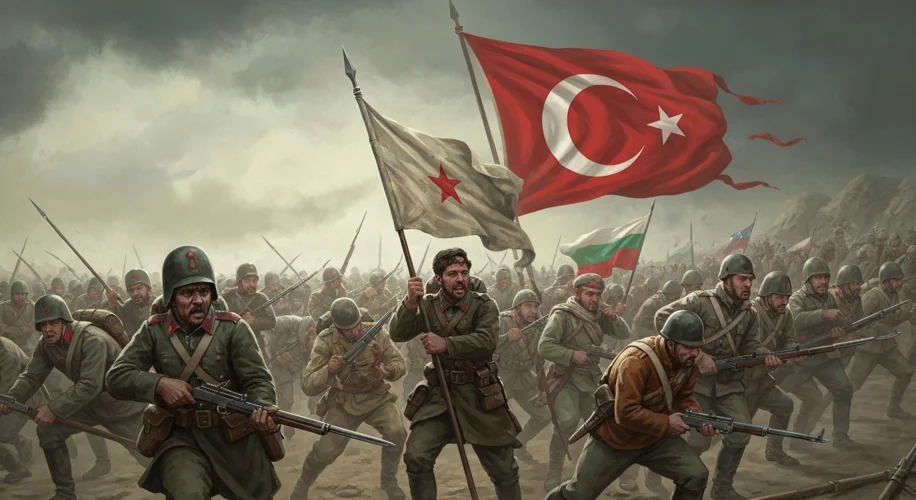
The war was swift and decisive. The Balkan armies, fueled by nationalist fervor and relatively well-trained, overwhelmed the Ottoman forces. Within months, the League had conquered almost all of the Ottoman Empire’s remaining European territories, including Macedonia and Thrace. The city of Adrianople (modern Edirne) fell after a long and brutal siege, a symbol of the Ottoman defeat. The war concluded with the Treaty of London in May 1913, which formally dissolved the Ottoman Empire’s European possessions and created an independent Albania.
The Second Balkan War: Victory Turns to Discord
But the ink on the treaty was barely dry before the cracks within the Balkan League began to widen. The spoils of war, particularly the disputed territory of Macedonia, became the new battleground. Bulgaria, believing it had borne the brunt of the fighting and deserved a larger share, felt cheated by its former allies.
In June 1913, Bulgaria, without warning, attacked its former allies – Serbia and Greece – in Macedonia. This act of aggression backfired spectacularly. Romania, which had stayed out of the first war, joined against Bulgaria, seeking territorial gains. Even the remnants of the Ottoman Empire, sensing an opportunity, attacked Bulgaria and recaptured Adrianople.
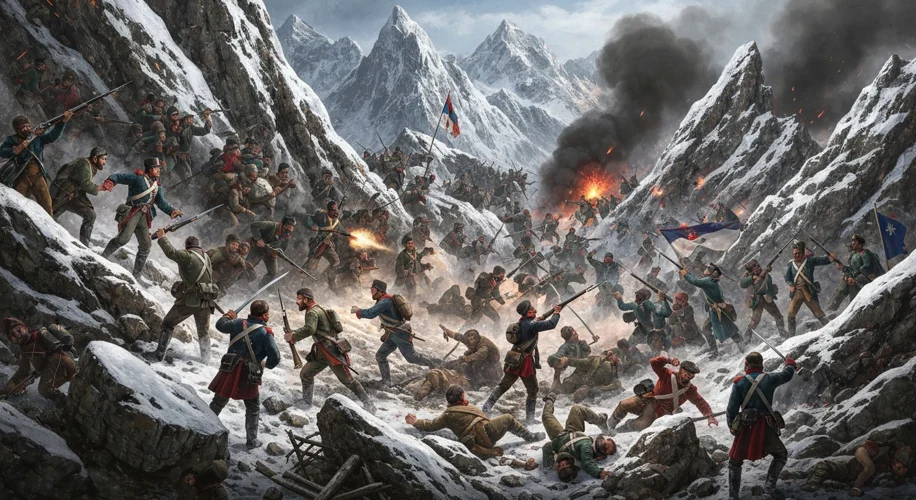
Isolated and outmaneuvered, Bulgaria was quickly defeated. The Treaty of Bucharest, signed in August 1913, imposed harsh terms on Bulgaria, stripping it of much of the territory it had gained in the first war. Serbia emerged significantly stronger and larger, its influence in the Balkans greatly enhanced, much to the alarm of Austria-Hungary.
The Echoes of Conflict: Seeds of a Wider War
The Balkan Wars, though seemingly regional conflicts, sent shockwaves across Europe. They demonstrated the terminal decline of the Ottoman Empire, shifting the balance of power and emboldening nationalist movements.
More critically, the wars exacerbated existing rivalries and created new ones. Serbia’s increased power and its irredentist ambitions directly threatened Austria-Hungary, which had a large and restive South Slav population. The Austro-Hungarian Empire saw Serbia as a destabilizing force, a threat that needed to be contained, if not eliminated. Bulgaria’s humiliation and desire for revenge also created a volatile element in the region.
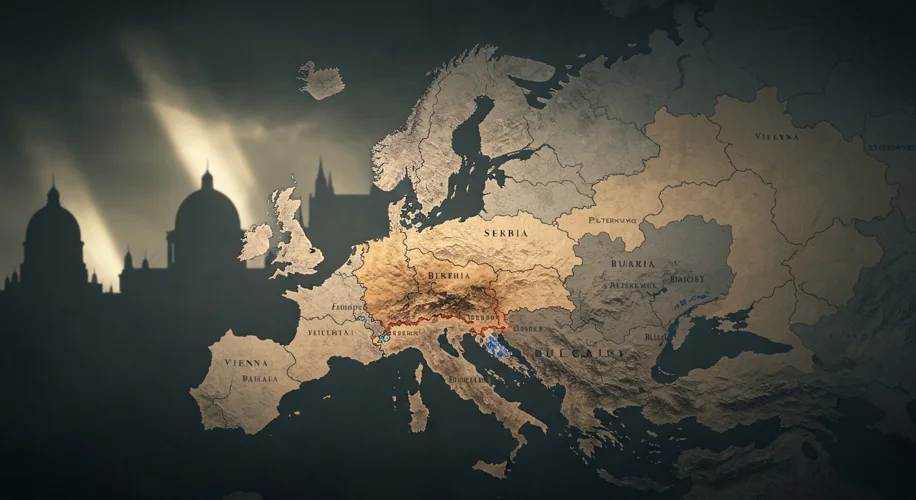
When Archduke Franz Ferdinand of Austria-Hungary was assassinated in Sarajevo in June 1914 by a Bosnian Serb nationalist, the pre-existing tensions, inflamed by the Balkan Wars, proved to be the tinder that ignited the devastating inferno of World War I. The great powers, entangled in a web of alliances and fueled by imperial ambitions, were drawn into the conflict, with the Balkans serving as the initial spark.
The Balkan Wars were a stark reminder of how quickly local disputes can escalate into international crises, a lesson etched in blood and territory on the volatile landscape of southeastern Europe. They were not just wars over land; they were wars over identity, ambition, and the very future of empires and nations, setting the stage for the deadliest conflict the world had yet seen.