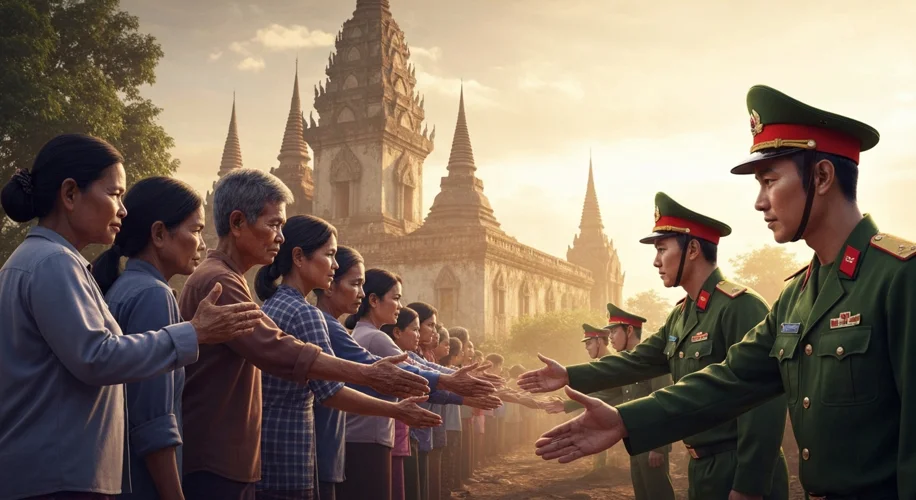
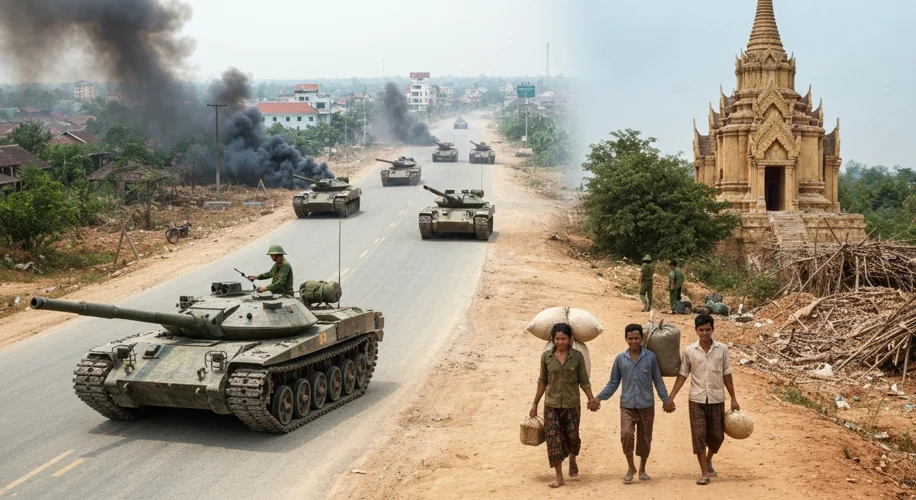
The year is 1978. Cambodia, known then as Democratic Kampuchea, is a land shrouded in terror. The Khmer Rouge, led by Pol Pot, has transformed a nation into a death camp, orchestrating the Cambodian genocide. Millions have perished under their radical agrarian ideology. Yet, even in this landscape of utter devastation, a new conflict brewed, one that would pit former allies against each other and redraw the geopolitical map of Southeast Asia.
The roots of this conflict lay deep in the shared history and ideological fervor of the Indochina Wars. For years, Vietnam and the Khmer Rouge had fought side-by-side against the United States and its allies. However, as the dust settled in 1975, the fragile alliance fractured. Pol Pot’s regime, fueled by a virulent nationalism and a deep suspicion of its larger neighbor, launched brutal cross-border raids into Vietnam, massacring Vietnamese civilians and seizing territory. These attacks, coupled with Vietnam’s own growing regional ambitions and a desire to secure its borders, set the stage for a devastating confrontation.
The key players were Vietnam, led by its pragmatic and battle-hardened Communist Party, and the Khmer Rouge, a regime driven by an almost unfathomable cruelty. From Vietnam’s perspective, the raids were an intolerable provocation, a direct threat to its sovereignty and a challenge to its vision of a stable, communist-led Indochina. For the Khmer Rouge, Vietnam was an expansionist power, a threat to Khmer identity and independence. Their actions, however, were also a desperate attempt to project power amidst their internal chaos and a twisted fulfillment of their revolutionary zeal.
On December 25, 1978, the storm broke. Vietnam, with overwhelming force and the support of defecting Khmer Rouge soldiers, invaded Cambodia. The invasion was swift and decisive. Within weeks, Phnom Penh, the Cambodian capital, fell, and the Khmer Rouge leadership, including Pol Pot, were forced to flee into the jungles along the Thai border. Vietnam installed a new government, the People’s Republic of Kampuchea, led by Heng Samrin, a former Khmer Rouge commander who had defected.
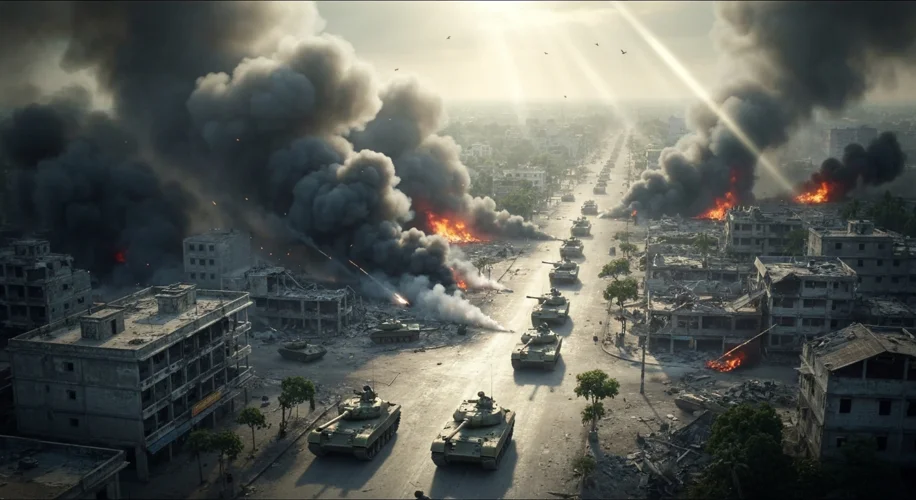
What began as a swift invasion to overthrow a genocidal regime quickly morphed into a protracted and brutal conflict. The Khmer Rouge, though defeated militarily, regrouped and launched a tenacious guerrilla insurgency. They were supported by a motley coalition, including China, the United States, and other ASEAN nations, who feared Vietnam’s growing influence and saw it as a Soviet proxy. This international support, while varying in intensity, allowed the Khmer Rouge to sustain their fight for over a decade.
The war’s impact on Cambodia was catastrophic. While the Vietnamese invasion ended the immediate horrors of the Khmer Rouge regime, it ushered in an era of occupation and continued conflict. The country was devastated by years of genocide followed by over a decade of war. Infrastructure was destroyed, the economy was in ruins, and the population was traumatized. The protracted insurgency meant that for millions of Cambodians, the suffering only deepened. The fear of the Khmer Rouge, coupled with the presence of foreign troops, created a climate of deep instability.
For Vietnam, the war was a costly victory. While they achieved their primary objective of removing the Khmer Rouge and securing their western flank, they incurred significant international condemnation and economic isolation. The occupation of Cambodia became a drain on resources and a source of constant friction, particularly with China, leading to a brief but sharp Sino-Vietnamese border war in 1979. The war also solidified Vietnam’s image as a regional power, but one that was increasingly dependent on Soviet support.
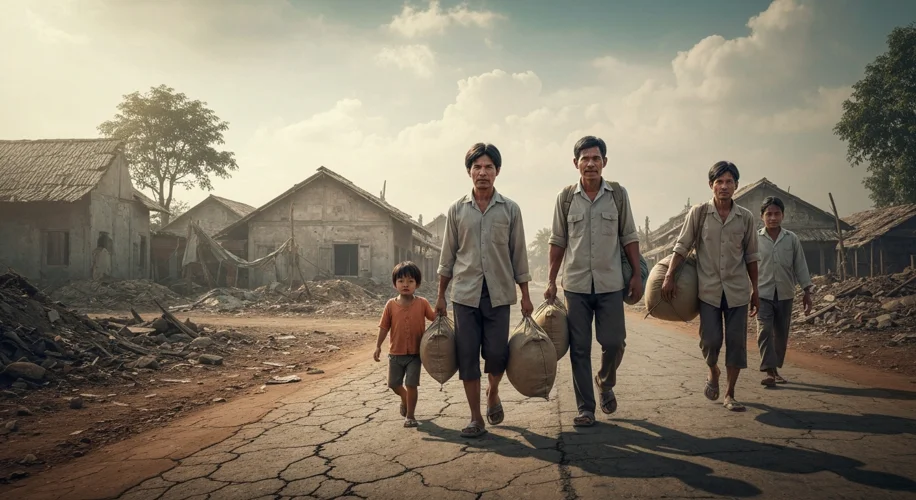
The Cambodian–Vietnamese War, lasting from December 1978 to May 1989, was a complex and tragic chapter in Southeast Asian history. It was a conflict born from the ashes of genocide, fueled by historical grievances, and shaped by Cold War geopolitics. While Vietnam’s intervention undeniably saved countless lives from the Khmer Rouge’s immediate barbarity, it also prolonged Cambodia’s agony and created a new set of challenges. The war’s legacy is one of immense suffering, a stark reminder of the devastating consequences of unchecked nationalism, ideological extremism, and international power plays on the lives of ordinary people. The scars of this conflict, both visible and invisible, continue to shape Cambodia and the region to this day.