
For centuries, the name Yahweh has echoed through religious texts and traditions, conjuring images of a singular, all-powerful God. Yet, the story of Yahweh is far more complex, a captivating narrative of evolution, adaptation, and profound transformation. Long before the firm establishment of monotheism, Yahweh’s identity was fluid, shaped by the vibrant polytheistic and henotheistic landscapes of the ancient Near East. Journey with us as we unearth the archaeological and textual evidence that sheds light on the early, often surprising, depictions of this ancient deity.
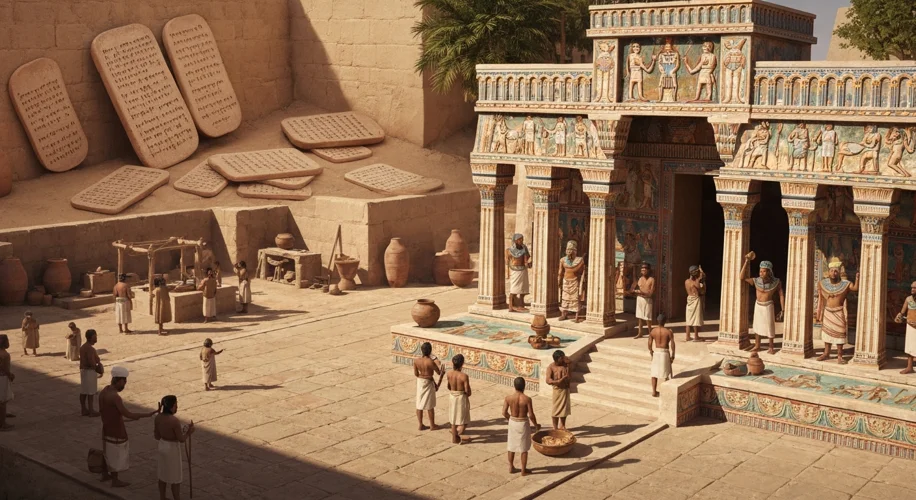
Imagine the bustling city of Ugarit, on the Syrian coast, around the 14th century BCE. Here, amidst the grandeur of temples and the intricate cuneiform script, we find the earliest extrabiblical mentions of a deity named ‘Yw.’ This name, strikingly similar to Yahweh, appears in texts alongside a pantheon of other gods, including El, the head of the Canaanite pantheon, and Baal, the god of storms and fertility. This discovery, found on clay tablets unearthed in the ancient city, suggests that Yahweh, or a precursor to the name, was once part of a diverse divine family.
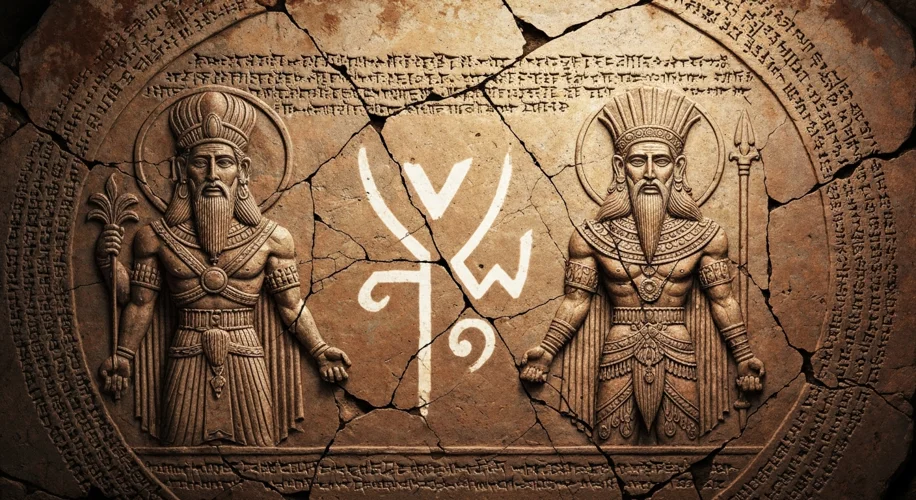
The biblical narrative often presents a stark contrast to this polytheistic environment, emphasizing a unique covenant between Yahweh and the Israelites. However, the historical context reveals a more nuanced reality. Early Israelite religion did not spring fully formed into monotheism. Instead, it likely engaged in a process known as henotheism, where one god is worshipped above all others, but the existence of other deities is not necessarily denied. This is akin to a powerful family head who is clearly the most important, but other family members, though less prominent, still exist.
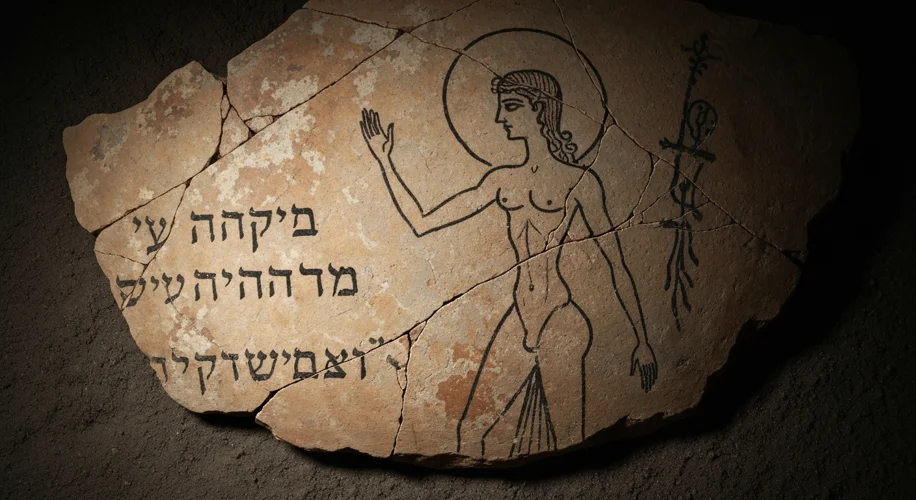
Consider the inscriptions found at Kuntillet Ajrud, a remote desert site in the Sinai Peninsula, dating to the 8th century BCE. Here, archaeologists discovered pottery fragments adorned with drawings and inscriptions. Among these, some depict figures accompanied by inscriptions that scholars interpret as “Yahweh of Samaria and his Asherah.” This ‘Asherah’ was a prominent goddess in the Canaanite pantheon, often considered the consort of El. The presence of Yahweh alongside his Asherah suggests that for many Israelites, Yahweh was not yet the solitary, genderless deity of later traditions. He was a god with a divine consort, part of a broader divine family, even if he held a place of supreme importance.
This evolving understanding of Yahweh is also reflected in the biblical texts themselves. Early poems, like the Song of Deborah in Judges 5, portray Yahweh as a warrior god, emerging from the southern mountains (Seir) and Sinai, actively participating in battles alongside his people. He is depicted as a powerful, almost elemental force, a divine champion leading his followers to victory. There are even passages that hint at a divine council, where Yahweh presides over other heavenly beings, further underscoring a less absolute, more relational understanding of the divine.
As centuries passed, and particularly with the prophetic movement and the Babylonian exile (6th century BCE), the concept of Yahweh underwent a dramatic shift. Prophets like Isaiah and Jeremiah vehemently denounced the worship of other gods, emphasizing Yahweh’s unique sovereignty and demanding exclusive allegiance. The trauma of exile, the destruction of Jerusalem, and the scattering of the people became a crucible, forging a new understanding of Yahweh – a God not tied to a specific land or sanctuary, but transcendent and universal.
This period marks the transition from henotheism to true monotheism. The idea of other gods faded, and Yahweh became the one and only God. His attributes expanded to encompass creation, justice, and mercy on a cosmic scale. The once-warrior god of the early tribes evolved into the supreme creator and sustainer of the universe, a God of all humanity, not just of Israel.

The journey of Yahweh is a testament to the dynamic nature of religious belief. It demonstrates how deities and their attributes can evolve over time, influenced by cultural exchange, political upheaval, and the evolving spiritual needs of a people. By examining the archaeological finds and the subtle shifts within ancient texts, we gain a richer, more profound appreciation for the complex origins of one of the world’s most influential deities. Yahweh’s story is not just the story of a god; it is the story of a people, their struggles, their triumphs, and their enduring quest for the divine.