
The air in Boston’s North End on January 15, 1919, was thick with anticipation. It was a crisp winter afternoon, and the usual cacophony of the city—the clatter of horse-drawn carts, the distant clang of trolleys, the shouts of vendors—was punctuated by a low, ominous rumble. Few could have predicted that this sound, growing louder by the second, would herald one of the most bizarre and tragic disasters in American history.
At the heart of the unfolding catastrophe was a colossal, 50-foot-tall steel tank, a behemoth of industrial might situated on Commercial Street. Within its confines sloshed an unimaginable quantity of molasses – an estimated 2.3 million gallons, destined for industrial alcohol production, a key ingredient in munitions during the Great War, which had recently ended.
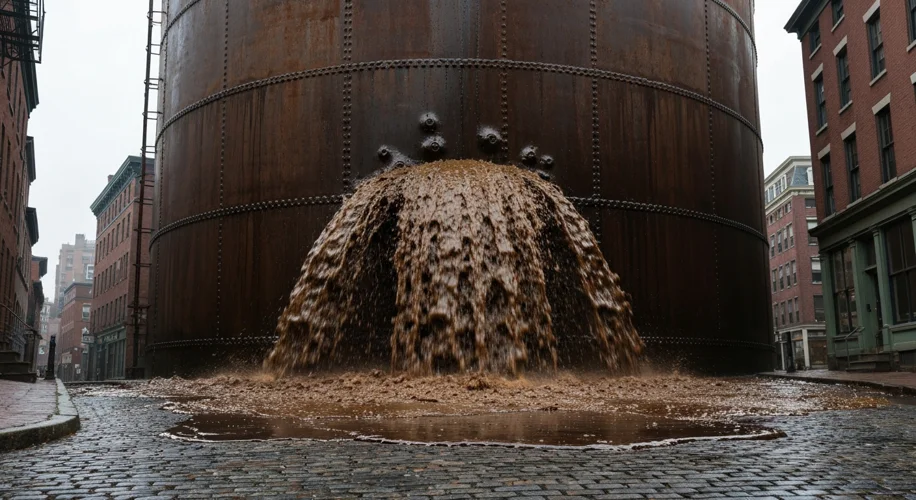
The tank, owned by the Purity Distilling Company, was a hastily constructed behemoth, erected in 1915. Rushed construction and a lack of rigorous testing were hallmarks of its creation. Locals had long voiced concerns, complaining of groaning sounds and even molasses seeping from the tank’s seams, a testament to its poor construction and the immense pressure it contained. Some even claimed to have painted the tank to try and hide the leaks, a desperate, futile act against the inevitable.
The rumble intensified, a monstrous growl that sent people scrambling. Then, with a deafening roar, the tank burst. It wasn’t a gentle leak; it was an explosion. The rivets, weakened by rust and stress, gave way, and the immense volume of molasses, propelled by the immense pressure, erupted outwards. It was a wave, not of water, but of thick, viscous, brown goo, moving at an estimated 35 miles per hour.
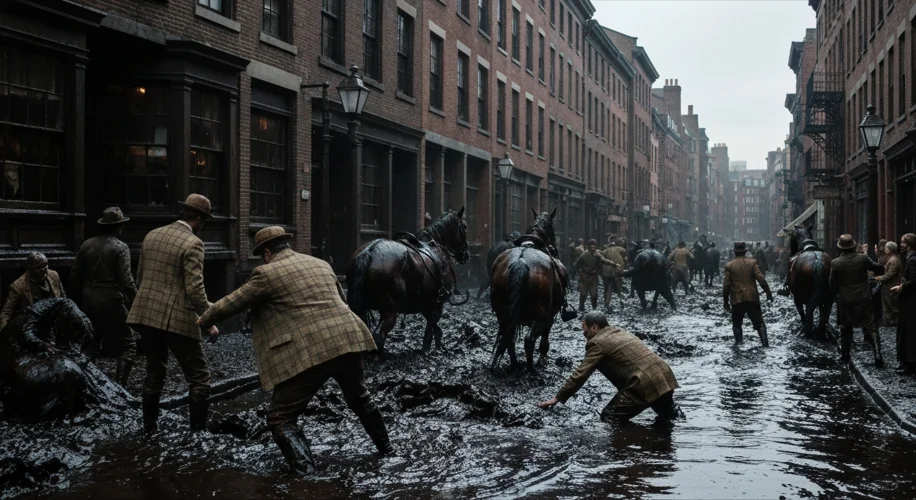
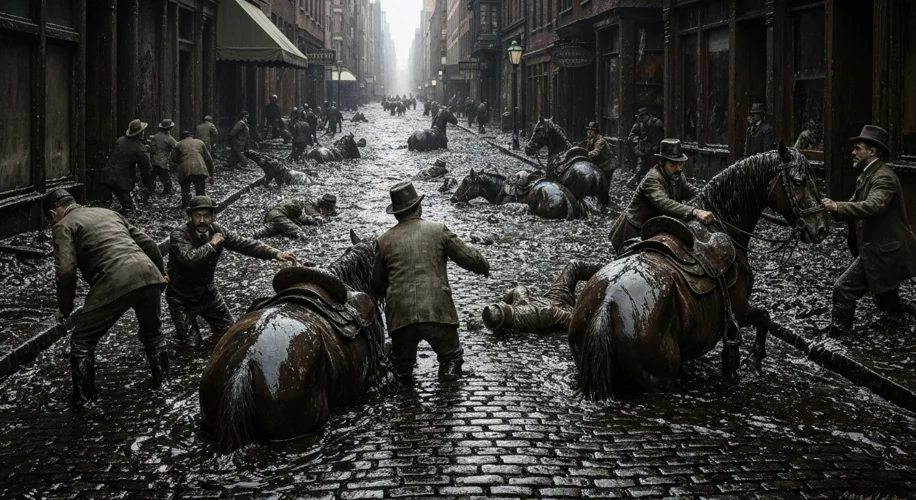
Witnesses described a terrifying spectacle: a tsunami of molasses, between 15 and 25 feet high, engulfing everything in its path. Buildings were flattened, horses were trapped and drowned, and people were swept off their feet, suffocating in the sticky tide. The sheer force of the wave could snap the thick wooden beams of buildings and carry locomotives off their tracks.
“The wave struck with the force of a tidal wave,” recalled one survivor, Michael Donohoe, a foreman at the nearby fire station. “It simply pulverized everything in its way.” Another witness, Agnes O’Malley, described the horror of seeing her brother, a dockworker, engulfed by the sticky mass.
The immediate aftermath was a scene of surreal horror. Rescuers, including firefighters and police, struggled to navigate the thick, clinging molasses. Horses that had survived the initial onslaught were trapped, their cries a desperate soundtrack to the unfolding tragedy. The air, once smelling faintly of the sweet commodity, was now choked with the cloying, suffocating odor of death.
It took hours, and then days, to pull victims from the viscous embrace of the molasses. The sheer stickiness made rescue efforts a Herculean task. The molasses solidified in the cold air, trapping bodies and making it difficult to even reach the victims. The cleanup operation was immense, taking weeks and involving hundreds of people, hosing down streets and buildings with saltwater from fireboats to try and wash away the sticky residue.
In the end, 21 people lost their lives, and over 150 were injured. The economic impact was also significant, with damage estimated at $600,000 in 1919 dollars (over $9 million today). The Purity Distilling Company, a subsidiary of United States Industrial Alcohol, initially tried to blame anarchists, a common scapegoat in the Red Scare era. However, a lengthy class-action lawsuit, one of the first of its kind in Massachusetts, ultimately found the company liable.
The Great Molasses Flood stands as a stark reminder of the unchecked ambitions and the potential for disaster when safety is sacrificed for profit. It highlighted the critical importance of proper engineering, rigorous inspection, and accountability in industrial practices. The sweet, sticky substance that fueled industry became, for one horrific afternoon, a deadly weapon, forever etching its place in Boston’s history as a testament to the unpredictable and sometimes sticky nature of progress.
The disaster also had a curious, lasting impact on how Boston smelled. For decades after the event, on hot summer days, residents claimed they could still catch a faint whiff of molasses in the air, a spectral reminder of the day the sweet tide turned deadly.