
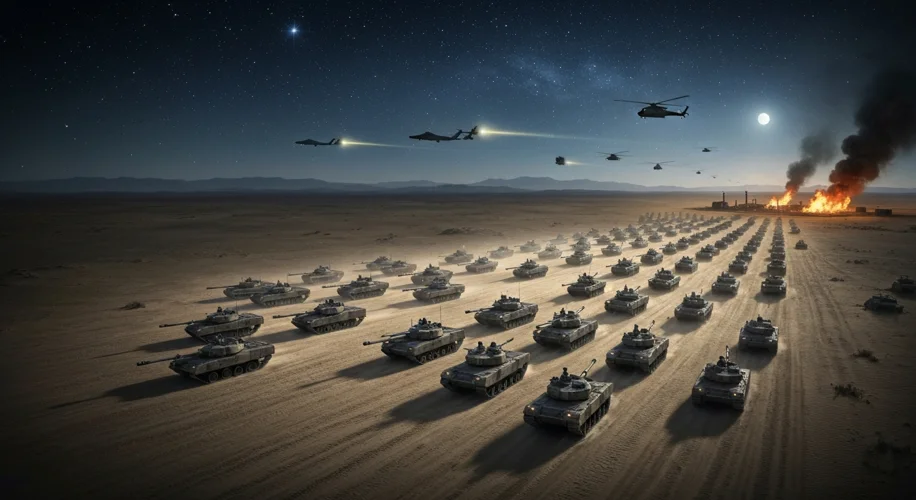
The air hung thick and heavy over the Kuwaiti desert, a suffocating blanket of heat and anticipation. It was January 17, 1991, and the world held its breath. For months, the world had watched with growing alarm as Iraq, under the iron fist of Saddam Hussein, had swallowed its tiny neighbor, Kuwait, whole. The annexation, a brazen act of aggression on August 2, 1990, sent shockwaves through the international community, igniting fears of a wider conflagration that could engulf the vital oil-producing region.
Iraq’s invasion wasn’t just a territorial grab; it was a strategic gamble. Hussein believed his modernized army, battle-hardened from the protracted Iran-Iraq War, was invincible. He aimed to control a significant portion of the world’s oil reserves, cripple his regional rival Saudi Arabia, and perhaps even seize its oil fields, thus holding the global economy hostage. His rhetoric was defiant, his actions audacious, and his miscalculations, as history would soon reveal, were colossal.
The global response was swift and unified. The United Nations Security Council, a rare display of post-Cold War consensus, condemned Iraq’s actions and demanded its immediate withdrawal. When Baghdad refused, a formidable coalition of 35 nations, spearheaded by the United States, began to mobilize. Operation Desert Shield, the defensive buildup in Saudi Arabia, was a spectacle of military might, a clear signal that Saddam Hussein’s gamble would not pay off unchallenged.
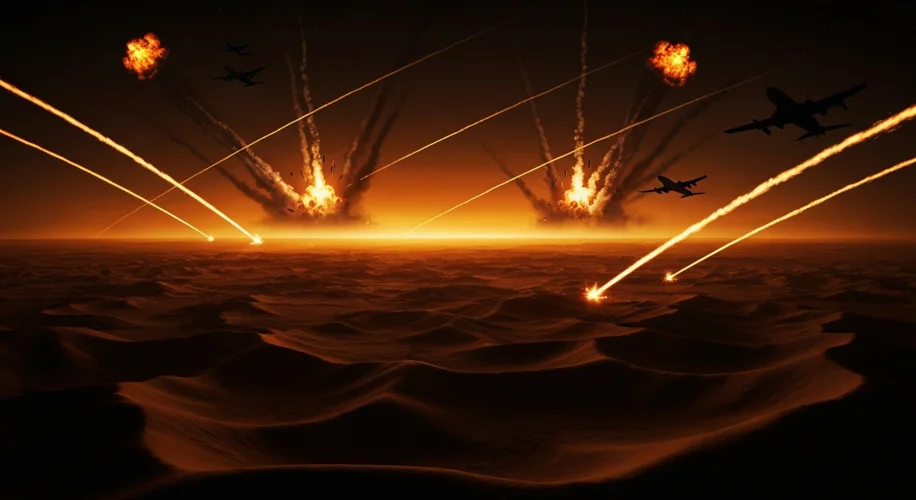
The coalition forces, a tapestry of uniforms from North America, Europe, and Asia, amassed along the Saudi-Kuwaiti border. Their objective: Operation Desert Storm, the offensive campaign to liberate Kuwait and restore its sovereignty. The air campaign, launched with devastating precision, was a symphony of destruction aimed at crippling Iraq’s military infrastructure. Stealth bombers and fighter jets hammered command centers, airfields, and missile launch sites, while cruise missiles, like relentless harbingers of doom, found their targets deep within Iraq.
But the war was not one-sided. Iraq retaliated with Scud missile attacks, launching them indiscriminately into civilian areas of Saudi Arabia and Israel. These were not strategic weapons; they were terror weapons, designed to sow fear and provoke wider regional conflict. The Patriot missile defense system, a marvel of modern technology, intercepted many of these incoming threats, but the psychological impact was immense.
The ground war, when it finally commenced on February 24, 1991, was a rapid and decisive affair. Coalition forces, employing brilliant maneuver warfare tactics, outflanked Iraqi defenses with astonishing speed. The famed ‘left hook’ by U.S. and allied armored divisions sliced through Iraqi lines, encircling much of Saddam’s army. The Iraqi military, demoralized, outgunned, and lacking air cover, crumbled. The liberation of Kuwait was swift, a testament to the coalition’s overwhelming technological and tactical superiority.
The war, though relatively short, left an indelible mark on the region and the world. Kuwait was free, but the cost was immense. The Iraqi military machine was shattered, but Saddam Hussein remained in power, his defiance undimmed. The coalition’s victory solidified the United States’ position as the preeminent global superpower, capable of projecting power across vast distances and commanding international cooperation.
The consequences, however, were complex and far-reaching. The war exacerbated existing sectarian tensions and contributed to the rise of extremist ideologies in the region. The sanctions imposed on Iraq, while intended to prevent rearmament, caused immense suffering to the Iraqi civilian population. The war also ushered in a new era of military intervention, setting precedents for future conflicts in the Middle East.
Desert Storm was more than just a military conflict; it was a turning point. It demonstrated the power of international cooperation in the face of aggression, but it also laid bare the intricate and often brutal realities of geopolitics. The echoes of those sand-swept battles continue to resonate today, a stark reminder of the fragile peace and complex challenges that continue to define the Middle East.