The word ‘apocalypse’ conjures images of fire, brimstone, and the dramatic end of the world. But what happens when we apply this potent concept to the vast, complex tapestry of human history? Do entire civilizations truly collapse in a single, cataclysmic event, or is the reality far more nuanced, often painted with strokes of oversimplification?
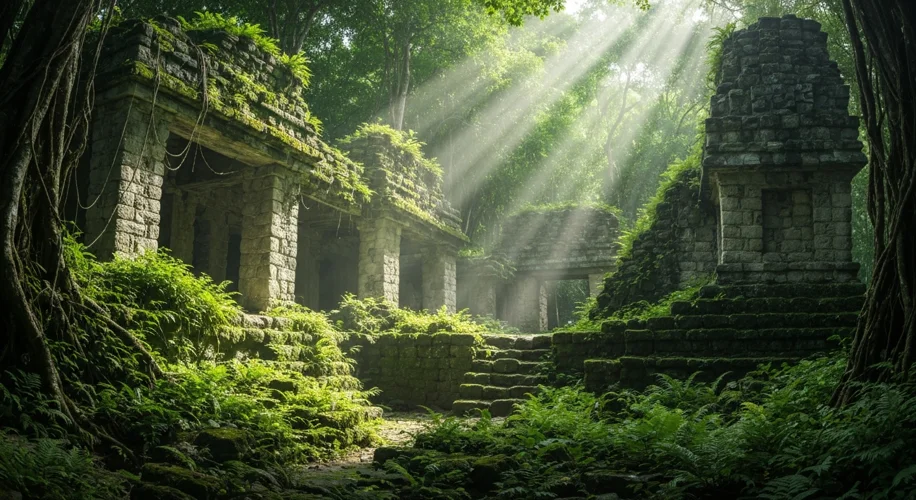
Let us journey back, not to the fiery pronouncements of future doom, but to the lived experiences of societies that, in their time, faced what they perceived as an existential crisis. Consider the fate of the Maya civilization. For centuries, their magnificent city-states flourished, marked by intricate calendars, soaring pyramids, and a sophisticated understanding of astronomy. Then, around the 9th century CE, something shifted. The great urban centers of the southern Maya lowlands, like Tikal and Calakmul, began to depopulate. Structures were left unfinished, inscriptions ceased, and the once-vibrant plazas fell silent, eventually reclaimed by the relentless jungle.
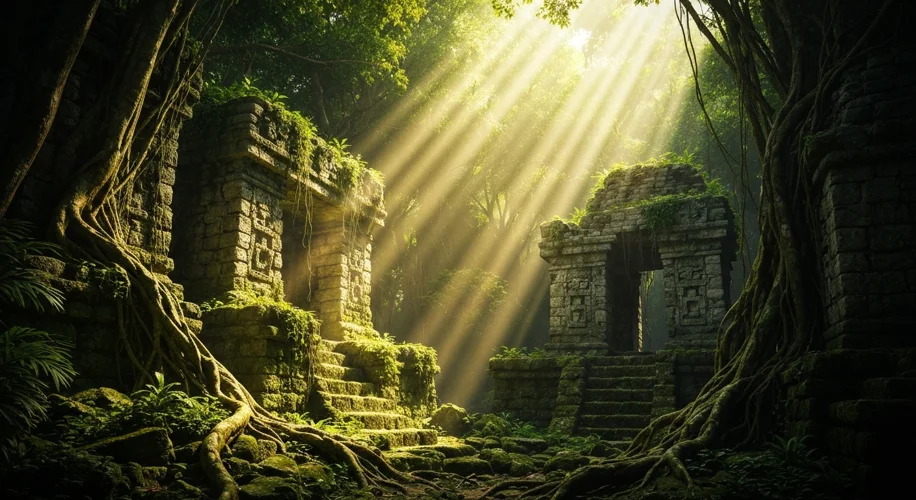
Was this an ‘apocalypse’? The popular imagination might leap to such a conclusion. However, historians and archaeologists point to a confluence of factors, not a single apocalyptic event. A prolonged period of drought, exacerbated by intense agricultural practices and deforestation, likely strained resources to their breaking point. Coupled with endemic warfare between city-states, social unrest, and possibly the breakdown of trade networks, these pressures gradually eroded the Maya’s complex societal structure. The ‘collapse’ was not a sudden implosion but a slow, agonizing unraveling, a process that played out over decades, if not centuries. Crucially, the Maya did not vanish. Their descendants continue to thrive today, carrying forward their rich cultural heritage, a testament to resilience rather than absolute annihilation.
Another fascinating, and often misunderstood, example is the Bronze Age Collapse, a period of widespread societal breakdown that occurred around the late 13th and early 12th centuries BCE across the Near East, Aegean, and Eastern Mediterranean. Great empires like the Mycenaeans in Greece, the Hittites in Anatolia, and even the powerful New Kingdom of Egypt experienced severe disruption. Cities were destroyed, trade routes severed, and literacy declined dramatically in many regions. For a time, this period was characterized by a ‘dark age,’ a supposed regression of civilization.
Again, the idea of a singular ‘apocalypse’ is too simplistic. The late Bronze Age was a complex, interconnected world, and its collapse was likely triggered by a domino effect. A confluence of factors is generally accepted: invasions by new groups of people, often referred to as the ‘Sea Peoples’; internal rebellions and social unrest; natural disasters like earthquakes and prolonged droughts; and the disruption of vital trade in metals like copper and tin, which were essential for Bronze Age technology. The interconnectedness that had fueled prosperity also made the entire system vulnerable to cascading failures.
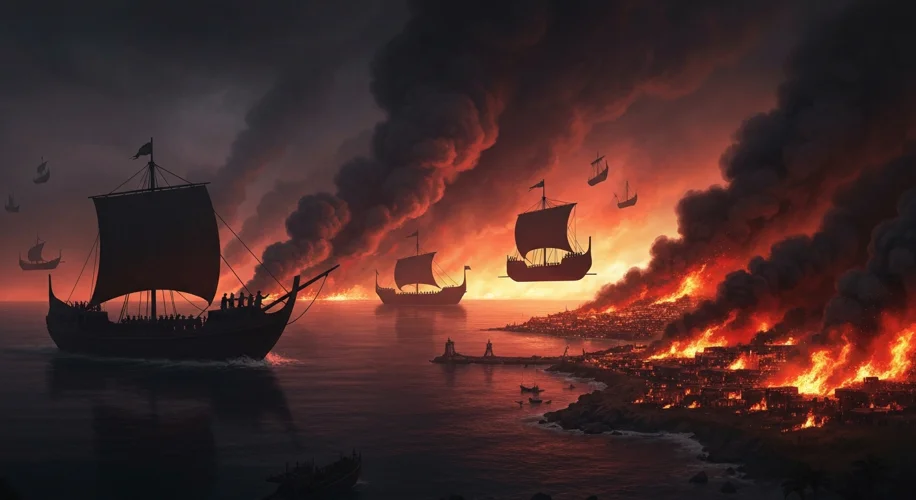
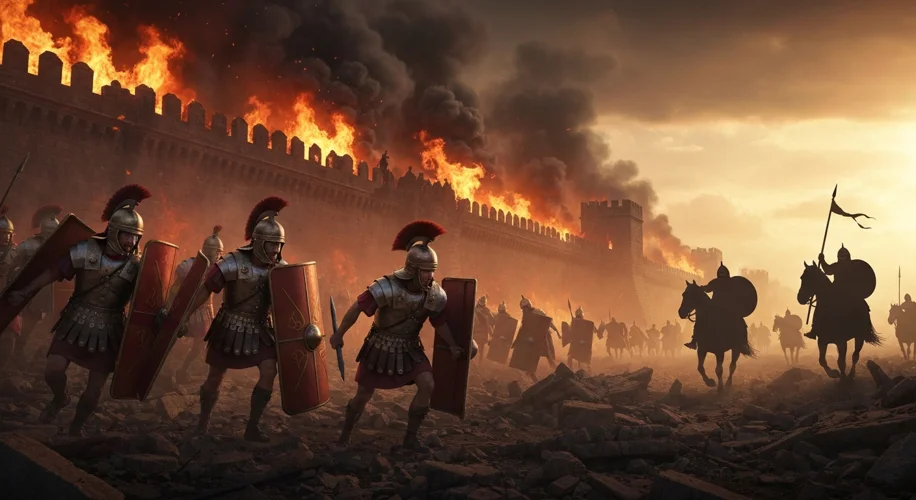
Imagine the scene: smoke rising from sacked cities, once-proud palaces reduced to rubble, and a populace fleeing their homes in search of safety, their familiar world dissolved into chaos. The interconnectedness of the Late Bronze Age world meant that a crisis in one region could quickly destabilize others.
The danger of labeling these events as mere ‘apocalypses’ lies in their tendency to obscure the agency and adaptability of the people involved. When we frame history as a series of inevitable dooms, we risk diminishing the human stories of struggle, adaptation, and survival. The fall of a city or the fragmentation of an empire is not an end, but often a transition. New political entities emerged from the ruins, new technologies were developed, and new cultural syntheses were forged.
Consider the Western Roman Empire. Its ‘fall’ in 476 CE is a date etched into the annals of history, often portrayed as a definitive apocalypse. Yet, this narrative ignores the centuries of gradual decline, the internal political strife, the economic pressures, and the gradual migration and assimilation of various peoples into its territories. The ‘fall’ was more of a long, drawn-out transformation. The Eastern Roman Empire, later known as the Byzantine Empire, persisted for another thousand years, carrying forward Roman traditions and administration. Moreover, the Germanic kingdoms that rose in the West were not simply barbarians destroying a civilization; they were, in many ways, building upon its foundations, adapting its laws, and contributing to the formation of new European identities.
History is replete with such instances. The popular notion of the ‘end of the world’ or the ‘collapse of civilization’ often overlooks the resilience, innovation, and reinvention that characterizes human societies. These events were not tidy conclusions but messy, protracted periods of change. To label them as simple apocalypses is to flatten complex historical processes and to miss the crucial lessons about societal vulnerability, the interconnectedness of human systems, and, perhaps most importantly, the enduring capacity for humanity to adapt and rebuild, even in the face of profound upheaval.
As we look at the challenges facing our own world today – from climate change to global pandemics and geopolitical instability – understanding these historical ‘apocalypses’ is not about predicting our doom, but about learning from the intricate dance of collapse and continuity that has defined human history for millennia. It is a reminder that endings are often beginnings in disguise, and that the human story is rarely as simple as a single, catastrophic end.