
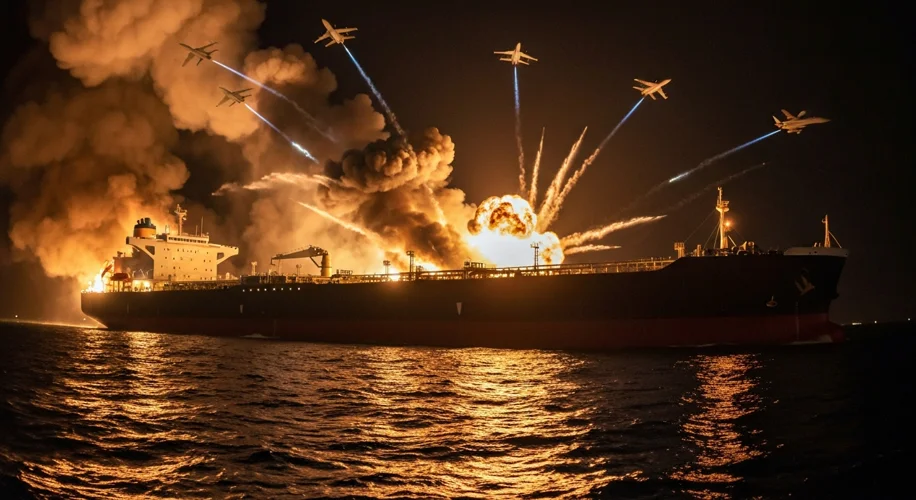
The year is 1984. The Iran-Iraq War, a brutal and seemingly endless conflict, has spilled onto the waters of the Persian Gulf. What began as a border dispute between two neighboring nations had, by this point, morphed into a desperate, attritional struggle, and the oil-rich waters became a new, terrifying battleground. This was the era of the Tanker War, a period where the very arteries of global commerce became targets, transforming the vital shipping lanes into a terrifying theater of naval warfare.
Imagine the scene: the vast, shimmering expanse of the Persian Gulf, a strategic chokepoint for the world’s oil supply. Suddenly, the sky is rent by the fiery trail of a missile. A supertanker, a behemoth of industry carrying millions of barrels of crude oil, erupts in flames. Black smoke billows into the sky, a grim monument to the escalating conflict. This was not an isolated incident; it was a chillingly regular occurrence throughout the latter half of the 1980s.
The roots of this conflict lay in the volatile aftermath of the Iranian Revolution of 1979 and Saddam Hussein’s opportunistic invasion of Iran in 1980. Iraq, initially confident of a swift victory, found itself bogged down in a protracted war of attrition. Iran, fueled by revolutionary fervor and a desire to export its Islamic revolution, proved a resilient foe. As the land war stalemated, both sides sought new ways to cripple their enemy and, crucially, to pressure international powers to intervene or at least take sides.
The strategy was brutally simple: attack each other’s oil infrastructure and, by extension, the flow of oil that sustained their economies and indeed, the global economy. Iran targeted Iraqi oil terminals and tankers traversing the Gulf, while Iraq retaliated with its own air and missile attacks against Iranian oil facilities and any vessel perceived to be aiding Iran. This tit-for-tat escalation soon drew in external powers.
The United States, concerned about the stability of oil supplies and the potential for Soviet influence, began to escort oil tankers through the Strait of Hormuz. This intervention, however, was a double-edged sword. While aimed at protecting shipping, it also increased the risk of direct confrontation. Naval vessels became targets, and the conflict broadened beyond a simple Iran-Iraq naval engagement. The declaration of a “tanker exclusion zone” by both belligerents effectively declared much of the Persian Gulf a war zone, with any vessel entering it doing so at extreme peril.
The human cost was immense, not just for the soldiers and sailors involved, but for the civilian crews of the tankers. Scores of seafarers from various nations lost their lives, their dreams of returning home extinguished in a fiery inferno. The psychological toll on those who survived was equally profound. Imagine the constant tension, the fear of an incoming missile, the smell of burning oil, and the deafening roar of explosions. These were not abstract battles fought on distant shores; they were visceral, terrifying experiences at the heart of international trade.
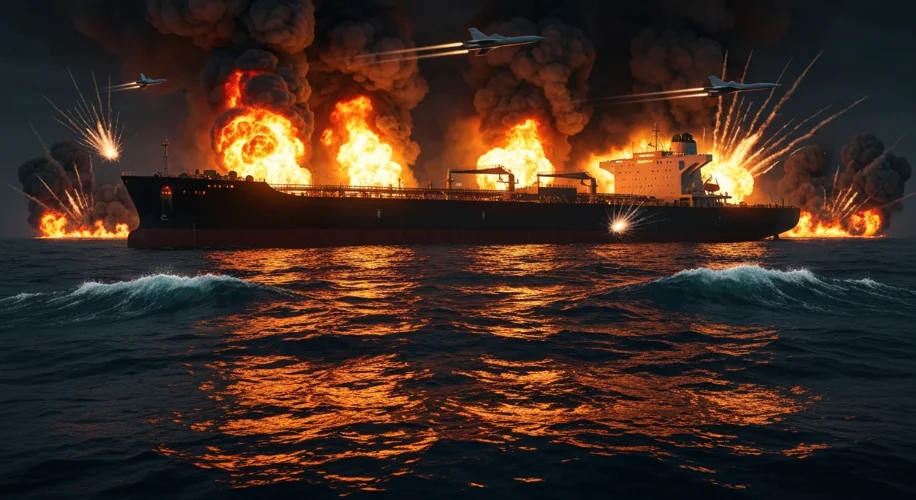
The Tanker War, officially lasting from 1984 to 1988, saw hundreds of attacks on maritime vessels. The conflict significantly disrupted global oil markets, leading to price volatility and increased insurance costs for shipping companies. It also demonstrated the devastating potential of asymmetric warfare, where a smaller naval power could inflict significant damage on global trade routes.
Beyond the immediate economic and human toll, the Tanker War had several lasting consequences. It highlighted the strategic importance of the Persian Gulf and the vulnerability of global energy supplies. The conflict also led to a significant increase in naval presence in the region, particularly by the United States, setting a precedent for future interventions. Furthermore, the willingness of both Iran and Iraq to target civilian shipping raised serious questions about international maritime law and the conduct of warfare. The war left a deep scar on the region, exacerbating existing tensions and contributing to the complex geopolitical landscape that persists to this day.
The Persian Gulf Tanker War stands as a stark reminder of how regional conflicts can have global repercussions. It was a period where the pursuit of nationalistic and ideological goals led to a brutal assault on the very lifeblood of the world economy, transforming peaceful waters into a sea of fire and fury.