The wind whispers across the arid plains of Afghanistan, carrying tales of conflict, resilience, and the relentless march of history. It is a land sculpted by the ambitions of empires and the fierce spirit of its people. In the crucible of the early 1990s, amidst the ashes of a devastating civil war and the crumbling remnants of Soviet influence, a new force began to stir.
Afghanistan in 1994 was a fractured land. The Soviet-backed government had collapsed years earlier, plunging the nation into a brutal civil war. Warlords, once allies in the fight against the Soviets, now carved out their own fiefdoms, their retinues of fighters enforcing their will through fear and violence. Cities lay in ruins, roads were unsafe, and the basic tenets of law and order had all but vanished. For ordinary Afghans, life was a daily struggle for survival, marked by widespread corruption, rampant injustice, and a deep yearning for peace and security.
It was in this desperate landscape that the Taliban, meaning “the students” or “seekers of knowledge,” emerged. Primarily drawn from the Pashtun population and many with roots in the religious seminaries (madrasas) of southern Afghanistan and northern Pakistan, their initial appeal was simple and profound: to restore order, enforce Sharia (Islamic law) with an iron fist, and end the corruption and lawlessness that plagued the country. Many saw them as a force for good, a necessary antidote to the chaos.
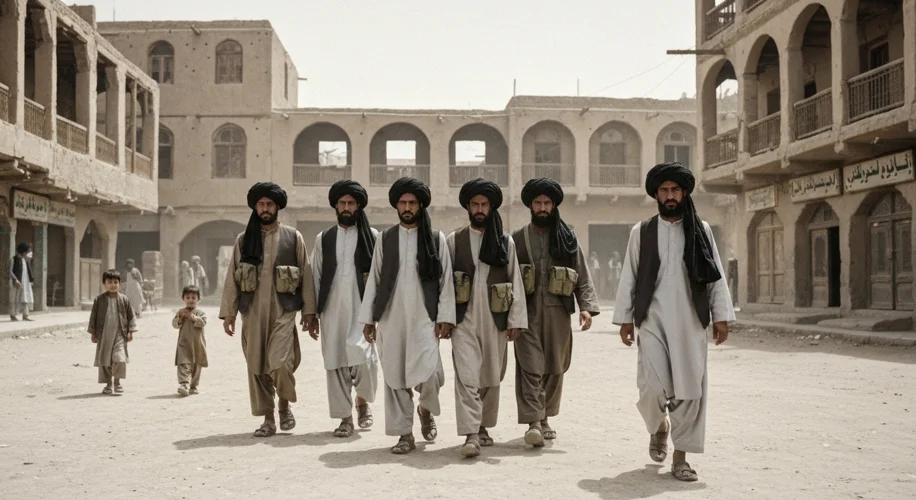
Led by the enigmatic Mullah Mohammed Omar, a one-eyed former mujahideen fighter, the movement gained rapid traction. Their early victories were swift and decisive. Sweeping through Kandahar in November 1994, they disarmed local commanders and imposed their strict interpretation of Islamic law. Their black turbans, simple dress, and unwavering discipline became their trademarks. They promised a return to a purer, more just society, free from the infighting and depredations of the warlords.
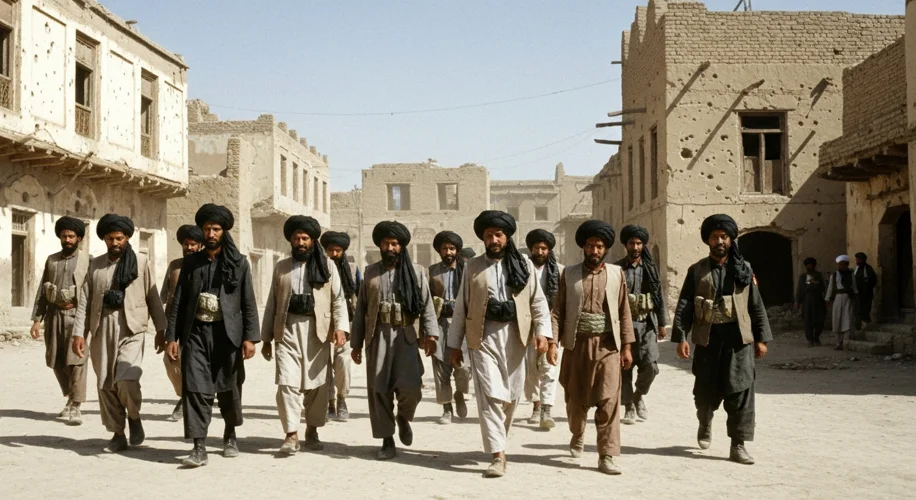
Their advance was fueled by a potent mix of religious fervor, tribal loyalties, and a narrative that resonated with a population weary of war. Neighboring Pakistan, seeking a stable, friendly regime in Kabul, also provided crucial support, both overt and covert. Saudi Arabia and the United Arab Emirates were the only other nations to officially recognize the Taliban government once they seized Kabul in September 1996.
The Taliban’s rule was characterized by a rigid imposition of Sharia law. Music was banned, television and photography were forbidden, and women were systematically stripped of their rights. Girls were denied education, and women were barred from working outside the home, unless in very specific, gender-segregated roles. Public executions, often held at the Kabul national stadium, became a grim spectacle. For many, the promised order came at an unbearable cost to freedom and human dignity.
Their control, however, was not absolute. Pockets of resistance, particularly in the north, coalesced into the United Front, led by figures like Ahmad Shah Massoud. This resistance, often supported by external powers wary of the Taliban’s ideology and regional ambitions, kept the conflict simmering for years.
The world watched with a mixture of apprehension and disinterest. The international community was slow to grasp the implications of the Taliban’s rise, preoccupied with the aftermath of the Cold War and internal conflicts. The group’s isolationist policies and severe human rights record meant they had few allies on the global stage.
The events of September 11, 2001, would forever alter the trajectory of the Taliban and Afghanistan. When al-Qaeda, harbored by the Taliban regime, launched its devastating attacks on the United States, Afghanistan became the focal point of a new global conflict. The subsequent US-led invasion in October 2001 toppled the Taliban government, but the seeds of its resurgence had already been sown, a shadow that would loom over Afghanistan for decades to come.
The rise of the Taliban is a stark reminder of how quickly a movement can emerge from the ashes of conflict, offering simple solutions to complex problems, and how the vacuum of order can be filled by forces that, while promising security, can ultimately extinguish liberty. It is a chapter of history etched in the sands of Afghanistan, a testament to the enduring quest for peace, and the tragic consequences when that quest is pursued with an unyielding, and often brutal, ideology.