

In the humid, sprawling landscape of Florida, where nature’s raw power often clashes with human ambition, a peculiar chapter in public spending unfolded. It was a project that, while intended to serve a purpose, became infamous for its exorbitant costs and questionable management, earning itself the evocative nickname: ‘Alligator Alcatraz’.
Imagine a place designed not for human incarceration, but as a sanctuary, a refuge for a unique set of creatures. The vision was grand: to create an expansive, state-of-the-art facility that would house and breed American alligators, a species that, while abundant in Florida, was facing pressures from habitat loss and hunting. This wasn’t just any zoo exhibit; it was conceived as a major conservation effort, a research hub, and a tourist attraction, all rolled into one.
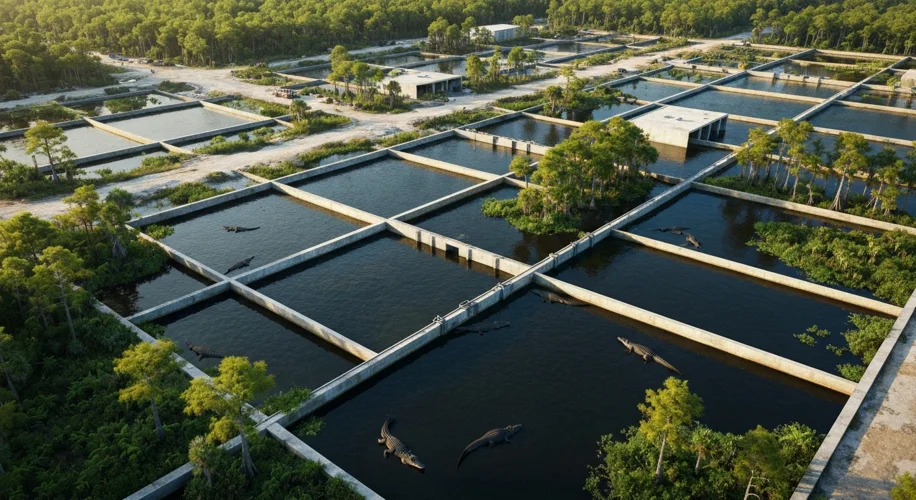
The project, which began in the early 1970s, was spearheaded by figures who envisioned Florida as a prime destination for exotic wildlife tourism and research. The allure of a massive alligator farm, capable of holding hundreds, if not thousands, of these prehistoric reptiles, was undeniable. Think of the spectacle: a controlled environment where visitors could witness the raw power of nature up close, while scientists delved into the mysteries of alligator biology and behavior. The initial investment was significant, reflecting the ambitious scale of the undertaking. Millions of dollars were earmarked for land acquisition, construction of vast enclosures, water management systems, and research facilities.
The proponents painted a picture of a thriving ecosystem, a testament to Florida’s unique biodiversity. They spoke of economic booms, job creation, and a renewed focus on conservation. The local community, eager for economic development, largely embraced the project. It was presented as a win-win: a boost for the state’s economy and a crucial step in protecting a beloved, albeit fearsome, Florida icon.
However, as the construction progressed, so did the whispers of concern. The sheer scale of the project began to strain budgets. What was initially planned as a manageable investment ballooned into a colossal expenditure. Reports began to surface detailing cost overruns, delays, and a lack of clear oversight. The grand vision started to appear more like a fiscal black hole.
The nickname ‘Alligator Alcatraz’ began to surface not because of the alligators themselves, but because of the way the project seemed to be imprisoning public funds. Critics argued that the money could have been better allocated to more pressing needs or to smaller, more manageable conservation initiatives. Questions arose about the financial acumen of those managing the project, and whether the projected revenues from tourism and research were realistic.
There were reports of elaborate, and expensive, systems for managing water flow and temperature, designed to mimic natural habitats on an unprecedented scale. While technically impressive, these features added layers of complexity and cost. The research facilities, too, were state-of-the-art, reflecting a desire to be at the forefront of herpetological science. But again, the price tag for this cutting-edge equipment and the specialized personnel required to operate it was astronomical.
The project’s ultimate fate was a slow, agonizing decline. Financial mismanagement, coupled with shifting public priorities and a failure to attract the anticipated level of tourism and scientific interest, led to its eventual closure. The grand enclosures, once teeming with the promise of conservation and spectacle, were left partially completed or fell into disrepair. The millions invested, a substantial portion of them taxpayer dollars, were largely a sunk cost, a testament to a dream that soured.
What remained was a cautionary tale. ‘Alligator Alcatraz’ became a symbol of how ambitious public projects, even those with noble intentions, can falter when financial planning is inadequate, oversight is weak, and the allure of grandiosity overshadows practical execution. It serves as a stark reminder that while vision is essential, fiscal responsibility and diligent management are the true architects of lasting success. The alligators, for their part, likely remained unfazed, continuing their ancient existence in the Florida wilds, oblivious to the human drama of spending and mismanagement that briefly, and expensively, sought to capture their essence.
Key Takeaways:
- Financial Overruns: The project suffered from massive cost overruns, significantly exceeding its initial budget.
- Management Issues: Questions were raised about the financial management and oversight of the project.
- Unmet Expectations: The anticipated tourism and research revenue failed to materialize, contributing to the project’s downfall.
- Symbol of Waste: ‘Alligator Alcatraz’ became a cautionary example of government spending gone awry.