
In the annals of scientific discovery, few tales are as compelling as the accidental unveiling of penicillin. It’s a story that begins not with a grand design, but with a moment of untidiness in a London laboratory and ends with the salvation of millions.
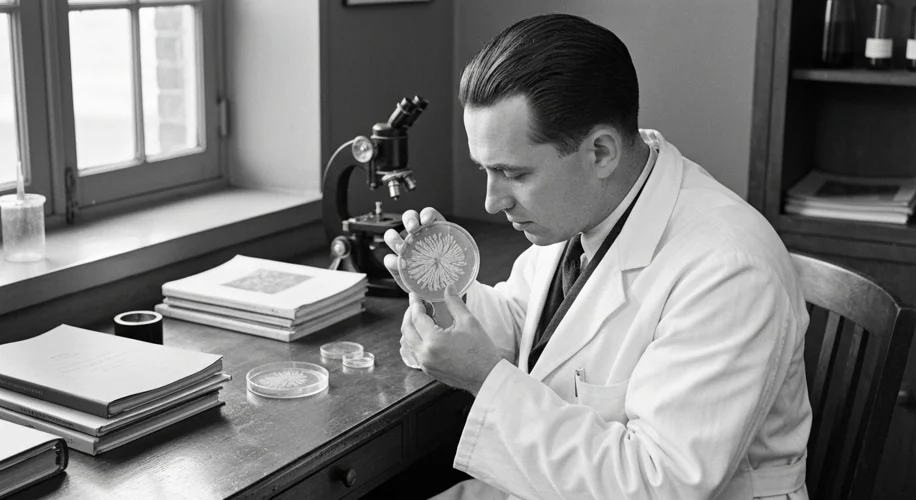
Our protagonist is Sir Alexander Fleming, a bacteriologist at St. Mary’s Hospital. By 1928, Fleming was already a respected scientist, known for his work in identifying antiseptics. Yet, he was also, by his own admission, a rather untidy researcher. This trait, often a bane in meticulous scientific pursuits, would, in a twist of fate, become the very catalyst for one of the most significant breakthroughs in human history.
Fleming had been studying Staphylococcus, a common bacterium responsible for a myriad of infections, from minor skin ailments to life-threatening pneumonia. He had left several petri dishes, each containing a culture of these bacteria, scattered on his workbench. It was late summer, and Fleming, like many scientists of his time, was preparing to take a much-needed holiday. Before departing, he left these cultures unattended, a decision that would have profound consequences.
Upon his return in September, the laboratory was a mess, just as he’d left it. As he began the tedious task of sorting through the contaminated dishes, one in particular caught his eye. This dish, unlike the others, was not entirely covered in the familiar fuzzy colonies of Staphylococcus. Instead, a peculiar blue-green mold had contaminated the culture, and around it, the bacteria had been obliterated, forming a clear halo.
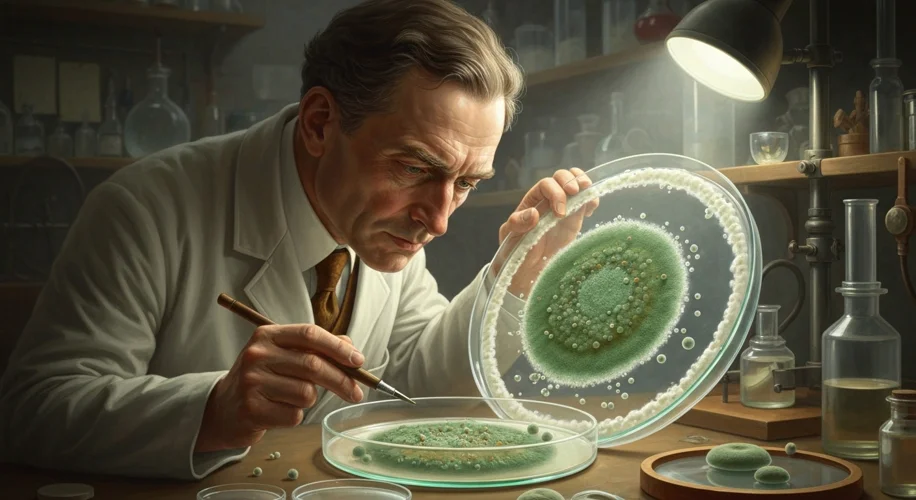
Fleming, a man of keen observation, was immediately intrigued. He recognized the mold as belonging to the Penicillium genus, a type he had encountered before, though never with such potent bactericidal properties. He took a sample of the mold and began to cultivate it in a pure form. He discovered that this mold produced a substance that was lethal to a wide range of disease-causing bacteria, including Staphylococcus, Streptococcus, and gonococcus, yet seemed harmless to human cells. He named this substance “penicillin.”
Fleming published his findings in 1929, but the scientific community remained largely indifferent. The challenge lay in isolating and purifying penicillin in quantities large enough to be medically useful. Fleming, lacking the necessary biochemical expertise and resources, struggled to stabilize the compound. Penicillin proved to be an unstable substance, easily destroyed by heat and prone to degradation. For over a decade, his discovery languished, a promising but ultimately impractical scientific curiosity.
The world, meanwhile, continued to grapple with the devastating toll of bacterial infections. Diseases like pneumonia, scarlet fever, and syphilis claimed countless lives, and surgery, though advancing, was fraught with the ever-present danger of post-operative infection.
The real revolution began in the late 1930s, amidst the looming shadow of World War II. A team at Oxford University, led by pathologist Howard Florey and biochemist Ernst Chain, rediscovered Fleming’s work. Driven by the urgent need for effective treatments for battlefield wounds, they embarked on the arduous task of purifying and producing penicillin.
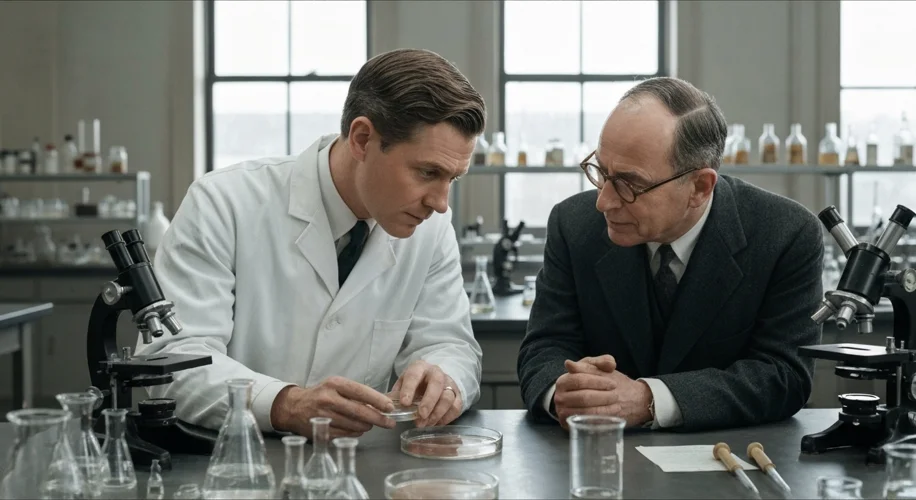
Their initial experiments were fraught with difficulty. They faced immense challenges in culturing the mold and extracting the precious penicillin. At one point, their entire supply was lost due to a laboratory accident. They had to start all over again, often with limited resources. The scale of the operation was immense; it took the efforts of hundreds of people, including many women who worked tirelessly in the purification process, to produce even a small amount of the life-saving drug.
The first human trials were conducted in 1941 on Albert Alexander, a policeman suffering from a severe infection. The results were nothing short of miraculous. Alexander began to recover, and his life was saved. However, the limited supply of penicillin meant that the treatment had to be stopped when the drug ran out, and tragically, he relapsed and died. This case underscored the urgent need for mass production.
The outbreak of World War II provided the impetus and the funding for large-scale production. The United States, with its vast industrial capacity, became instrumental in developing methods for mass-producing penicillin, often through fermentation in large vats. By D-Day in 1944, enough penicillin was available to treat all Allied soldiers wounded in the invasion.
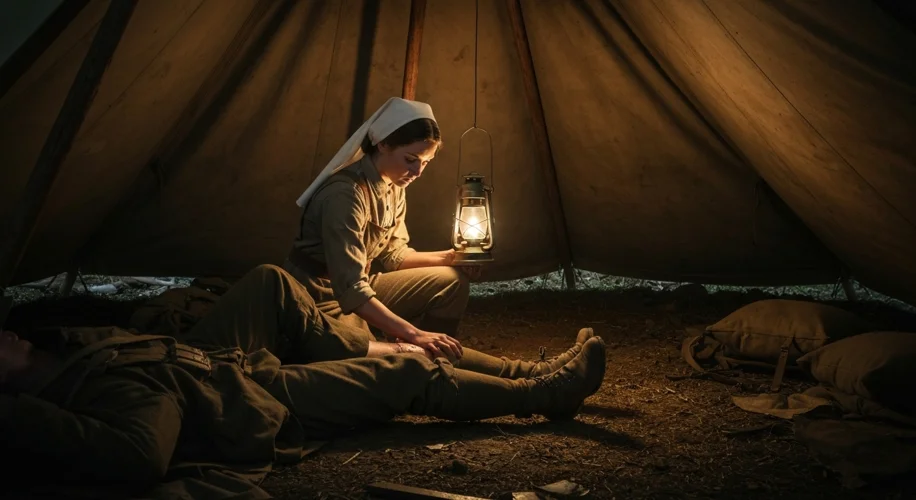
The impact of penicillin was immediate and transformative. Bacterial infections, once a death sentence, became treatable. Surgical survival rates soared, and life expectancy dramatically increased. Penicillin ushered in the age of antibiotics, a new era in medicine where previously incurable diseases could be conquered. It saved countless lives during the war and continued to do so in the decades that followed, revolutionizing healthcare and fundamentally altering the human experience.
Fleming, Florey, and Chain were jointly awarded the Nobel Prize in Physiology or Medicine in 1945 for their monumental contributions. While Fleming’s initial discovery was accidental, it was the persistent dedication and scientific rigor of Florey and Chain that transformed a laboratory curiosity into a global lifesaver. The story of penicillin is a powerful reminder that sometimes, the greatest advancements are born from unexpected circumstances, fueled by human ingenuity and an unwavering commitment to alleviate suffering.