
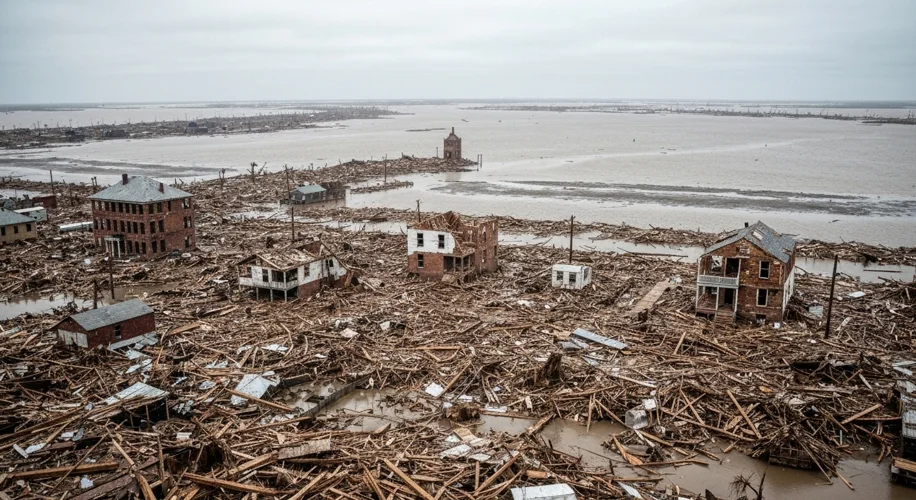
The air on Galveston Island, Texas, on September 8, 1900, hung heavy with the premonition of a storm. For days, whispers of a powerful tropical cyclone had drifted inland, but the islanders, accustomed to the whims of the Gulf, remained largely unconcerned. Galveston, a thriving port city, was a jewel of the South, its sandy shores and elegant Victorian homes basking in prosperity. Yet, beneath the veneer of normalcy, a terrifying reality was about to unfold.
Galveston’s vulnerability was a cruel paradox. Situated on a low-lying barrier island, it was a natural target for the fury of the Gulf of Mexico. Despite warnings from meteorologists like Isaac Cline, who had seen the storm’s growing strength, the city’s leadership had dismissed the idea of building a seawall, deeming it too expensive and unnecessary. This decision would seal the fate of thousands.
As the day wore on, the wind began to lash with an unnatural ferocity. The sea, usually a gentle blue, churned into a monstrous, grey mass, surging over the city’s meager defenses. Families huddled together, their homes, once symbols of security, now creaking and groaning under the immense pressure. The storm surge, an unbelievable wall of water, began to breach the shore, swallowing streets and buildings alike. The narrative of survival shifted from one of endurance to one of sheer, desperate clinging to life.
One harrowing account comes from a young boy named Gus, who, with his father, clung to a roof as their home was ripped apart. They watched in horror as debris, entire houses, and tragically, people, were swept past them in the churning water. The storm’s relentless assault continued for hours, stripping away not just structures but lives. The low-lying areas of the city were completely inundated, erasing entire neighborhoods.
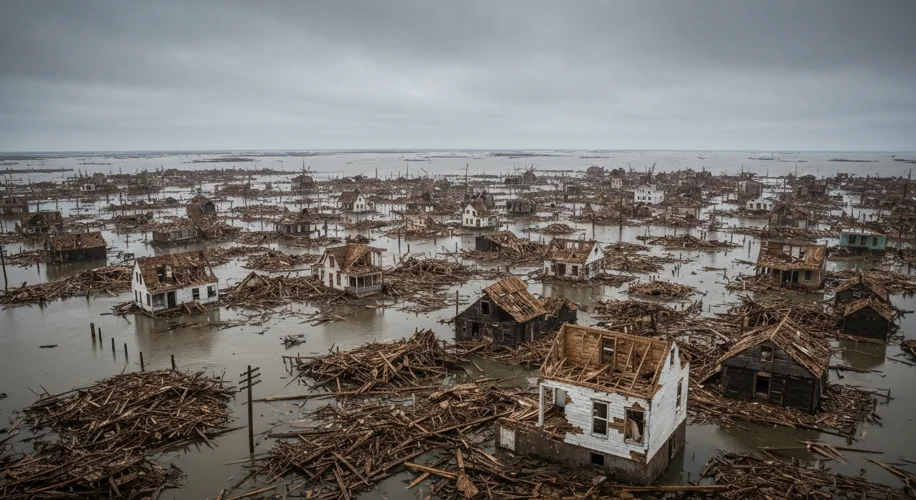
When the dawn finally broke on September 9th, it revealed a landscape of unimaginable destruction. Galveston was unrecognizable. An estimated 6,000 to 8,000 people had perished, making it the deadliest natural disaster in United States history. The storm had flattened 80% of the city’s structures, leaving behind a desolate wasteland of waterlogged timber and shattered dreams.
Survivors, dazed and grief-stricken, emerged from the wreckage to face a grim reality. The city’s infrastructure was in ruins, its people decimated. Yet, amidst the despair, a flicker of defiance ignited. The spirit of Galveston refused to be extinguished.
The immediate aftermath was a testament to human resilience. Survivors, including the injured and the orphaned, worked together to clear the debris, tend to the wounded, and bury the dead. The federal government and relief organizations provided aid, but the immense task of rebuilding fell to the very people who had endured the storm’s wrath.
Crucially, the hurricane served as a brutal, undeniable lesson. The city of Galveston, forever scarred but determined, embarked on an ambitious engineering feat: the construction of a massive seawall. This formidable barrier, stretching for miles, was designed to protect the island from future storm surges. Coupled with a radical elevation of the city’s grade, Galveston transformed itself into a symbol of adaptation and foresight.
The Galveston Hurricane of 1900 was more than just a meteorological event; it was a crucible that forged a new understanding of nature’s power and humanity’s capacity for both suffering and resilience. It serves as a stark reminder that even in the face of overwhelming destruction, the human spirit, tempered by loss, can rise to rebuild, innovate, and endure.