
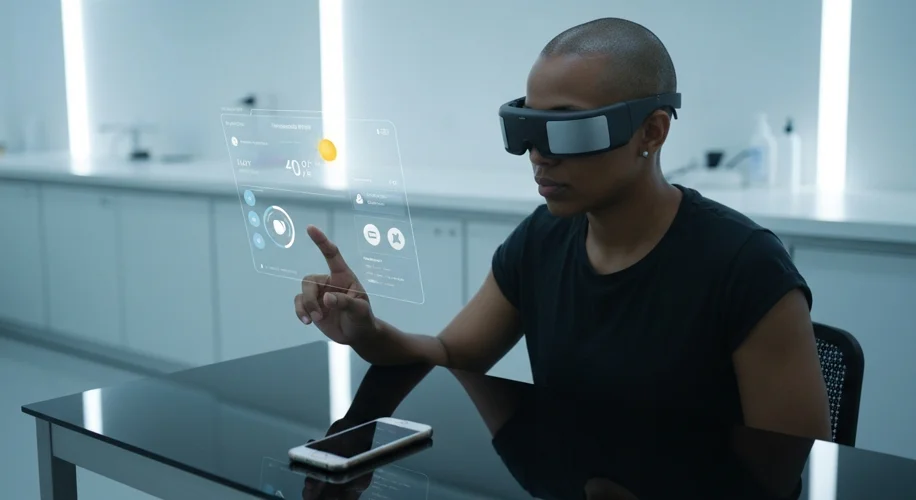
The hum of the smartphone has become the soundtrack to modern life. We cradle them, tap them, talk to them – these glowing rectangles are extensions of ourselves, portals to information, connection, and entertainment. But what if the very technology that birthed this constant companion is poised to make it obsolete?
Today, September 9th, 2025, we stand at a precipice, gazing into a future where Artificial Intelligence, or AI, promises to redefine our interaction with the digital world, potentially rendering the smartphone as quaint as a rotary dial telephone.
The seeds of this revolution were sown decades ago, long before the sleek glass and metal we know today. Early conceptualizations of AI often painted a picture of intelligent machines capable of learning, reasoning, and even feeling. Think of Isaac Asimov’s Three Laws of Robotics, first published in 1942, which grappled with the ethical implications of sentient machines. Or Arthur C. Clarke’s HAL 9000 from “2001: A Space Odyssey” (1968), a chilling portrayal of AI’s potential for both immense good and terrifying autonomy.
These were the dreams, the fictions that flickered in the minds of visionaries. But the reality of AI’s development has been a more gradual, albeit relentless, march. The early days were marked by symbolic AI, rule-based systems designed to mimic human logic. Think of expert systems used in medicine or finance. Then came machine learning, where algorithms could learn from data without explicit programming. This breakthrough powered early search engines and recommendation systems, subtle but significant shifts in how we accessed information.
The true acceleration, however, began in the 21st century. The explosion of data, coupled with significant advances in computing power and sophisticated algorithms like neural networks, paved the way for the AI we see today. Image recognition, natural language processing, and predictive analytics are no longer the stuff of science fiction; they are woven into the fabric of our daily lives, often invisibly.
Consider the trajectory from Alan Turing’s foundational work on computation in the 1930s and 40s, and his seminal 1950 paper “Computing Machinery and Intelligence” which proposed the “Turing Test” as a benchmark for machine intelligence, to the sophisticated AI assistants that now reside in our pockets. The journey has been one of conceptual leaps and engineering triumphs.
But what does this mean for the smartphone? We are already seeing the evolution. Voice assistants are becoming more sophisticated, capable of managing schedules, answering complex queries, and even engaging in nuanced conversations. Wearable technology, from smartwatches to augmented reality glasses, offers new interfaces that bypass the need for a traditional screen.
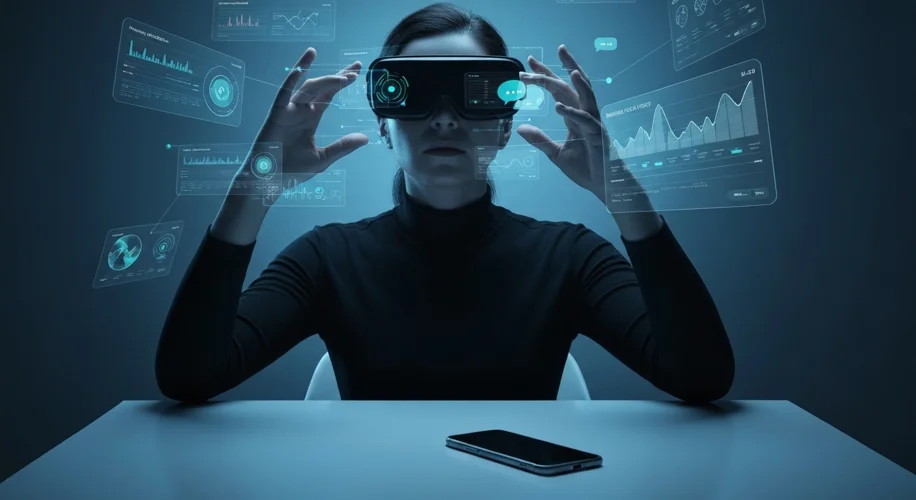
The true paradigm shift may lie in ambient computing. Imagine AI integrated seamlessly into our environment – in our homes, our cars, our clothing. Instead of pulling out a phone, a personalized AI could anticipate our needs, provide information through subtle cues, or facilitate communication through context-aware audio or visual projections. Your environment becomes the interface.
This future is not without its perils. The concentration of AI power in the hands of a few corporations raises concerns about data privacy, algorithmic bias, and the potential for manipulation. As AI becomes more integrated, questions of autonomy, control, and the very definition of human consciousness come into sharper focus.
The obsolescence of the smartphone isn’t just about a technological upgrade; it’s about a fundamental shift in how we interact with information and each other. It’s a transition from a tool we actively use to an intelligence that is passively present, always learning, always adapting.
As we stand on the cusp of this new era, it’s crucial to remember the human element. The history of AI is a testament to human ingenuity, a story of dreams that dared to challenge the limits of possibility. But it is also a cautionary tale, reminding us that with great power comes great responsibility. The future of interaction is being written, and the smartphone, once the undisputed king, may soon be a relic of a bygone technological age, a quiet testament to the relentless march of artificial intelligence.