
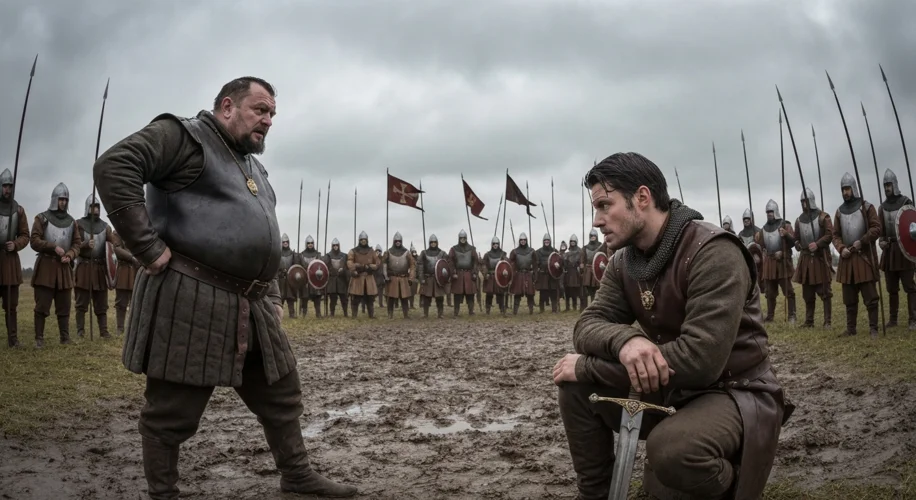
The clash of steel, the thunder of cannons, the roar of war – these are the visceral images that often spring to mind when we think of ancient and medieval battles. And who can forget those cinematic moments? Two opposing generals, bedecked in their finest armor, riding their chargers to the center of the blood-soaked field, banners unfurled, to engage in a tense, dramatic negotiation. One might offer terms, the other might defiantly refuse, perhaps even ending the parley with a fatal thrust of a sword. It’s compelling drama, a testament to the personal agency of leaders in moments of extreme crisis.
But how much of this captivating scene is rooted in historical reality, and how much is pure Hollywood invention? The truth, as it often is, is far more nuanced and, dare I say, even more intriguing than the silver screen’s portrayal.
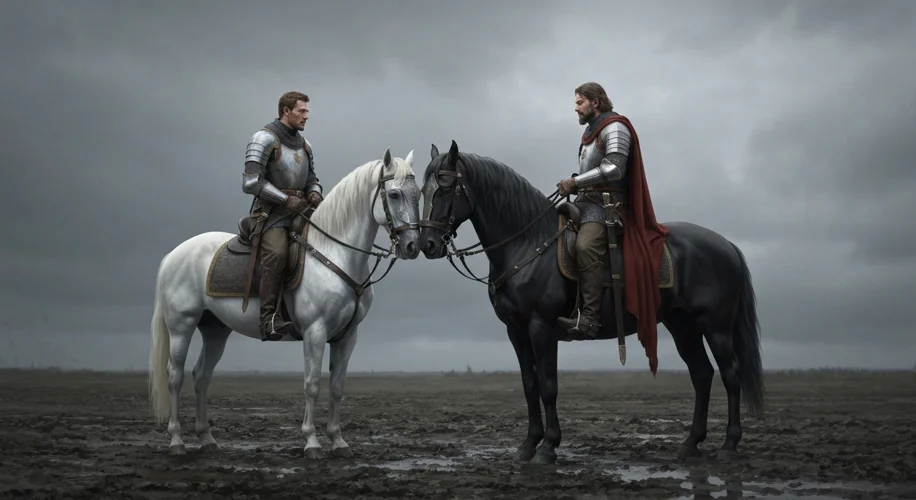
The Illusion of the Battlefield Summit
While the image of leaders meeting on the field of battle is powerful, it was, in truth, a rare occurrence. The sheer chaos and danger of a pre-battle environment made such encounters exceptionally perilous. Imagine the scene: armies arrayed, nerves frayed, the air thick with anticipation. A parley, especially one involving the highest commanders, required a level of trust and a belief in a potential outcome that was often absent in the heat of conflict. The risk of assassination, capture, or simply being caught in the crossfire was immense.
Instead of generals meeting directly, negotiations were more frequently conducted through intermediaries – envoys, heralds, or trusted lieutenants. These individuals would carry messages, proposals, and counter-proposals between the opposing camps, often under a flag of truce. This allowed for a degree of separation and minimized the personal risk to the leaders, while still facilitating communication.
Moments of Truce and Talk: Real-World Examples
Despite the inherent dangers, there are instances where direct or semi-direct negotiations did occur on the eve of battle, or even during lulls in fighting. These moments, though infrequent, are often critical turning points in history.
One significant example, though not strictly on the battlefield itself, occurred before the Battle of Agincourt in 1415. While Henry V of England and Charles d’Albret, Constable of France, didn’t meet face-to-face in the thick of it, extensive negotiations did take place in the days leading up to the battle. English envoys met with French commanders, attempting to avert a full-scale engagement. Henry V, facing a numerically superior French force, was keen to negotiate his passage and safe return to England, offering to return captured French nobles. The French, however, were emboldened by their numbers and largely dismissed his overtures, leading to the catastrophic battle that followed.
Another instance, albeit a tragic one, is the Battle of the River Plate in 1939. While this was a naval engagement, the concept of leaders engaging in dialogue, even under duress, is relevant. After being damaged by the Royal Navy cruisers HMS Exeter, HMS Ajax, and HMS Achilles, the German pocket battleship Admiral Graf Spee retreated to Montevideo. Captain Hans Langsdorff of the Graf Spee engaged in a complex dance of diplomacy and deception, with his crew signaling a supposed desire to negotiate their surrender or terms of withdrawal, while secretly preparing to scuttle the ship. The negotiations, conducted through intermediaries and diplomatic channels, ultimately led to Langsdorff’s decision to sink his own vessel rather than face certain destruction in battle.
Perhaps one of the most dramatic, though not strictly pre-battle, examples of direct leader engagement in a crisis is the Cuban Missile Crisis in 1962. While not a battlefield in the traditional sense, the world teetered on the brink of nuclear war. President John F. Kennedy of the United States and Premier Nikita Khrushchev of the Soviet Union engaged in intense, high-stakes communication, sometimes directly, sometimes through back channels and envoys. This was negotiation under the most extreme duress, where a single misstep or a breakdown in communication could have led to unimaginable consequences.
The Aftermath: Resolutions and Repercussions
The outcomes of these pre-battle or crisis negotiations varied wildly. Sometimes, they led to a peaceful resolution, averting bloodshed. Other times, they were instrumental in shaping the terms of surrender, prisoner exchanges, or even the strategic maneuvering that preceded the actual fighting.
In many cases, however, the breakdown of negotiations directly led to battle. The French failure to seriously consider Henry V’s overtures at Agincourt ensured that the ensuing battle would be one of the most significant English victories in the Hundred Years’ War. The failure of diplomacy in the Cuban Missile Crisis could have plunged the world into nuclear annihilation.
Conversely, successful negotiations could save countless lives. Throughout history, numerous sieges have ended not with a final, bloody assault, but with the surrender of the besieged city after arduous discussions about terms, safe passage for civilians, and the fate of the defenders.
Conclusion: More Than Just a Dramatic Trope
While Hollywood may dramatize pre-battle negotiations for effect, the underlying principle – that leaders seek to understand their adversaries and explore avenues for resolution, even on the precipice of conflict – is very real. These moments, however rare and often conducted through more practical means than on-screen duels, highlight the complex interplay of power, diplomacy, and human will that shapes the course of history. The battlefield might be the ultimate arbiter of disputes, but the whispers of negotiation, whether through envoys or direct communication, often hold the key to the war that is about to begin, or perhaps, the peace that might follow.