The biting wind howled across the endless Ukrainian steppe, carrying with it not just snow, but the chilling whispers of hunger. It was the early 1930s, and the Soviet Union, under the iron fist of Joseph Stalin, was undergoing a brutal transformation. The dream of a socialist utopia was being forged in the fires of forced collectivization, a policy that would ultimately starve millions.
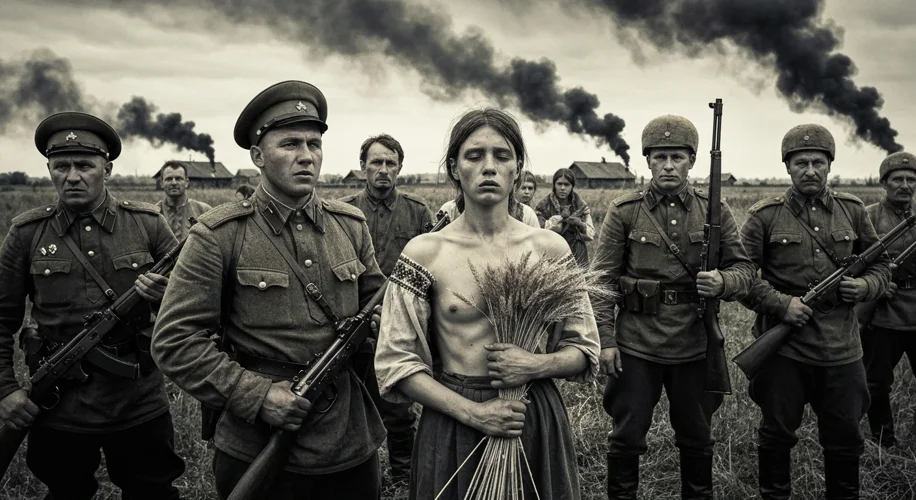
Stalin’s vision was simple, yet terrifying in its ambition: to consolidate individual peasant landholdings into massive, state-controlled collective farms, known as kolkhozes. This wasn’t a gentle nudge; it was a violent wrenching of the traditional agrarian life. The peasants, who had toiled their land for generations, were stripped of their property, their tools, and their livestock. The kulaks, a term broadly applied to wealthier peasants but often used to target any who resisted, were branded as enemies of the state. Many were executed, deported to remote gulags, or forced into labor camps, their families left to face the encroaching darkness alone.
The resistance was fierce, born from desperation and a deep connection to the soil. Farmers slaughtered their animals rather than surrender them to the state, leading to a drastic decline in livestock. Grain harvests, once a source of pride and sustenance, became a weapon. The state, under the guise of grain procurement for industrialization and export, levied impossibly high quotas. What little the peasants managed to grow was seized, leaving them with nothing.
This systematic dispossession was particularly devastating in Ukraine, the breadbasket of the Soviet Union. The Ukrainian peasantry, with its strong sense of national identity and historical resistance to Moscow’s rule, became a prime target. Stalin, suspicious of any regional autonomy, seemed determined to break the Ukrainian spirit. The grain seizures intensified, creating an artificial famine that was anything but natural.
The year 1932 marked the true descent into hell. Reports from Ukraine spoke of empty granaries, starving families, and communities ravaged by an invisible enemy. Yet, the Soviet government, led by Stalin, denied the famine’s existence. Propaganda machines churned out images of Soviet prosperity, while borders were sealed to prevent anyone from escaping the man-made catastrophe. Foreign journalists and aid workers were either barred or deliberately misled. The truth was a carefully guarded secret, buried beneath a mountain of lies.
The Holodomor, meaning ‘death by hunger’ in Ukrainian, was not merely a consequence of failed policy; it was a deliberate act of state terror. The death toll is staggering, with estimates ranging from 3.5 to 7 million Ukrainians. Children, the elderly, and the infirm were the most vulnerable, succumbing to starvation and the diseases that followed in its wake. Villages were depopulated, families torn apart, and a generation was scarred by an unimaginable trauma.
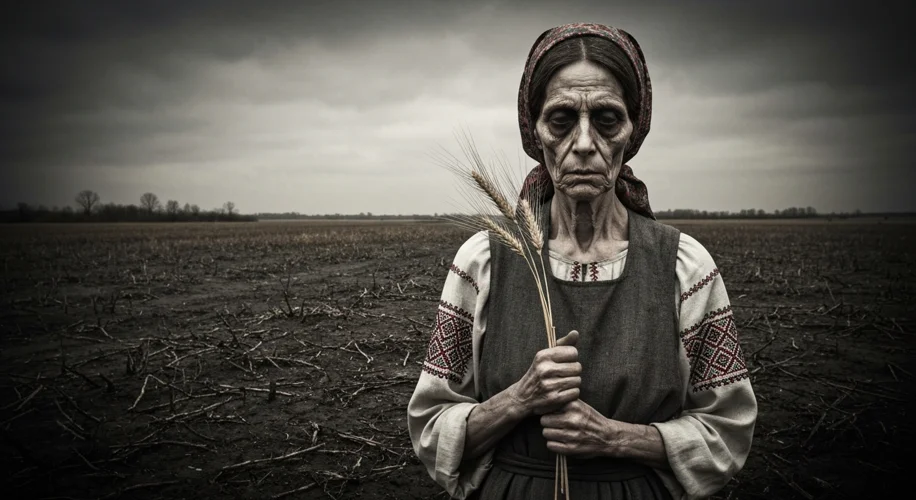
The impact of collectivization and the Holodomor extended far beyond the immediate suffering. It fundamentally reshaped Soviet society, consolidating state control over the peasantry and paving the way for further industrialization. For Ukraine, the Holodomor remains a deep wound, a testament to the brutal human cost of totalitarian ambition. It is a stark reminder that the pursuit of ideology, when divorced from humanity, can lead to unspeakable atrocities.
Decades later, the full horror of the Holodomor is still being understood. While the Soviet government attempted to erase it from history, the memories, the scars, and the undeniable evidence persist. The story of Stalin’s collectivization and the Holodomor is not just a chapter in Soviet history; it is a chilling parable about the dangers of unchecked power and the devastating consequences of a state that loses its conscience.