The year is 650 AD. England, a land forged in fire and migration, is a mosaic of shifting loyalties and emergent identities. For centuries, waves of Germanic tribes – Angles, Saxons, Jutes – had crossed the North Sea, their sagas of conquest and settlement echoing in the very names of the land. But who were these people, really? Were they simply ‘Anglo-Saxons,’ a monolithic group defined by shared language and custom, or was their identity far more fluid, shaped by origins, interactions, and the very soil beneath their feet?
For generations, our understanding of these complex lives was pieced together from the scattered fragments left behind: the shimmering bronze brooches, the intricately carved bone combs, the formidable iron swords, and the silent testament of the grave mounds. These were the tangible echoes of their existence, offering clues to their status, their beliefs, and their connections to a wider world. But the true depth of their identities remained shrouded in the mists of time.
Then came a revolution not of steel and shield, but of science. Modern archaeology, armed with ever more sophisticated tools, began to unearth more than just artifacts. Skeletal remains, once merely inert objects, began to speak. Through the groundbreaking analysis of ancient DNA, a new narrative has begun to emerge, one that challenges long-held assumptions and reveals the intricate tapestry of identity in 7th-century England.
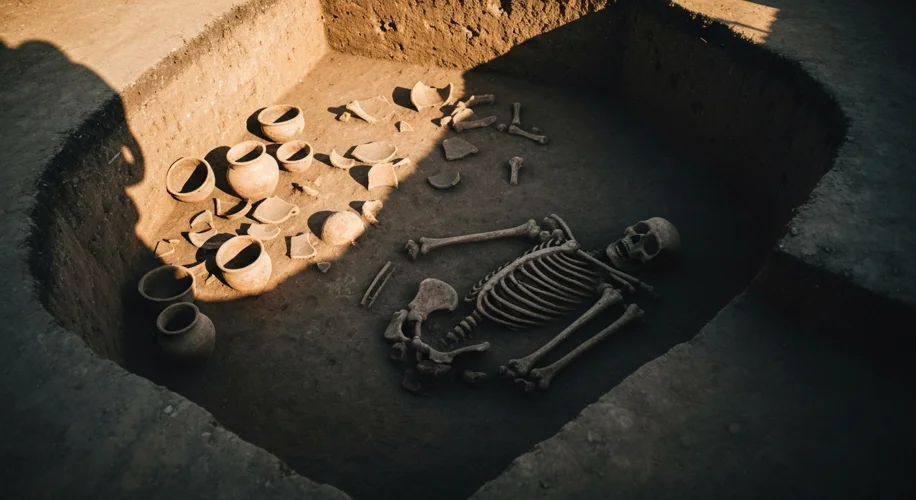
Consider the stark beauty of a burial site discovered in an unassuming field. Among the familiar grave goods – a pottery shard, a simple knife – lies a skeleton. For years, it might have been classified as typically ‘Anglo-Saxon.’ But DNA analysis tells a different story. Strontium isotopes within the bone, which vary depending to the geological makeup of one’s childhood environment, reveal that this individual spent their formative years far from the shores of England, perhaps in the lands we now know as Scandinavia or even further east. 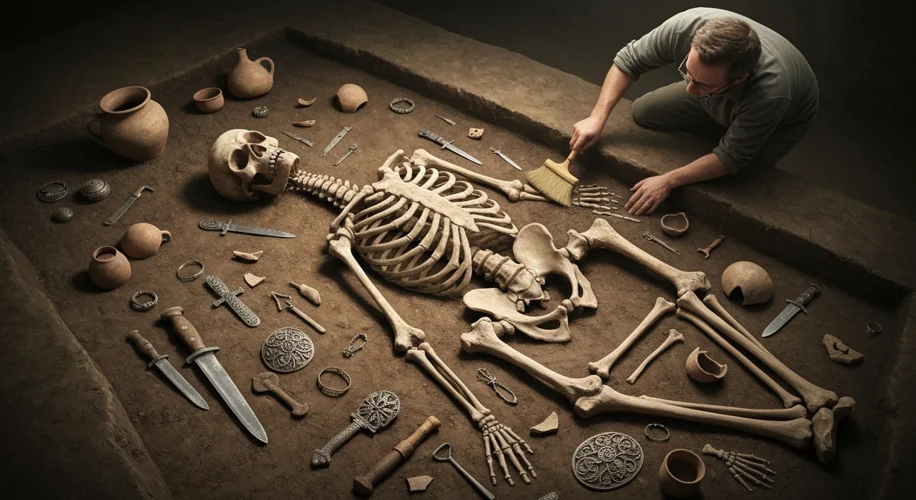
This isn’t an isolated case. Discoveries across England, from Kent to Northumbria, are revealing individuals with distinct geographical signatures. These weren’t necessarily ‘foreigners’ in the modern sense, but people whose lives were woven into the fabric of Anglo-Saxon society. They may have been traders, mercenaries, war captives, or even migrants seeking new opportunities. Their presence suggests a society far more dynamic and interconnected than previously imagined, a place where origin did not necessarily dictate destiny or social standing.
What did this mean for their identity? Did they retain their ancestral customs? Did they fully assimilate into the burgeoning Anglo-Saxon culture? Or did they forge something entirely new, a hybrid identity that reflected their dual heritage? The archaeological record, combined with DNA analysis, offers tantalizing glimpses. Objects found in their graves might bear stylistic influences from their homeland, yet their burial practices might align with local traditions. This fusion of the familiar and the foreign speaks volumes about individual agency and the complexities of belonging.
These findings force us to re-examine the very concept of ‘Anglo-Saxon identity.’ It was not a static, predetermined state, but a fluid, negotiated process. The presence of individuals with distant origins demonstrates that 7th-century England was not a closed system, but a vibrant crossroads where people, ideas, and goods flowed. This challenges the simplistic narrative of invasion and displacement, revealing a more nuanced picture of cultural exchange and adaptation.
Furthermore, the DNA evidence can shed light on relationships within communities. Were these individuals integrated into family structures, or did they form distinct enclaves? The isotopic and genetic data, when combined with the wealth of artifactual evidence, can paint a more complete picture of social structures, kinship ties, and the dynamics of integration and segregation.
The story these bones tell is one of movement, adaptation, and the creation of new identities in a land under construction. The people of 7th-century England were not simply defined by where they were born, but by the journeys they undertook, the people they met, and the lives they chose to build. Archaeology and DNA analysis are not just digging up the past; they are unearthing the very essence of what it meant to be alive, to belong, and to forge an identity in a world shaped by migration and the relentless march of history. The echoes of their lives, once faint, now resonate with remarkable clarity, reminding us that identity has always been a complex, dynamic, and deeply personal creation.