The fog of war is often thick, but sometimes it’s deliberately manufactured. Across history, nations and groups have orchestrated events, disguised their involvement, and then pointed fingers elsewhere. These are known as ‘false flag’ operations, insidious acts designed to manipulate public opinion, justify aggression, or escalate conflicts. They are the ultimate deception, turning the tools of war into instruments of deceit.
Imagine a ship sailing peacefully, only to be attacked and sunk. The attackers, however, are not the enemy you suspect. Instead, they are your own forces, dressed in enemy uniforms, their actions designed to enrage your populace and push you towards a war you might otherwise have avoided. This is the chilling essence of a false flag operation.
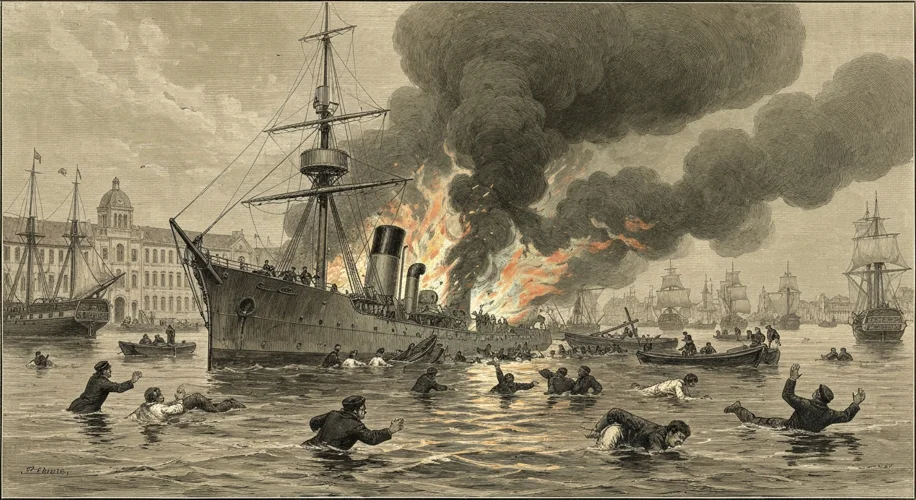
One of the most infamous, though debated, examples of a potential false flag operation involves the sinking of the USS Maine in Havana Harbor on February 15, 1898. The explosion, which killed 260 American sailors, was immediately blamed on the Spanish colonial government in Cuba. The rallying cry, “Remember the Maine! To Hell with Spain!” echoed across America, fanning the flames of public outrage. Newspapers, like William Randolph Hearst’s New York Journal, sensationalized the event, even though investigations at the time and later analyses have cast serious doubt on the initial Spanish culpability. Some evidence suggests an internal accident, perhaps a coal bunker fire igniting ammunition, was the true cause. Regardless of the actual cause, the narrative of Spanish treachery was potent, providing the casus belli for the Spanish-American War. The war, in turn, led to Spain losing its last significant colonial possessions and the United States emerging as a world power.
Another chilling historical instance, though less debated, is the Reichstag fire in Berlin on February 27, 1933. The German parliament building was engulfed in flames, and the Nazi Party, led by Adolf Hitler, swiftly blamed communist agitators. The fire provided the perfect pretext for the Nazis to suspend civil liberties, arrest political opponents, and consolidate their power. The Reichstag Fire Decree, passed in its wake, effectively dismantled democratic freedoms in Germany, paving the way for the totalitarian regime that would plunge Europe into World War II. While the exact perpetrators remain a subject of historical debate, the Nazis certainly capitalized on the event to further their authoritarian agenda, demonstrating how a manufactured crisis can be exploited for catastrophic political gain.
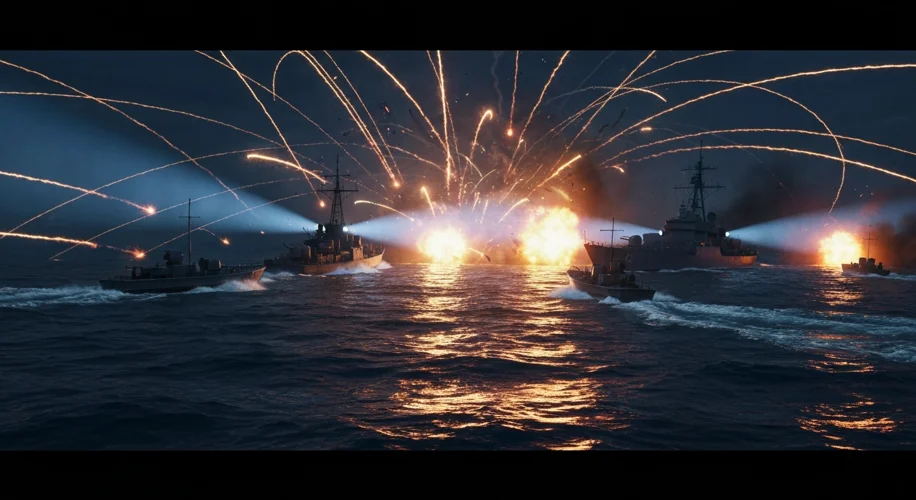
False flags aren’t just about igniting wars; they can also be used to sabotage peace talks or sow discord. The Gulf of Tonkin incident in August 1964 is a prime example. U.S. naval destroyers reported being attacked by North Vietnamese torpedo boats on two separate occasions. The second incident, in particular, was highly questionable and may not have happened at all. Regardless, President Lyndon B. Johnson used the reports to secure the Gulf of Tonkin Resolution from Congress, which granted him broad authority to escalate U.S. military involvement in Vietnam. This marked a significant turning point, leading to the massive deployment of American troops and the prolonged, devastating Vietnam War. The incident served to harden American resolve against North Vietnam and undermine any potential for diplomatic resolution at that critical juncture.
Analyzing these events reveals a consistent pattern: the exploitation of fear and anger. False flag operations prey on the public’s desire for security and justice, transforming emotions into political capital. They demonstrate a cynical understanding of human psychology, where perceived threats, even fabricated ones, can override rational judgment. The actors involved – the orchestrators, the unwitting pawns, and the manipulated populace – form a complex web of deception.
From the perspective of the perpetrators, a successful false flag operation is a masterclass in strategic deception. It allows them to achieve objectives – be it war, political consolidation, or the weakening of an adversary – without direct attribution and the associated diplomatic or military repercussions. For the victims, the consequences can be catastrophic, ranging from the loss of sovereignty to widespread conflict and immense human suffering.
The legacy of false flag attacks is a somber reminder of the darker side of international relations. They highlight the critical importance of independent verification, critical thinking, and a healthy skepticism when presented with claims of aggression, especially during times of heightened tension. The ability to discern truth from manufactured reality remains one of the most vital tools for safeguarding peace and preventing the descent into unnecessary conflict. The echoes of these deceptive acts continue to resonate, urging us to question narratives and scrutinize motives, lest we become unwitting participants in history’s most dangerous deceptions.