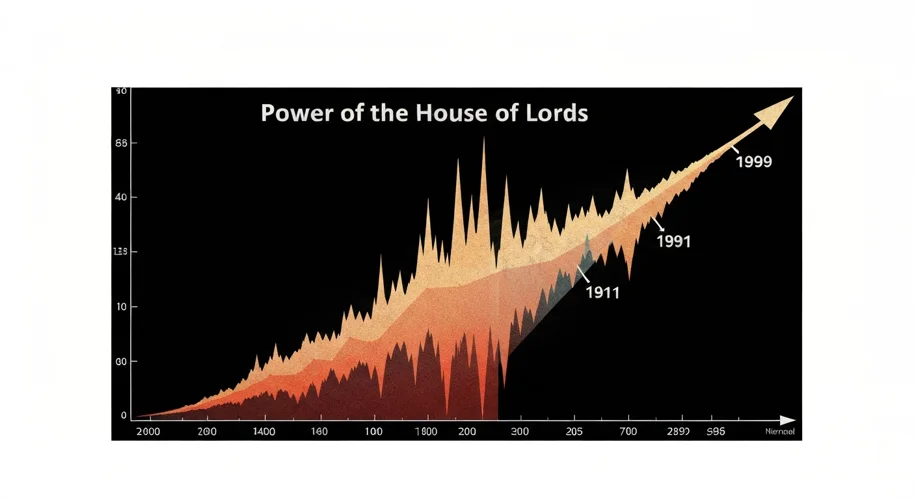

For centuries, the echo of a powerful, almost sovereign House of Lords resonated through the halls of Westminster. It was a chamber where lineage and privilege held sway, a co-equal partner to the burgeoning power of the House of Commons. But the tide of history, propelled by social upheaval and constitutional shifts, has dramatically reshaped this ancient institution, gradually eroding its once-immense authority.
Imagine, if you will, a Britain where the unelected peers of the realm could, with a stroke of their collective will, block the very laws that the elected representatives of the people sought to enact. This was not a distant, fictional realm, but the reality of Britain for much of its history. The House of Lords, composed of hereditary peers (those who inherited their titles and seats) and a growing number of bishops (Lords Spiritual), wielded significant legislative power. Their assent was as crucial as that of the Commons, and in many instances, their conservative instincts acted as a formidable brake on reform.
The seeds of change were sown in the fertile ground of 19th-century social and political reform. The Great Reform Act of 1832, while primarily expanding suffrage in the Commons, signaled a growing public appetite for representative government and a questioning of inherited privilege. However, the Lords remained a bastion of the old order. A pivotal moment arrived with the People’s Budget of 1909, a radical financial plan proposed by the Liberal government aimed at increasing taxes on the wealthy to fund social welfare programs. The House of Lords, dominated by Conservative peers who saw it as an attack on their class interests, summarily rejected the budget. This act of defiance ignited a constitutional crisis.
The ensuing battle was fierce. The Prime Minister, David Lloyd George, famously declared, “We have been the slaves of the Lords long enough.” The crisis culminated in the Parliament Act of 1911. This landmark legislation, passed only after the threat of creating enough new Liberal peers to outvote the Conservatives, fundamentally altered the balance of power. The Parliament Act stripped the Lords of their power to veto money bills – effectively, budgets – and limited their ability to block other legislation. They could now only delay, not block, bills passed by the Commons, and this delay was limited to two years. It was a significant, though not fatal, blow to their authority.
Yet, the Lords did not fade into irrelevance. Their role as a revising chamber, scrutinizing and amending legislation from the Commons, remained. Furthermore, the abolition of most hereditary peerages in the aftermath of the Second World War, through the House of Lords Act 1958 and later reforms, began to reshape its composition. Life peers, appointed for their lifetime contributions in various fields, gradually increased, bringing a more diverse range of expertise and perspectives. However, a small number of hereditary peers retained their seats, a legacy of the past that continued to spark debate.
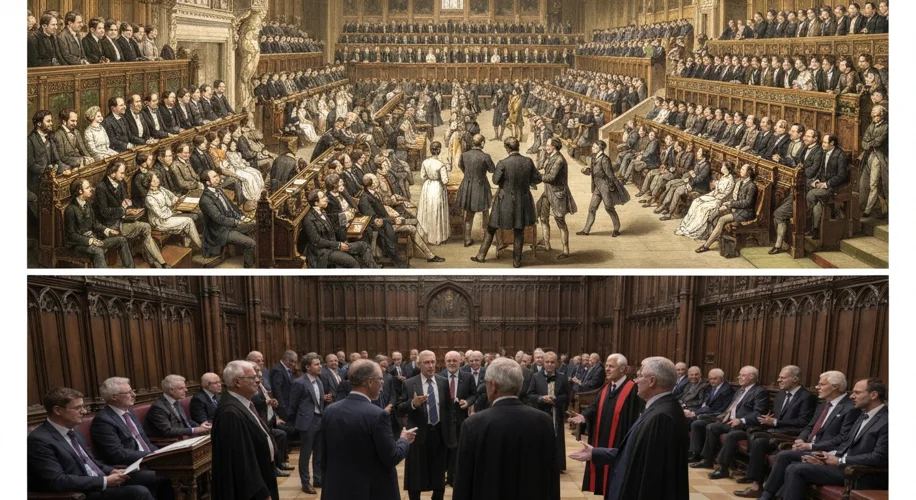
The late 20th and early 21st centuries saw further, and arguably more profound, transformations. The House of Lords Act 1999 removed the right of all but 92 hereditary peers to sit in the chamber. This was a seismic shift, a direct confrontation with the anachronism of inherited legislative power. The subsequent decades have been marked by ongoing discussions and attempts to reform the chamber further, focusing on whether it should remain entirely appointed, become partially elected, or even be abolished altogether. The debate often centers on democratic legitimacy versus the benefits of an experienced, if unelected, revising body.
Today, the House of Lords stands as a testament to this evolution. While it no longer possesses the co-equal power it once held, it remains an influential part of the British parliamentary system. Its members, drawn from a wide array of backgrounds, contribute to the legislative process through detailed scrutiny and debate. The journey from a chamber dominated by hereditary landowners to one increasingly populated by life peers, experts, and former politicians is a dramatic narrative of adaptation and the enduring quest for a more representative form of governance. The Lords, once the unquestioned arbiters of law, are now a complex, evolving body, a living echo of Britain’s long and often contentious constitutional journey.