
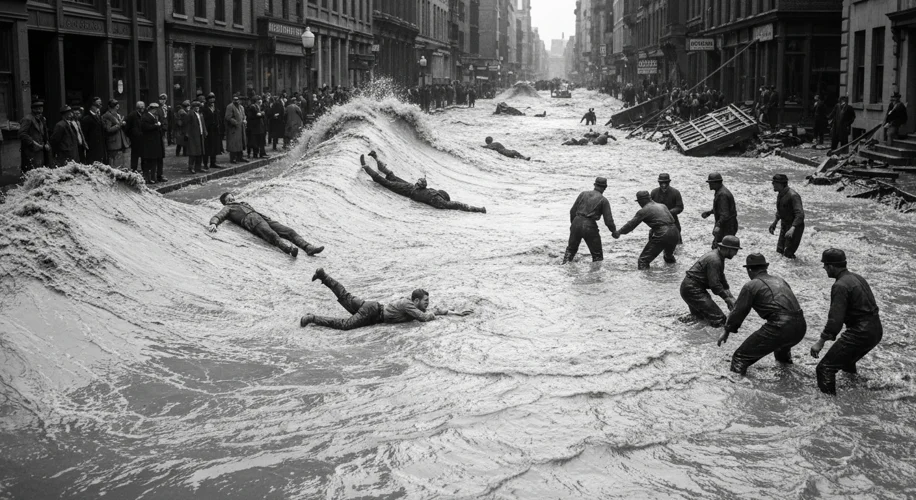
The year is 1919. Boston, a city steeped in history and industry, is about to face a disaster as bizarre as it is horrific. It wasn’t a hurricane, an earthquake, or a raging fire that would claim lives and reshape a neighborhood. It was molasses. Yes, the sweet, sticky syrup that graces our pancakes and gingerbread cookies, in a monstrous wave, would unleash a torrent of destruction.
The Sweet Beginning of a Bitter End
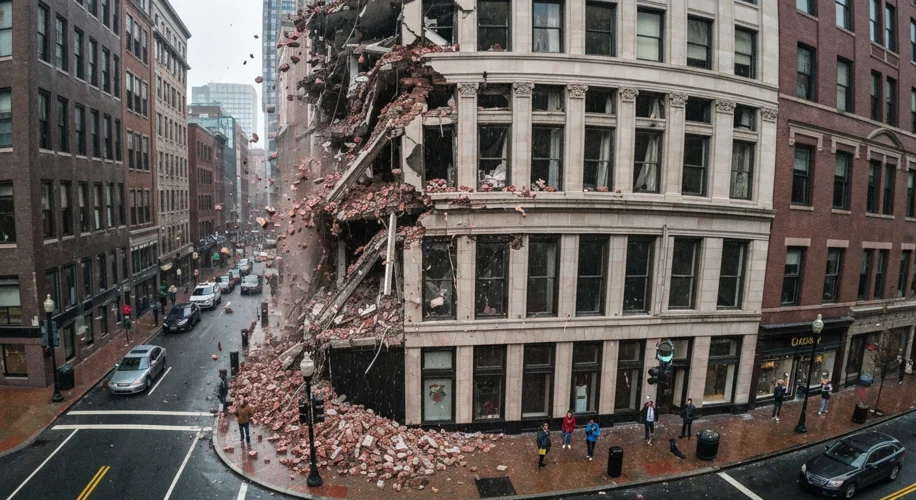
On January 15, 1919, a massive steel tank, standing 50 feet tall and 90 feet in circumference, ominously loomed over Boston’s North End. It was owned by the Purity Distilling Company, a subsidiary of the United States Industrial Alcohol Company, and it held an astonishing 2.3 million gallons of molasses. This wasn’t just any molasses; it was destined to be fermented into industrial alcohol, a crucial component for munitions production during World War I. The company, eager to meet its quota and profit from the war effort, had rushed the construction of the tank, cutting corners and ignoring safety concerns. Locals had complained about the tank’s groaning and leaking for months, even noting a dark, sticky residue that coated everything nearby, but their pleas fell on deaf ears.
The Day the Sweetness Turned Sour
As a warm winter day dawned, the temperature rose unseasonably, from 8 degrees Fahrenheit to a balmy 40 degrees. This temperature fluctuation, combined with the sheer volume and pressure within the tank, proved to be the breaking point. Around 12:30 PM, a deafening roar echoed through the North End. The tank, unable to withstand the immense strain, burst open. A colossal wave of molasses, estimated to be 15 to 25 feet high and moving at an estimated 35 miles per hour, surged through the streets.
Witnesses described a terrifying scene. The sticky, viscous wave, driven by the sheer momentum of millions of gallons, swept away everything in its path. Buildings were crushed, wagons overturned, and horses and people were caught in the sticky embrace. The force of the wave was so immense that it peeled the roofs off buildings and tossed vehicles into the air. The scene was one of utter chaos and devastation, a viscous, dark tide of destruction.
The Aftermath: A City Drowning in Syrup
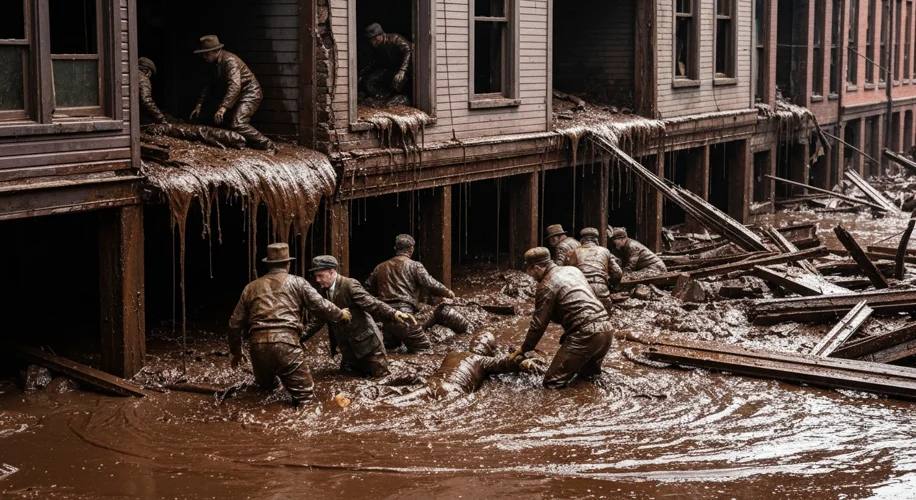
Rescue efforts were immediate but agonizingly slow. The thick molasses hampered the efforts of rescuers, making it difficult to move and even harder to breathe. The sticky substance coated everything, suffocating victims and making it a grim struggle to pull them from the muck. Firefighters, police, and soldiers, along with local volunteers, waded through knee-deep molasses, their efforts often futile against the sheer scale of the disaster.
The final toll was devastating: 21 people lost their lives, and an estimated 150 were injured. The molasses wave carried debris, including a section of the tank itself, for blocks, battering buildings and causing significant structural damage. The North End was transformed into a scene of abject destruction, a sticky, brown wasteland.
Lingering Scars and Legal Battles
Cleaning up the mess took weeks. Horses were used to haul away the molasses-soaked debris, and fireboats sprayed the area with saltwater to try and wash away the sticky residue. The aroma of molasses, once a symbol of industry, lingered in the North End for decades, a constant, albeit strange, reminder of the tragedy.
The disaster also led to a landmark class-action lawsuit against the United States Industrial Alcohol Company. The company initially tried to blame anarchists for bombing the tank, but the court ultimately found the company liable due to negligent construction and inadequate safety measures. This case set an important precedent for corporate responsibility in industrial accidents.
A Sticky Lesson in History
The Great Molasses Flood of 1919 stands as a peculiar and tragic chapter in American history. It serves as a stark reminder that even the sweetest substances can turn deadly when safety is disregarded. It’s a story of industrial ambition clashing with human safety, of a city’s resilience in the face of a bizarre and overwhelming disaster, and a sticky testament to the lessons learned from a sticky, tragic day in Boston.