

The air in Mogadishu in October 1969 crackled with anticipation. Somalia, a fledgling nation just nine years free from colonial rule, stood on the precipice of change. Barre, a charismatic military officer, would soon seize power, ushering in an era that would dramatically reshape the Horn of Africa.
Born into the relative obscurity of the Marehan clan in the arid northwestern region of the country, Mohamed Siad Barre’s early life gave little indication of the seismic impact he would have on Somalia. He rose through the ranks of the nascent Somali National Army, a force forged from the disparate colonial armies of Italy and Britain. By 1960, he was its commander. The Somalia he inherited was a land of vast, untamed beauty, rich in history and culture, but burdened by political instability and the lingering specter of clan divisions. A parliamentary democracy had been established, but it was a fragile system, often fractured by infighting and corruption.
Barre’s moment arrived on October 21, 1969. A military coup, swift and bloodless, saw him declared President of the Supreme Revolutionary Council. The stated goal was to end corruption and restore order. The early years of Barre’s rule were marked by a strong, centralized authority. He declared Somalia a socialist state, aligning himself with the Soviet Union and nationalizing industries. His administration launched ambitious literacy campaigns, improved infrastructure, and fostered a sense of national unity, often by suppressing clan identities. For a time, it seemed Barre might indeed forge a strong, unified Somalia.
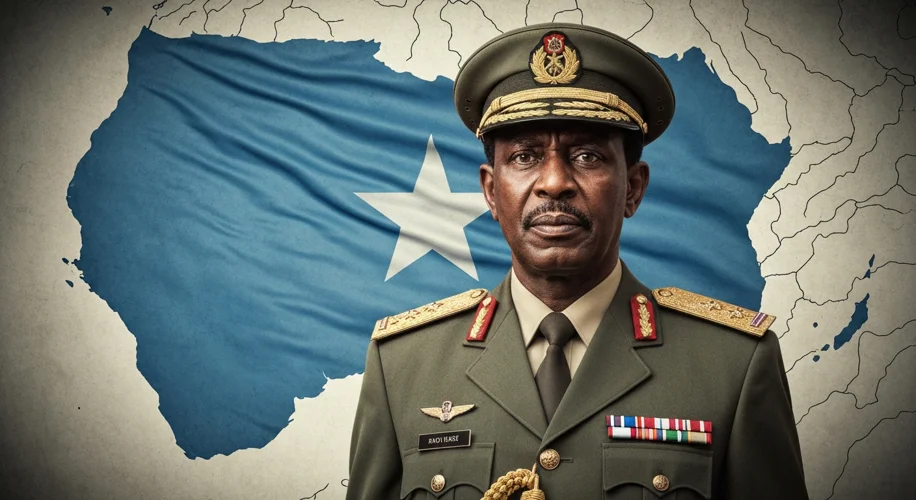
But the tides of geopolitics are rarely still, and the Horn of Africa was a particularly turbulent sea. The Cold War cast a long shadow, and Somalia’s strategic location made it a prize for competing superpowers. Barre’s initial alliance with the Soviet Union soured in the late 1970s after the Soviet Union shifted its support to Ethiopia, which was engaged in a brutal conflict with Somalia over the Ogaden region. Barre, seeing an opportunity to reclaim what he considered Somali territory, launched an invasion in 1977. The Ogaden War was a turning point. While initially successful, Somalia was ultimately defeated by Ethiopian forces, bolstered by massive Soviet and Cuban military aid. The defeat was a devastating blow to Barre’s prestige and the nation’s pride.
Humiliation on the battlefield began to chip away at Barre’s iron grip. The influx of weapons and the heightened clan tensions exacerbated by the war created a volatile internal situation. The suppression of dissent, which had been a hallmark of his rule, became more brutal. Various armed opposition groups began to emerge, fueled by a growing sense of injustice and a desire for a more equitable distribution of power. The Somali National Movement (SNM), largely drawn from the Isaaq clan, became a formidable force in the north.
By the late 1980s, the country was descending into civil war. Barre’s regime responded with increasing desperation and violence. The once-lauded military became an instrument of oppression, with widespread human rights abuses reported. The northern city of Hargeisa, a stronghold of the SNM, suffered immense destruction during what became known as the “Hargeisa Holocaust.”
The unraveling was swift and brutal. In January 1991, the Somali National Movement, alongside other rebel factions, finally breached the capital. Siad Barre was forced to flee, ending his 21-year rule. His ousting, however, did not bring peace. Instead, Somalia plunged into a catastrophic civil war, fracturing along clan lines and leading to widespread famine and humanitarian crisis. The international community, initially hesitant, eventually intervened, but the path to stability has been long and arduous.
The legacy of Siad Barre’s rule is a complex tapestry of ambition, authoritarianism, and ultimately, destruction. While he brought a period of relative stability and national pride in his early years, his authoritarian tendencies, his disastrous foreign policy, and his brutal suppression of opposition ultimately tore Somalia apart. The civil war that followed his downfall plunged the nation into decades of chaos, a stark reminder of the fragility of peace and the profound impact of leadership on a nation’s destiny. The Horn of Africa, a region already fraught with historical tensions, became a landscape irrevocably scarred by the ambition and eventual collapse of one man’s vision.
The story of Siad Barre is a cautionary tale, echoing through the sands of time, a testament to the double-edged sword of centralized power and the enduring struggle for a nation’s soul.