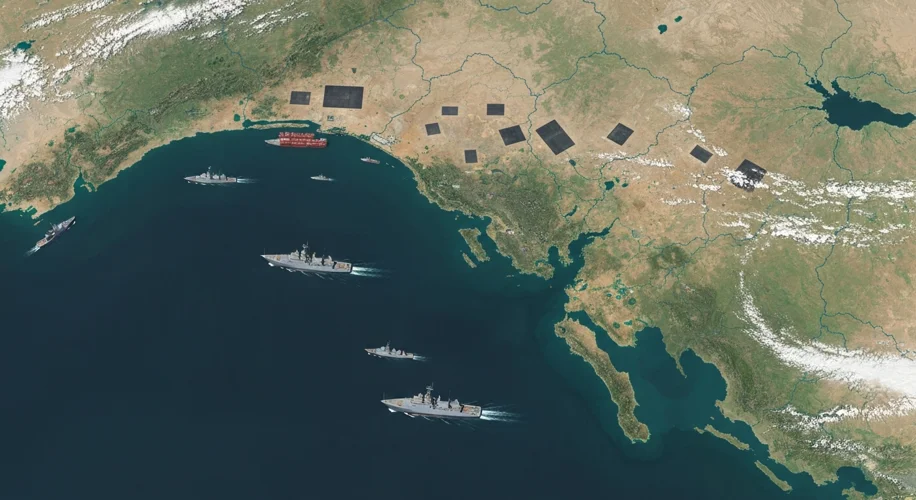

The Middle East, a region cradled by ancient civilizations and a crossroads of global trade, has long been a focal point of international interest. For decades following World War II, this strategic expanse became an arena where the United States, grappling with the burgeoning Cold War and its own evolving role on the world stage, exerted its military might. These interventions, often shrouded in complex geopolitical calculations and driven by a mix of perceived threats and economic interests, have left an indelible mark on the region and the global order.
The Post-War Landscape: A New Game of Thrones
As World War II drew to a close, the old colonial powers, namely Britain and France, began to recede from their Middle Eastern spheres of influence. This power vacuum, coupled with the rise of the United States and the Soviet Union as superpowers, set the stage for a new era of geopolitical maneuvering. The region, rich in oil and strategically positioned between Europe and Asia, became a crucial theater in the ideological struggle between capitalism and communism.
One of the earliest and most significant interventions, though covert, occurred in Iran in 1953. The democratically elected Prime Minister, Mohammad Mosaddegh, had nationalized the Anglo-Iranian Oil Company, a move that threatened Western oil interests. In a clandestine operation orchestrated by the CIA and MI6, Mosaddegh was overthrown, and the Shah, Mohammad Reza Pahlavi, was reinstalled. This event cemented the Shah’s authoritarian rule and deeply entrenched US influence, but it also sowed seeds of resentment that would later bear bitter fruit.
The Eisenhower Doctrine and the Dominoes of Influence
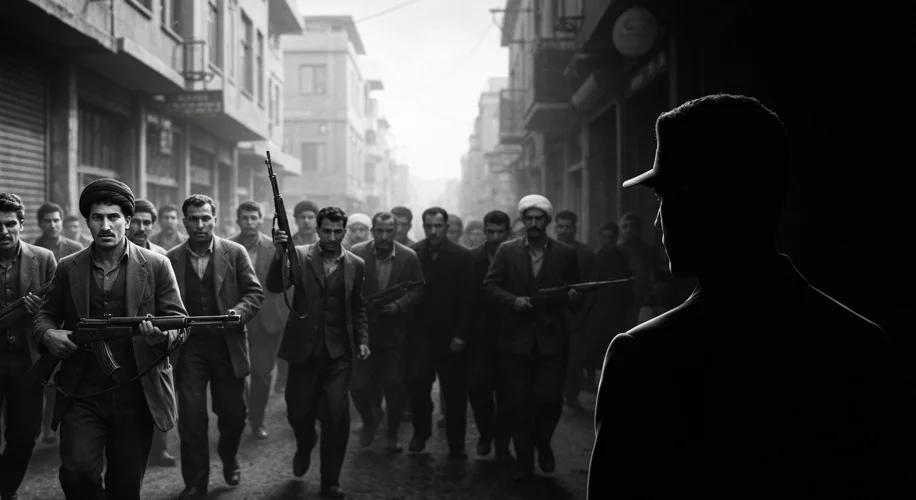
By 1957, the Eisenhower Doctrine explicitly stated the United States’ commitment to use armed force to defend Middle Eastern nations against communist aggression. This doctrine signaled a more overt US military presence, moving beyond covert operations. The following year, Lebanon found itself embroiled in a sectarian conflict, and at the Lebanese government’s request, President Eisenhower deployed some 14,000 US Marines to stabilize the country. While the intervention was relatively brief and bloodless, it underscored the US willingness to intervene directly to maintain friendly regimes.
The Arab-Israeli conflict, a simmering cauldron of national aspirations and territorial disputes, also drew the attention of the US. While the US officially supported Israel, its engagement in the region was often complex, aiming to balance its strategic alliance with Israel against its relationships with oil-producing Arab states. The Six-Day War in 1967 and the Yom Kippur War in 1973 saw the US provide significant military aid to Israel, reinforcing its position as a key player in regional security.
The Oil Crisis and the Quest for Stability
The 1973 oil embargo, imposed by Arab members of OPEC in response to US support for Israel, sent shockwaves through the global economy. This event starkly highlighted the region’s critical role in global energy security and intensified US efforts to secure its interests. The subsequent years saw a continued focus on maintaining the flow of oil and preventing the rise of hostile powers that could disrupt this vital supply line.
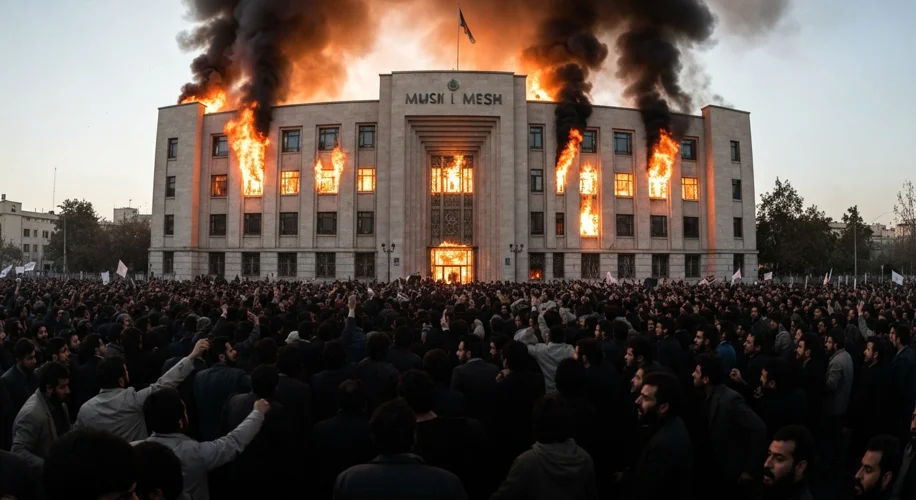
In 1979, the Iranian Revolution brought about a seismic shift. The overthrow of the US-backed Shah and the establishment of an Islamic Republic under Ayatollah Khomeini marked a significant setback for American influence. The subsequent hostage crisis, where 52 American diplomats and citizens were held captive for 444 days, was a deeply humiliating episode that dominated US foreign policy for over a year.
The Reagan Era and the Shadow of Proxy Wars
Under President Ronald Reagan, US military involvement in the Middle East became more assertive. While not always involving direct ground combat for US forces, the Reagan administration pursued a policy of countering Soviet influence and supporting anti-communist forces. This often translated into proxy conflicts and increased military aid to regional allies.
The Iran-Iraq War (1980-1988), a brutal and protracted conflict, saw the US play a complex and often contradictory role. While officially neutral, the US tilted towards Iraq, providing intelligence and some military support, primarily to prevent an Iranian victory that could destabilize the region further. This period also saw the beginnings of the US naval presence in the Persian Gulf, aimed at protecting oil shipping lanes.
A Legacy of Intervention
The late 20th century witnessed a pattern of US military engagement in the Middle East characterized by a mix of direct intervention, proxy support, and diplomatic maneuvering. From the covert coup in Iran to the overt deployment of troops in Lebanon, and the complex dynamics of the Arab-Israeli conflict and the Iran-Iraq War, these interventions were driven by a confluence of factors: the strategic importance of oil, the ideological battle of the Cold War, and the desire to maintain regional stability perceived to be in the US interest.
These actions, however, were not without their consequences. They often fueled anti-American sentiment, contributed to political instability, and laid the groundwork for future conflicts. The history of US military involvement in the Middle East during this period is a complex tapestry woven with threads of strategic calculation, unintended consequences, and the enduring human stories of those caught in the crossfire.