In the vast, shimmering blue of our planet’s oceans lie jewels – islands. These isolated paradises, often teeming with unique life found nowhere else on Earth, are also incredibly fragile. For millennia, they evolved in splendid isolation, developing life forms perfectly suited to their environments. But when humanity, with its insatiable curiosity and relentless movement, arrived, it often brought unwelcome guests.
Imagine a world where a creature, utterly unprepared for predators, suddenly finds itself on an island that has never known its like. This isn’t a scene from a science fiction novel; it’s a recurring tragedy playing out across the globe, a silent invasion that has led to the decline and extinction of countless native species. This is the story of introduced species and their profound, often devastating, impact on island ecosystems.
The story often begins with a single, seemingly innocuous act. A sailor’s pet parrot escapes its cage on a remote Pacific island. A farmer, seeking to diversify crops, plants a fast-growing vine on a Caribbean isle. A ship, laden with goods, docks in a new harbor, unknowingly carrying stowaways in its cargo hold. These are the seeds of ecological disaster.
Consider the Galápagos Islands, a living laboratory that inspired Charles Darwin. These volcanic outposts, once a haven for unique species like the giant tortoise and the marine iguana, have been profoundly altered by the introduction of goats, rats, cats, and invasive plants. The goats, voracious herbivores, devoured the native vegetation, destroying habitats and outcompeting native herbivores. Rats, arriving on ships, became a menace to ground-nesting birds and reptile eggs, decimating populations that had no natural defenses against such predators.
The consequences are often swift and brutal. Native species, evolved in isolation, lack the innate defenses – behavioral or physiological – to cope with new competitors, predators, or diseases. The dodo bird of Mauritius, a flightless wonder, was driven to extinction by introduced animals like pigs, rats, and monkeys that preyed on its eggs and young, and by deforestation that destroyed its habitat. The passenger pigeon, once numbering in the billions across North America, vanished entirely, its extinction a stark reminder of how even abundant species can be pushed over the edge by combined pressures, including introduced diseases and habitat loss.
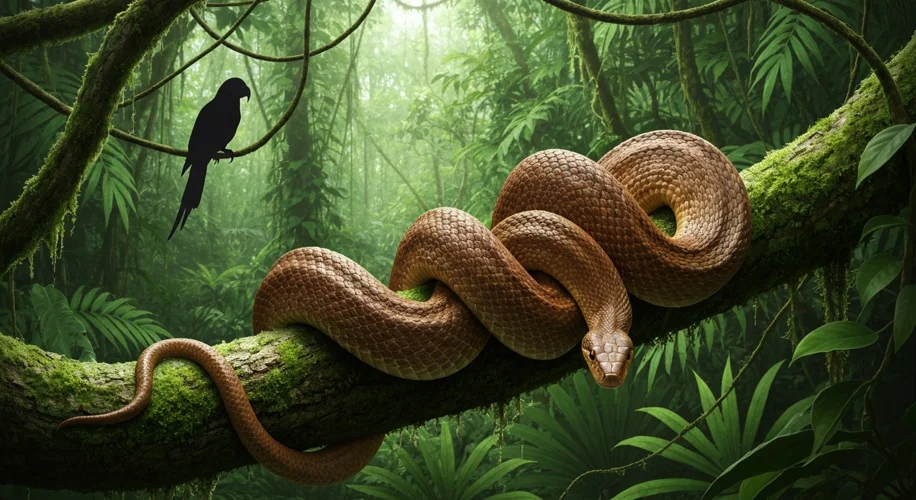
One of the most insidious invaders is the brown tree snake (Boiga irregularis). Accidentally introduced to Guam after World War II, likely as a stowaway on military cargo, this non-native predator has had a catastrophic impact. With no natural predators on the island, the snake population exploded, leading to the extinction or near-extinction of most of Guam’s native forest birds. The forest, once alive with birdsong, fell into an eerie silence.
Beyond the direct predation, introduced species can fundamentally alter entire ecosystems. Invasive plants can outcompete native flora for sunlight, water, and nutrients, transforming lush forests into monocultures of foreign weeds. These changes then ripple through the food web, affecting insects, birds, and mammals that depend on the native plants for survival. Feral cats, for instance, are not only predators of birds and small mammals but can also spread diseases that impact native wildlife.
It’s not just the animals and plants that suffer. The human populations on islands, often deeply connected to their local environment, can also experience profound impacts. Loss of native biodiversity can affect traditional food sources, cultural practices, and even the aesthetic beauty that draws tourism and sustains economies.
The fight against introduced species is a monumental, often uphill, battle. Conservation efforts worldwide are pouring resources into eradication programs, habitat restoration, and the development of biosecurity measures to prevent future introductions. From the intensive culling of goats on Pinta Island in the Galápagos to remove the last individuals of the species that included Lonesome George, to the ongoing efforts to control invasive rodents on islands across the Pacific, dedicated individuals and organizations are working tirelessly.

The lesson is clear: our interconnected world, while bringing many benefits, also carries inherent risks. The introduction of species, whether accidental or intentional, is a powerful force that can unravel the intricate tapestry of life on isolated islands. Understanding this dynamic is crucial. It calls for greater awareness, more stringent biosecurity, and a collective commitment to protecting these unique, irreplaceable natural treasures from the silent, often unseen, tide of invasion.
The story of introduced species on islands is a somber testament to the delicate balance of nature and the far-reaching consequences of human actions. It is a story that continues to unfold, a constant reminder that even in the most remote corners of our planet, the impact of our global reach can be profound and irreversible.