Imagine a world not of bustling cities and humming technology, but of colossal beasts and alien landscapes. A world where the very air might have teemed with unfamiliar life, and where sudden, catastrophic events reshaped the planet with terrifying finality. This is not a scene from a science fiction epic, but a glimpse into Earth’s deep history, a history pieced together by the dedicated work of paleontologists.
For millennia, humanity has stumbled upon the fossilized remains of creatures long gone – massive bones, peculiar shells, and enigmatic imprints. These fragments, once seen as curiosities or the work of mythical beasts, are now the keys that unlock a profound understanding of life’s grand, and often brutal, evolutionary journey. Paleontology, the scientific study of ancient life, is our most powerful tool for deciphering these ancient whispers and understanding the dramatic chapters of extinction that punctuate our planet’s story.
The Detective Work of Ancient Worlds
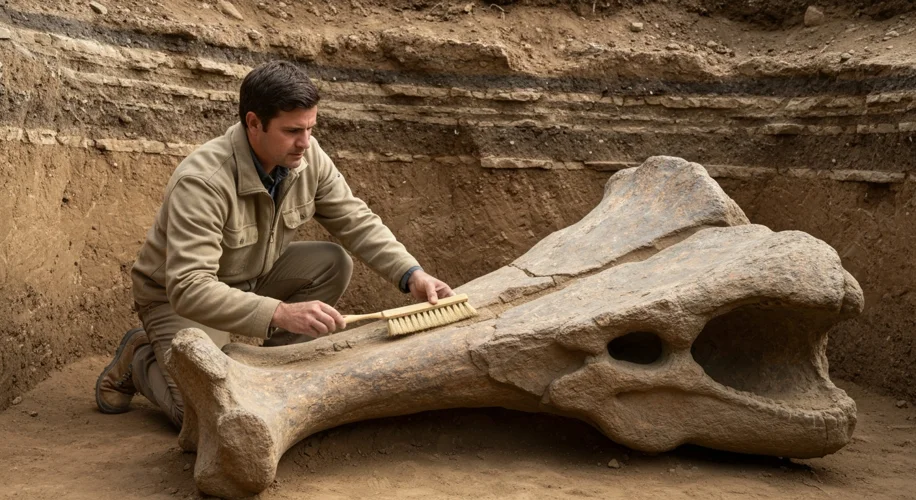
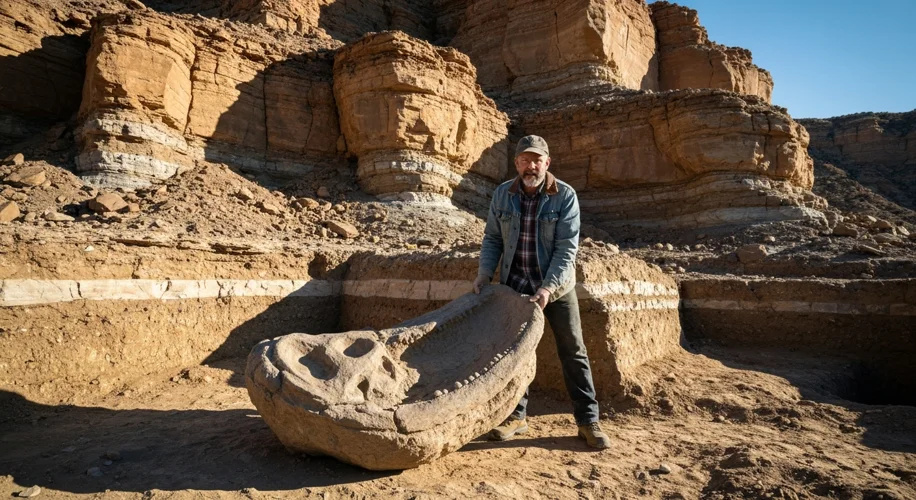
Think of a paleontologist as a detective, but instead of a crime scene, they work with a vast, ancient tableau. Their evidence lies buried deep within the Earth’s crust – rocks that are essentially time capsules, preserving the imprints of life from millions, even billions, of years ago. The methods they employ are as diverse as the life forms they study.
Radiometric dating, for instance, allows scientists to determine the age of rocks and fossils with remarkable accuracy. By analyzing the decay of radioactive isotopes within these geological samples, they can construct timelines, placing events like mass extinctions within their proper chronological context. Imagine dating a fossil from the “Great Dying” – the Permian-Triassic extinction event – to approximately 252 million years ago, a period when an estimated 96% of all marine species and 70% of terrestrial vertebrate species vanished.
But dating is just the beginning. Paleontologists meticulously analyze the morphology of fossils – their shape, structure, and texture. These physical characteristics tell stories of diet, locomotion, adaptation, and the environment in which the creature lived. A shark’s tooth, for example, reveals its predatory nature and the abundance of prey in its ancient oceanic habitat. The delicate structure of a fern fossil speaks of a humid, ancient forest. The famous trilobites, with their segmented bodies and complex eyes, offer a window into the early complex life that thrived in Paleozoic seas.
Reconstructing Lost Ecosystems
One of paleontology’s greatest triumphs is its ability to reconstruct ancient ecosystems. By studying the assemblage of fossils found together in a particular geological layer, scientists can infer the relationships between different species and the environment they inhabited. This is akin to looking at a snapshot of a long-lost world.
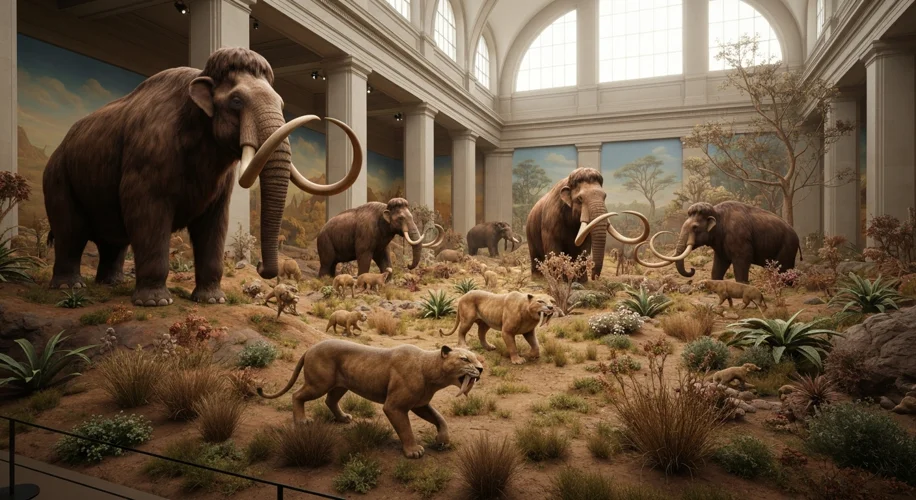
Consider the famous La Brea Tar Pits in California. This site, remarkably preserved over tens of thousands of years, contains an astonishing collection of Ice Age fossils. The pits trapped mammoths, saber-toothed cats, dire wolves, and countless smaller creatures. Paleontologists, by studying the types of animals trapped, the presence of predators and prey, and the geological context, can paint a vivid picture of Pleistocene ecosystems in Southern California – a landscape far different from today’s urban sprawl.
Similarly, the fossil-rich badlands of Montana and Alberta have revealed the world of the dinosaurs. Here, paleontologists have uncovered a stunning diversity of Cretaceous flora and fauna. The presence of herbivores like Triceratops and Hadrosaurs, alongside predators like Tyrannosaurus Rex, alongside fossilized plants that indicate a warmer, wetter climate, allows for the reconstruction of these vibrant, ancient landscapes.
The Great Extinction Events: Clues from the Rocks
Paleontology’s most profound contribution lies in its illumination of Earth’s mass extinction events. These are not gradual declines but periods of rapid, catastrophic loss of biodiversity. By studying the fossil record, scientists have identified at least five major mass extinctions, often referred to as the “Big Five”:
- The End-Ordovician Extinction (around 443 million years ago): Likely caused by global cooling and glaciation.
- The Late Devonian Extinction (around 372 million years ago): A prolonged period of extinction affecting marine life, possibly linked to anoxia (lack of oxygen) in the oceans.
- The Permian-Triassic Extinction (The Great Dying) (around 252 million years ago): The most severe, with massive volcanic activity in Siberia believed to have released greenhouse gases, causing extreme global warming and ocean acidification.
- The Triassic-Jurassic Extinction (around 201 million years ago): Linked to volcanic activity associated with the breakup of the supercontinent Pangea.
- The Cretaceous-Paleogene (K-Pg) Extinction (around 66 million years ago): Famously known for wiping out the non-avian dinosaurs, this event is strongly linked to a massive asteroid impact in the Yucatán Peninsula (the Chicxulub impactor) and subsequent volcanic activity.
Fossil evidence is critical for understanding these events. For the K-Pg extinction, the discovery of a thin layer of iridium-rich clay around the world, dating precisely to the time of the dinosaur extinction, provided a smoking gun for the asteroid impact theory. This layer, found at sites from New Mexico to Spain, contained microtektites – tiny glass beads formed from molten rock ejected by the impact.
The study of fossilized organisms at the boundary between the Cretaceous and Paleogene periods shows a stark difference: below the iridium layer, dinosaur fossils are abundant; above it, they vanish, replaced by early mammals and birds. This abrupt transition is powerful evidence of a sudden, catastrophic event.
Lessons from the Past for the Future
Paleontology is not merely an academic pursuit of ancient curiosities. It provides crucial context for understanding the fragility of life and the forces that drive evolutionary change. The insights gleaned from studying past extinctions are eerily relevant to our current era, often termed the “Anthropocene,” where human activities are driving unprecedented rates of biodiversity loss.
By understanding the causes and consequences of past cataclysms – from asteroid impacts to massive volcanic eruptions and drastic climate shifts – we gain invaluable perspective on the potential outcomes of our own actions. The fossil record serves as a stark warning, demonstrating that life on Earth is not static and that even dominant species can disappear in the blink of an geological eye.
Through the painstaking work of paleontologists, we continue to uncover the incredible story of life on our planet, a story etched in stone, a testament to resilience, adaptation, and the profound, often violent, cycles of extinction and renewal that have shaped Earth for billions of years. The echoes of these ancient extincess reach across time, urging us to learn from the past to safeguard our future.