
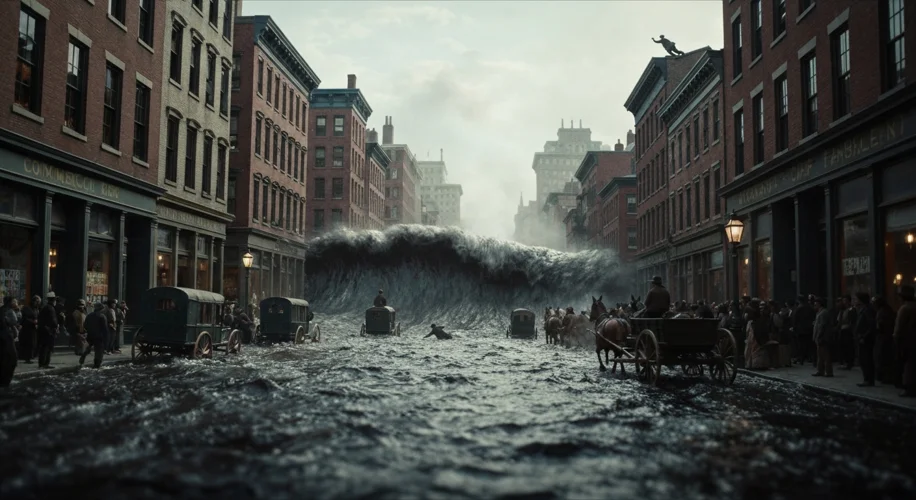
The frigid air of Boston on January 15, 1919, carried the usual winter chill, but it was about to be replaced by a suffocating, sticky wave of a far more unusual kind. The city, still buzzing from the end of World War I and teetering on the precipice of the Roaring Twenties, was about to experience a disaster that was as bizarre as it was deadly: the Great Molasses Flood.
For years, a colossal steel tank, holding an astonishing 2.3 million gallons of molasses, had stood on the edge of Boston’s North End. Owned by the Purity Distilling Company, a subsidiary of United States Industrial Alcohol, this behemoth was a vital, if unglamorous, component of the city’s industrial landscape. The molasses, a thick, dark syrup, was destined to be fermented into industrial alcohol, a crucial ingredient for munitions manufacturing during the war. But with the war’s end, its intended purpose shifted to producing spirits for the thirsty public, a prospect that loomed large as Prohibition’s shadow began to lengthen.
The tank itself was a monstrosity of riveted steel, standing 50 feet tall and 50 feet in diameter. It was an imposing structure, a testament to industrial ambition. However, its construction had been rushed, and corners were cut. Locals had long complained about its constant groaning and leaking, with children often seen catching the sweet drips in pails. Some even claimed to have seen the rivets sweating with molasses on warmer days. The company, however, seemingly paid little heed to these warnings.
On that fateful Tuesday afternoon, a day unusually warm for January, with temperatures climbing into the low 40s Fahrenheit, the atmosphere inside the tank was a ticking time bomb. The molasses, recently delivered and warmer than the ambient temperature, combined with the expansion caused by the temperature fluctuation, created immense pressure within the already strained vessel. Then, with a deafening roar that echoed through the city streets, the tank burst.
Imagine the scene: a tsunami, not of water, but of thick, viscous molasses, surging outwards. It moved at an estimated 35 miles per hour, a dark, sticky wave that engulfed everything in its path. Buildings were splintered and tossed aside like matchsticks. Wagons were overturned, and horses were swallowed by the churning syrup. The sheer force of the 15-foot-high wave was terrifyingly destructive.
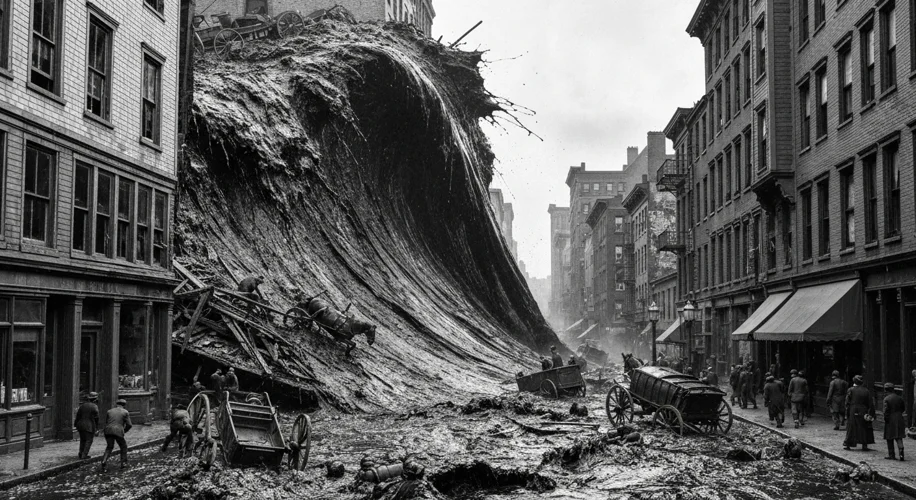
The immediate aftermath was a scene of chaos and horror. Rescuers, struggling through waist-deep molasses, found themselves trapped, their movements hampered by the sticky mass. Survivors described the suffocating smell and the terrifying sounds of those caught in the deluge, their cries for help swallowed by the syrupy tide. The molasses was so thick that it coated everything, making breathing difficult and movement nearly impossible. It seeped into homes, trapping families, and clung to victims with a suffocating grip.
By the time the sticky wave finally receded, it had claimed 21 lives and injured 150 others. The cleanup effort was monumental, taking weeks and thousands of laborers to clear the streets, homes, and the harbor. The city was coated in a brown, sticky film that refused to wash away easily, a grim reminder of the disaster. The smell of molasses reportedly lingered in the North End for decades.
The Great Molasses Flood wasn’t just a freak accident; it was a stark illustration of corporate negligence and the human cost of cutting corners in industrial development. Investigations followed, and it was revealed that Purity Distilling had rushed the tank’s construction and ignored numerous safety concerns. In the ensuing lawsuits, the company was found liable, setting a precedent for corporate responsibility in industrial accidents.
This bizarre, tragic event remains etched in Boston’s history, a sticky, dark legend that serves as a potent reminder of the often-unseen dangers lurking beneath the surface of industrial progress. It’s a story that reminds us that behind every great structure, behind every ambitious company, lies a responsibility to human life, a responsibility that, when ignored, can have devastating and unforgettable consequences.