
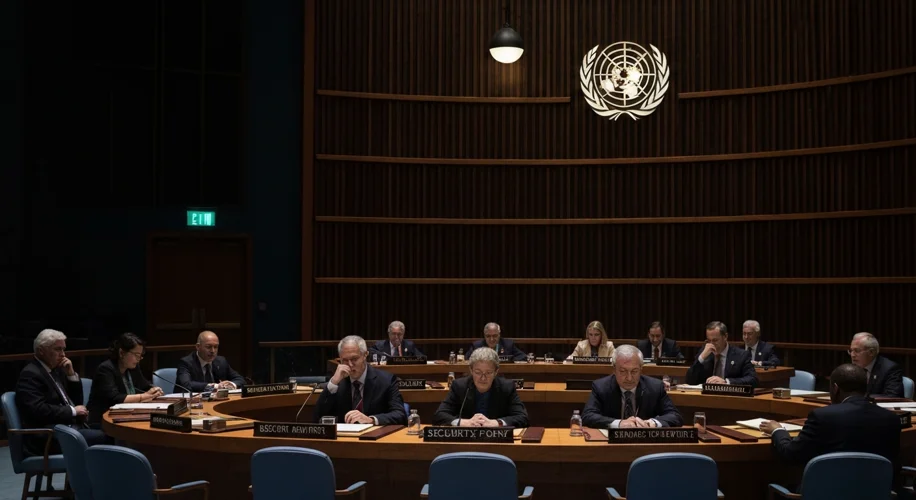
In the aftermath of the Second World War, a flicker of hope ignited across a war-weary globe. Representatives from nations great and small convened, their hearts heavy with the recent horrors, yet resolute in their quest for a lasting peace. From this collective aspiration, the United Nations was born in 1945, a grand experiment forged from the ashes of conflict, dedicated to the noble ideals of preventing future wars and fostering international cooperation. But nearly eight decades later, as the world grapples with a new landscape of geopolitical tensions and persistent humanitarian crises, one question echoes with increasing urgency: has the UN lived up to its promise?
The UN’s charter, a document brimming with optimism, bestowed upon its Security Council the primary responsibility for maintaining international peace and security. Its tools were diplomacy, peacekeeping missions, sanctions, and, as a last resort, the authorization of military force. The early years saw tentative successes, but the Cold War’s icy grip soon cast a long shadow over the Security Council’s effectiveness. The inherent power of the veto, wielded by the five permanent members (China, France, Russia, the United Kingdom, and the United States), often paralyzed the organization, turning potential interventions into protracted debates and inaction.
Consider the stark reality of the Rwandan genocide in 1994. As the horrific slaughter of an estimated 800,000 people unfolded over 100 days, the UN’s response was tragically inadequate. Despite clear warnings and a dwindling peacekeeping force that was eventually reduced to a mere skeleton crew, the Security Council dithered, bogged down by political squabbles and a reluctance to label the atrocities for what they were: genocide. The chilling silence of the international community, embodied by the UN’s paralysis, remains a haunting testament to its limitations.
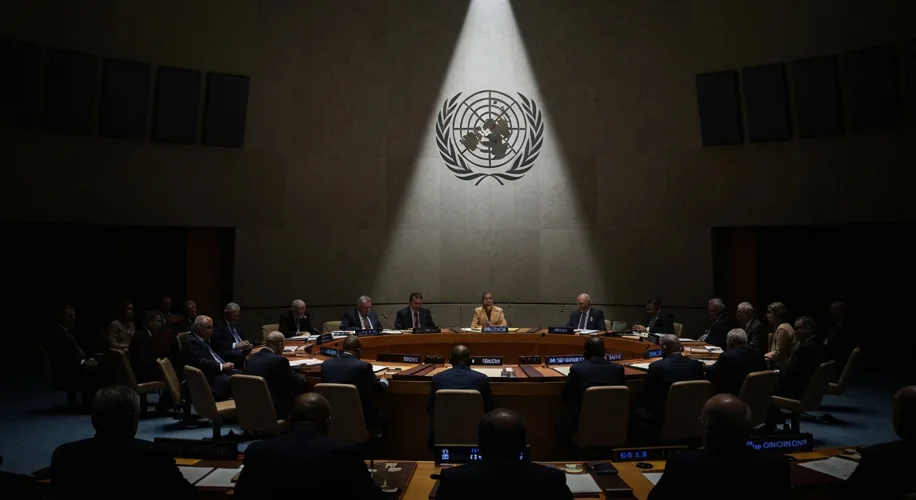
Then there’s the ongoing saga in Syria. Since the conflict erupted in 2011, the UN has been a witness to unimaginable suffering. While humanitarian aid has been a lifeline for millions, the Security Council’s inability to forge a unified front against the brutal Assad regime, often due to Russian and Chinese vetoes, has prevented decisive action. The prolonged civil war, marked by chemical weapon attacks and mass displacement, stands as another painful chapter in the UN’s struggle to fulfill its peace-enforcing mandate.
However, to paint the UN as solely an entity of failure would be to ignore its significant contributions. In the realm of humanitarian aid, through agencies like UNICEF and the World Food Programme, the UN has alleviated untold suffering, providing essential services, food, and shelter to populations caught in the crossfire of conflicts and natural disasters. Its peacekeeping operations, though often criticized, have provided crucial stability in numerous regions, acting as a buffer between warring factions and creating space for diplomatic solutions. The UN’s work in decolonization, its role in setting international law, and its efforts to combat global challenges like climate change and disease underscore its indispensable, albeit imperfect, role on the world stage.
The effectiveness of the UN is not a simple equation of successes and failures. It is a complex tapestry woven with threads of political will, national interests, and the inherent challenges of coordinating nearly 200 sovereign states. The veto power, intended to prevent a repetition of the League of Nations’ impotence, has paradoxically become a stumbling block. The Security Council’s composition, reflecting the geopolitical realities of 1945, is increasingly anachronistic in the 21st century, lacking representation from major emerging powers.
Ultimately, the UN remains a reflection of its member states. Its strengths lie in their collective commitment, and its weaknesses are often a direct result of their divisions. While the dream of a world free from conflict may remain elusive, the UN, for all its flaws, continues to be the most viable global platform for dialogue, cooperation, and the pursuit of a more peaceful and just world. The question is not whether the UN is perfect, but whether we, as a global community, are willing to empower it to be more effective, to reform its structures, and to truly invest in the ideals it was founded upon.