
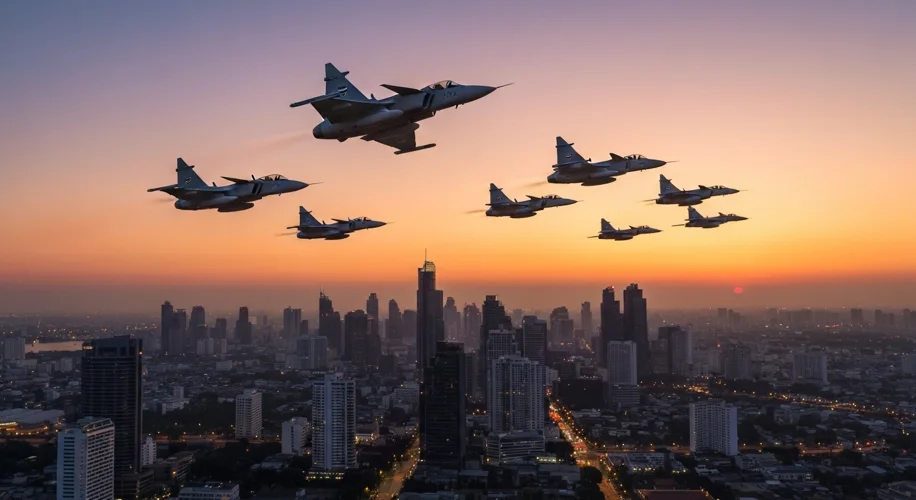
The year is 2005. A palpable tension hangs in the humid Bangkok air, not just from the tropical climate, but from a high-stakes decision gripping the Royal Thai Air Force (RTAF). For decades, the skies over Thailand had been dominated by American might, epitomized by the venerable F-16 Fighting Falcon. But now, a challenger, sleek and Swedish, was making its case: the Saab JAS 39 Gripen.
This wasn’t merely a procurement deal; it was a geopolitical statement, a ripple in the global arms market, and a testament to Europe’s burgeoning defense industry prowess. The F-16, a ubiquitous symbol of American air power, had long been the standard for many air forces worldwide. Its combat-proven pedigree, extensive upgrade paths, and the vast logistical support network of the United States made it a formidable contender.
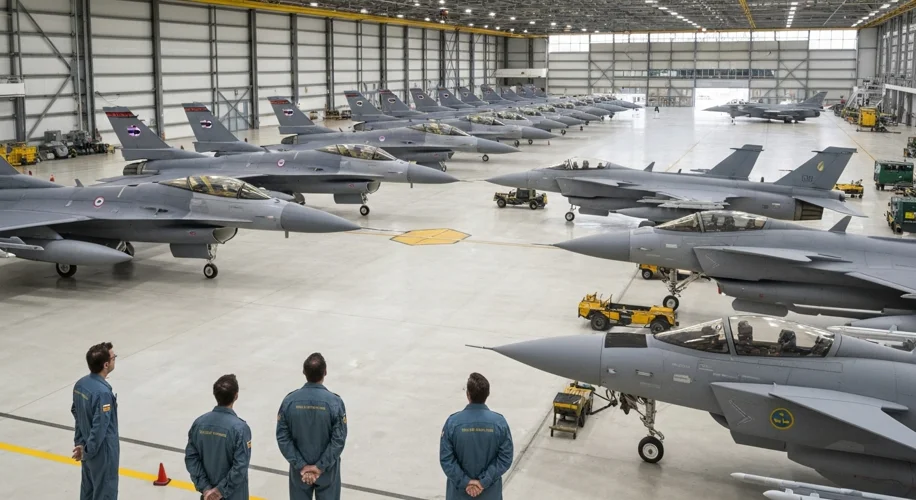
However, the RTAF was seeking something more than just a frontline fighter. They were looking for a cost-effective, versatile, and modern platform that could meet their specific defense needs without breaking the bank. Enter the Gripen, a relatively new entrant into the international fighter jet arena. Developed by Saab, a Swedish aerospace giant with a rich history of innovation, the Gripen was designed from the ground up with agility, advanced avionics, and affordability in mind. Its canard-delta wing configuration promised exceptional maneuverability, while its sophisticated sensor suite and open-architecture design suggested a degree of adaptability that appealed to nations seeking to avoid becoming overly reliant on a single foreign supplier.
The decision process was intricate, involving rigorous evaluations, flight demonstrations, and intense diplomatic maneuvering. The American delegation, confident in the F-16’s established reputation, presented a compelling case for continued partnership. They highlighted the jet’s combat experience, the established infrastructure for training and maintenance within Thailand, and the potential for future upgrades and integration with other US-supplied systems. The RTAF pilots who flew the F-16 were intimately familiar with its capabilities, and the logistical chain for spare parts and weaponry was already in place.
But Sweden, through Saab, offered a different narrative. The Gripen, they argued, was not just a fighter jet; it was a complete package. The initial purchase price was reportedly more attractive, and crucially, the operational and maintenance costs were projected to be significantly lower. This was a critical factor for the RTAF, which needed to balance cutting-edge capability with fiscal prudence. Furthermore, Sweden’s neutrality and its non-aligned foreign policy offered a degree of political advantage, suggesting a partnership less susceptible to the geopolitical winds that could affect US defense sales. The Gripen’s modular design also allowed for easier upgrades and customization, giving the RTAF greater control over its fleet’s technological evolution.

The RTAF’s eventual decision to acquire the Gripen was a watershed moment. It signaled a growing confidence in European defense manufacturers and a willingness by nations like Thailand to diversify their military suppliers. This move was not a rejection of American military hardware, but rather a strategic choice that prioritized long-term value, operational flexibility, and a desire for greater autonomy in its defense procurement.
The consequences of this decision were far-reaching. For Sweden, it was a significant victory, opening doors for the Gripen in other markets and bolstering Saab’s international standing. For the US, it was a stark reminder that the global defense landscape was becoming increasingly competitive, with European firms capable of challenging American dominance. It underscored the need for American manufacturers to remain innovative and competitive not just in terms of technological superiority, but also in terms of cost-effectiveness and adaptability.

The Thai Gripen saga is more than just an anecdote in aviation history; it’s a microcosm of larger global trends. It demonstrates how developing nations are becoming more discerning buyers, capable of conducting thorough evaluations and making independent decisions that best serve their national interests. It also highlights the evolving nature of air power, where agility, adaptability, and total cost of ownership are becoming as crucial as raw performance. The Gripen’s success in Thailand, and its subsequent adoption by other air forces, cemented its status as a serious contender in the advanced fighter jet market, proving that the sands of air superiority were indeed shifting, with new players emerging to challenge the established order.