
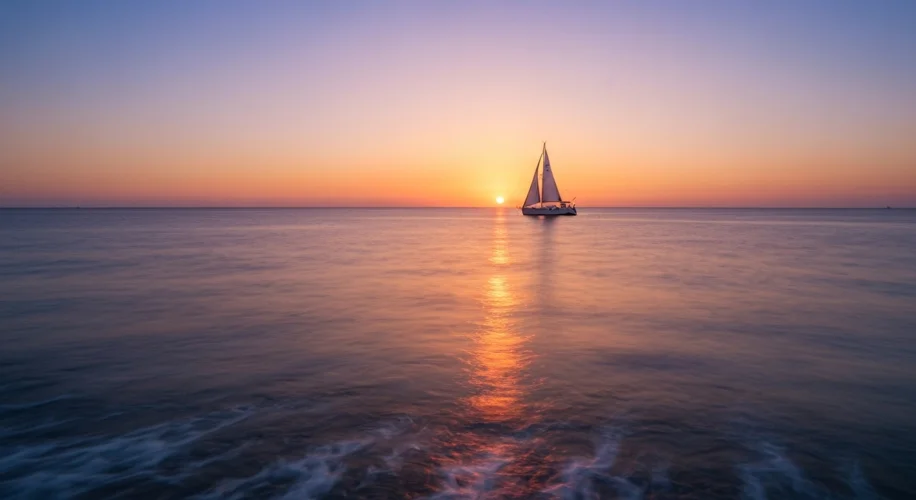
The vast Pacific Ocean, a realm of endless blue and unfathomable depths, has long held secrets whispered only by currents and the creatures of the abyss. For centuries, tales of lost civilizations and submerged lands have captivated imaginations, but now, science has begun to peel back the watery veil. In a discovery that promises to rewrite our understanding of ancient maritime cultures, an international team of marine archaeologists has unveiled what appears to be a sprawling, sophisticated metropolis lying dormant beneath the waves of the Pacific.
The scale of the find is, frankly, staggering. Preliminary surveys suggest an urban center covering an area of at least ten square miles, dwarfing many known ancient settlements. What’s more, the architectural sophistication and apparent urban planning indicate a society with advanced engineering and organizational capabilities, far beyond what was previously thought possible for cultures of that era. The city, which has been tentatively named ‘Aethelgard’ by the research team, features distinct districts, intricate canal systems, and what appear to be monumental structures, some of which rise hundreds of feet from the seabed.
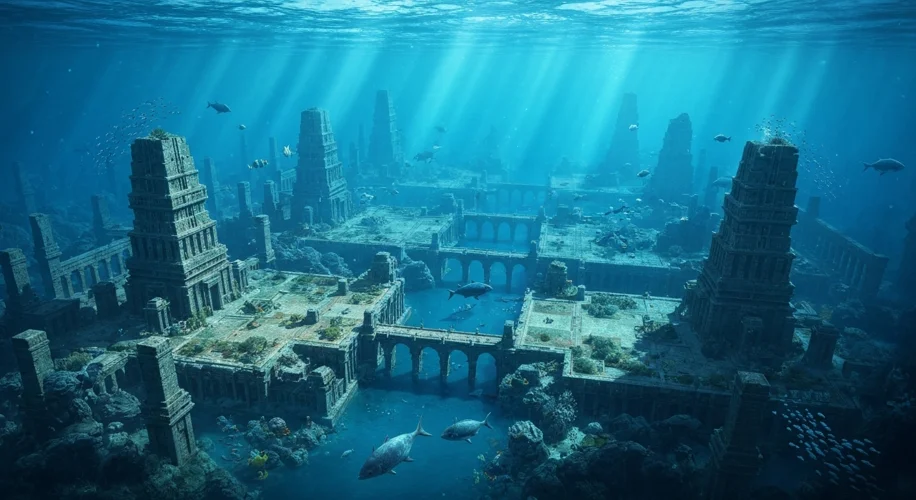
This isn’t just a scattering of ruins; it’s a meticulously designed urban landscape. Sonar mapping has revealed wide avenues, residential areas, and what archaeologists believe might be public gathering spaces or temples. The sheer volume of stonework, precisely cut and fitted, speaks to a level of craftsmanship that is awe-inspiring. Early analysis of some recovered artifacts—ceremonial tools, pottery shards with unique glyphs, and metallic objects of unknown composition—suggests a culture with a rich artistic and spiritual life.
The dating of the site remains a significant challenge, but initial radiocarbon dating of organic materials found within the structures points to an occupation period potentially stretching back over 5,000 years, placing it among the oldest known urban settlements on Earth. The implications are profound, potentially pushing back the timeline for complex societies and large-scale urbanism in Oceania by millennia.
Leading the expedition is Dr. Aris Thorne, a renowned maritime archaeologist whose previous work has focused on ancient trade routes. “We went in expecting to find perhaps a small settlement, a fishing village perhaps,” Thorne stated during a press conference held via satellite from the research vessel. “What we’ve found is… it’s humbling. It’s a testament to human ingenuity and the vast, untold stories still hidden in our oceans. The level of preservation is extraordinary, likely due to the relatively stable, deep-water environment.”
However, the discovery is not without its mysteries. The cause of Aethelgard’s submersion is currently unknown. Theories range from catastrophic seismic activity and subsequent subsidence to a gradual sea-level rise over centuries. The absence of widespread destruction marks suggests a more gradual inundation, allowing the inhabitants to potentially relocate, though no clear evidence of mass exodus has yet been found.
Another puzzle is the unique iconography found on the pottery and carved stone fragments. The glyphs bear no resemblance to any known Pacific island scripts, suggesting either a completely isolated cultural development or evidence of contact with civilizations previously unknown to history. “These symbols are unlike anything we’ve cataloged,” commented Dr. Lena Petrova, a linguist and epigrapher on the team. “We are on the cusp of potentially deciphering a lost language, a new window into a forgotten world.”
The sheer magnitude of Aethelgard presents immense challenges. Recovery and preservation efforts will require international cooperation and significant investment. Protecting the site from potential looting and environmental damage is paramount. The research team is working closely with various Pacific island nations, recognizing the cultural significance of such a find for the region.
As research vessels continue their meticulous mapping and sampling, the world watches with bated breath. The submerged city of Aethelgard stands as a silent, monumental testament to a chapter of human history that was lost to the waves, a chapter that is now, thrillingly, beginning to be rewritten.