
The air in classrooms today hums with a familiar anxiety: are students learning what they need to? Whispers of declining scholastic achievement, particularly in core subjects like mathematics and reading, echo across educational institutions and parental conversations. While this concern might feel like a distinctly modern predicament, the roots of fluctuating academic performance run deep into history, intertwined with societal shifts, educational reforms, and the very nature of learning itself.
History offers a fascinating, albeit complex, perspective on the ebb and flow of student success. It wasn’t so long ago that the very idea of widespread public education, let alone standardized testing to measure its efficacy, was a nascent concept. For much of human history, education was a privilege, largely confined to the elite, the clergy, or those pursuing specific trades. The ability to read, write, and perform arithmetic was not a universal benchmark of societal progress.
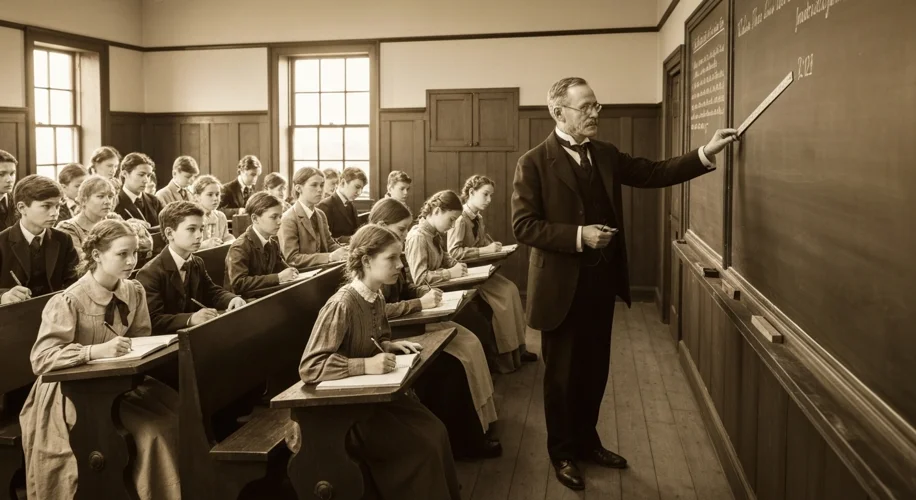
The advent of mass schooling in the 19th and early 20th centuries marked a seismic shift. As industrialization surged, so did the demand for a literate and numerate workforce. Educational systems were largely designed to impart foundational skills, with a focus on rote learning and discipline. In many ways, this era saw a general uplift in basic literacy and numeracy across larger segments of the population. Think of the fervent belief in education as the great equalizer, the pathway out of poverty and toward a brighter future.
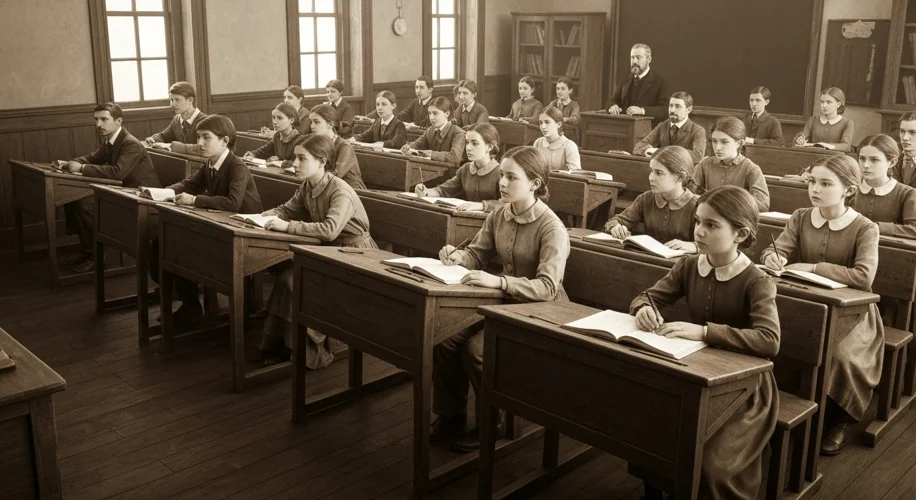
However, even in these periods, challenges were present. Social stratification often dictated the quality and accessibility of education. Students from poorer backgrounds might have faced underfunded schools, fewer resources, and teachers who were themselves struggling. The “achievement gap” is not a new phenomenon; it has merely evolved in its expression.
Periods of significant reform often followed perceived declines or the emergence of new societal needs. The mid-20th century, for instance, saw a surge in educational innovation, partly driven by the Cold War and the Space Race. The launch of Sputnik in 1957, a stark demonstration of Soviet technological prowess, sent shockwaves through the United States, prompting a national re-evaluation of its science and math education. The National Defense Education Act of 1958 poured federal funding into these areas, aiming to produce a generation of scientists and engineers capable of competing on the global stage.
This era of intense focus on STEM (Science, Technology, Engineering, and Mathematics) produced tangible results, contributing to advancements that defined the latter half of the century. Yet, the very specialization that fostered these gains could also, paradoxically, lead to a narrowing of focus, potentially at the expense of other critical subjects like humanities or arts, which are crucial for developing well-rounded critical thinkers.
The latter half of the 20th century and the dawn of the digital age brought new complexities. The explosion of information, the rise of new technologies, and the increasing globalization of economies demanded different skill sets. Educational philosophies shifted, with a greater emphasis on critical thinking, problem-solving, and adaptability. However, the transition was not always smooth. Debates raged about the best pedagogical approaches, the role of technology in the classroom, and how to measure learning effectively in a rapidly changing world.
Concerns about declining math and reading scores, particularly evident in international comparisons like the Programme for International Student Assessment (PISA) in recent decades, have ignited contemporary debates. Are the curricula too demanding, or not demanding enough? Are teaching methods outdated? Has the pervasive influence of digital media and shorter attention spans fundamentally altered how students learn and retain information?

It’s crucial to avoid a simplistic narrative of constant decline. Throughout history, educational systems have faced periods of both triumph and tribulation. Each era brings its unique set of challenges and opportunities. The concerns we voice today about scholastic achievement are, in many ways, echoes of historical anxieties about preparing the next generation for a world that is perpetually transforming.
Understanding these historical trends is not about assigning blame but about appreciating the complex, multifaceted nature of education. It suggests that any attempts to address perceived declines must be rooted in a deep understanding of pedagogical history, societal context, and the evolving needs of both students and the world they will inherit. The pursuit of effective education is a continuous journey, one that has always been shaped by the echoes of the past and the demands of the future.