
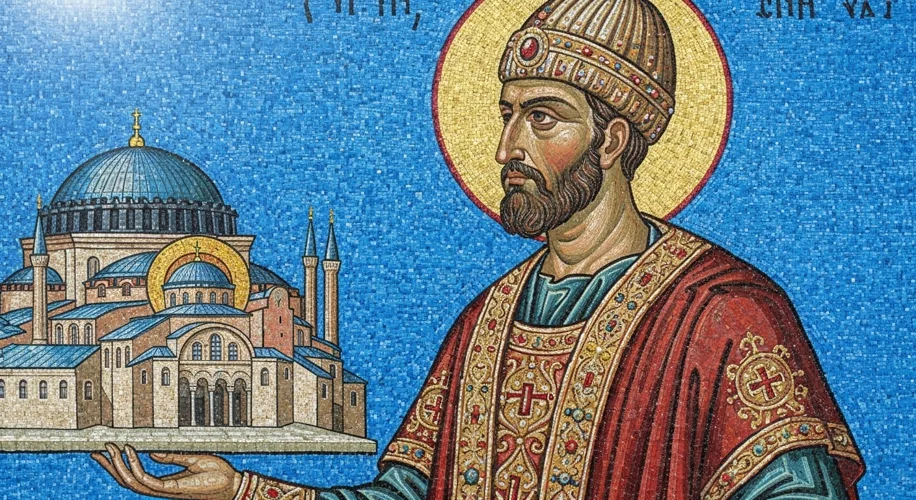
For over a millennium, a magnificent empire shimmered at the crossroads of Europe and Asia, a direct heir to the grandeur of Rome, yet forged in its own distinct crucible of culture, faith, and power. This was the Byzantine Empire, a civilization that, from its founding in the 4th century CE to its final, dramatic fall in 1453, served as a bulwark against encroaching empires, a beacon of Hellenistic and Roman traditions, and a vibrant center of art, law, and learning. Its legacy, often overshadowed by its Western Roman counterpart, is undeniably immense, shaping the very fabric of Eastern Europe and the Mediterranean world.
The story of Byzantium, often called the Eastern Roman Empire by its contemporaries, begins not with a bang, but with a strategic shift. Emperor Constantine the Great, seeking a more defensible and strategically vital capital, laid the foundations for Constantinople (modern-day Istanbul) on the ancient Greek city of Byzantium. This move in 330 CE was more than just a geographical relocation; it was a declaration of a new era, one that would see the Eastern half of the Roman Empire not only survive but thrive for a thousand years after the Western half crumbled under the weight of barbarian invasions.
Constantinople was a masterpiece of urban planning and a formidable fortress. Surrounded by massive defensive walls, including the legendary Theodosian Walls, it commanded the vital straits connecting the Black Sea to the Mediterranean. Its location facilitated trade, making it a nexus of East-West commerce, and its strategic position allowed it to weather numerous storms that would have engulfed lesser cities.
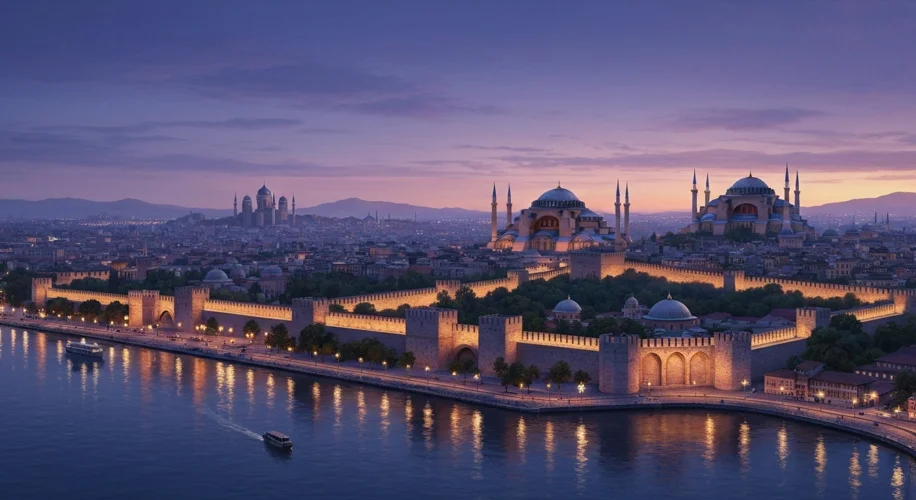
The empire’s cultural tapestry was rich and complex, woven from threads of Greek language and philosophy, Roman law and administration, and a deeply ingrained Orthodox Christianity. While Latin remained the language of the early military and administration, Greek quickly became the dominant vernacular and literary tongue. This fusion of cultures created a unique identity that permeated every aspect of Byzantine life, from the intricate mosaics adorning its churches to the sophisticated legal codes.
The Byzantine Empire was not merely a passive repository of ancient knowledge; it was an active participant in shaping the intellectual landscape of its time. Its scholars preserved classical texts, translating and commenting on the works of Plato, Aristotle, and Homer, ensuring their survival for future generations. The empire’s libraries and scriptoria were vital centers for the dissemination of learning, and its universities, particularly in Constantinople, fostered rigorous scholarship in theology, law, and the sciences.
Key figures punctuated the empire’s long history. Justinian I, in the 6th century, famously sought to reconquer the lost territories of the Western Roman Empire, achieving notable successes in North Africa and Italy. His reign also saw the codification of Roman law into the Corpus Juris Civilis, a legal framework that would influence legal systems across Europe for centuries. The emperor Basil II, known as the “Bulgar-Slayer,” solidified the empire’s borders in the 10th and 11th centuries through his relentless military campaigns.
The empire faced constant challenges. From the Sassanid Persians in the East to the Slavs and Avars in the Balkans, and later the Arabs, Bulgars, and Normans, Byzantium was perpetually engaged in defending its vast frontiers. The rise of Islam in the 7th century presented a significant new threat, leading to centuries of conflict and territorial loss, though the empire managed to hold onto Anatolia and Constantinople.
One of the most devastating blows came in 1204 during the Fourth Crusade. Instead of heading to the Holy Land, the crusaders, manipulated by Venetian interests, turned on Constantinople itself, sacking the city and establishing a Latin Empire. Although the Byzantines eventually recaptured their capital in 1261, the empire was permanently weakened, a shadow of its former glory.
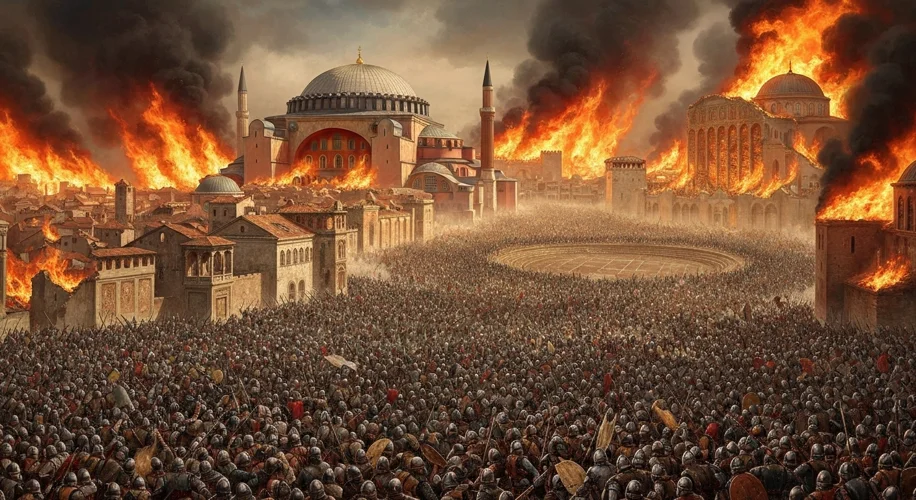
The final act in the grand drama of the Byzantine Empire unfolded on May 29, 1453. After a grueling siege, the Ottoman Turks, led by Sultan Mehmed II, breached the walls of Constantinople. The last Byzantine Emperor, Constantine XI Palaiologos, is said to have died fighting in the streets, a heroic, if ultimately futile, stand against overwhelming odds. The fall of Constantinople marked the end of an era, closing the chapter on a thousand years of Roman continuity and ushering in a new age dominated by Ottoman power.
The consequences of Byzantium’s fall were profound. It led to the dispersal of Greek scholars westward, contributing to the Renaissance in Italy. It solidified Ottoman control over the Eastern Mediterranean and the Balkans, fundamentally altering the geopolitical map of the region. For Eastern Europe, particularly the Slavic Orthodox nations, Byzantium had been the spiritual and cultural motherland, and its fall created a void that would be filled in various ways, most notably by Moscow, which began to style itself as the “Third Rome.”
The Byzantine Empire’s enduring legacy lies not just in its magnificent architecture or its preserved classical texts, but in its role as a bridge between worlds. It safeguarded a unique blend of Roman pragmatism and Hellenistic intellectualism, infused with the spiritual fervor of Eastern Christianity. Its legal system, its administrative practices, and its artistic traditions left an indelible mark on the development of numerous cultures, ensuring that the echoes of Rome, amplified and transformed in the East, would continue to resonate through the ages.
Byzantium reminds us that empires, like all human endeavors, are subject to the inexorable march of time. Yet, it also shows us the incredible resilience of civilization, the enduring power of culture, and the profound impact a single empire can have on the trajectory of human history.