
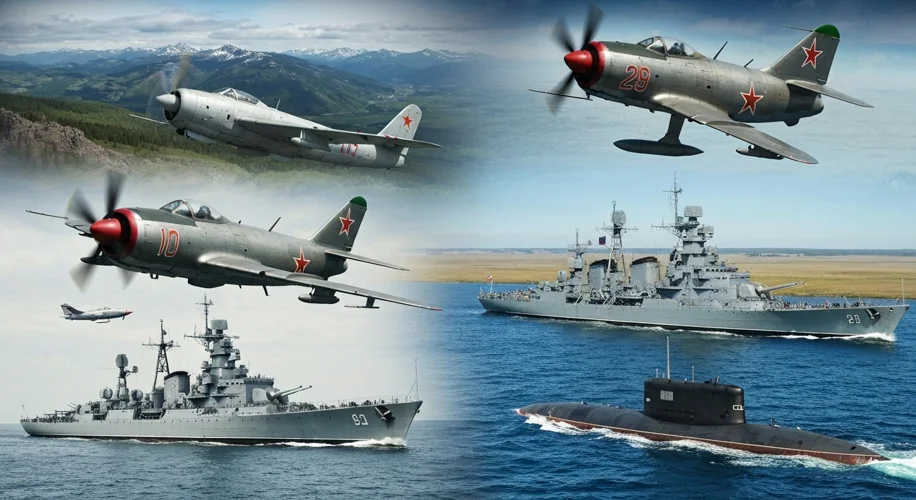
The vast expanse of Russia, a land of sweeping plains and formidable ice, has long been a crucible of innovation, where necessity has often been the mother of invention. For centuries, its people have looked to the skies and the seas, seeking to conquer distances and defend their colossal homeland. This is the story of Russia’s remarkable, and often turbulent, journey in aviation and shipbuilding – a saga of pioneering spirit, imperial ambition, and enduring resilience.
The seeds of Russian aviation were sown in the fertile ground of late Tsarist Russia, a period of both burgeoning industrialization and a deep-seated fascination with the impossible. Visionaries like Konstantin Tsiolkovsky, a self-taught rocket scientist from the provincial town of Borovsk, dreamt of ‘celestial travel’ long before the Wright brothers took their historic flight. His theoretical work on rocketry and spaceflight, though largely unrecognized in his time, laid the intellectual groundwork for future generations.

Simultaneously, Russia’s shipbuilding prowess was not a new phenomenon. From Peter the Great’s ambitious naval reforms in the early 18th century, which established a formidable Baltic Fleet, to the construction of powerful dreadnoughts in the early 20th century, Russia had a long tradition of maritime might. The Black Sea Shipyards and the Admiralty Shipyards in St. Petersburg were centers of cutting-edge naval technology, churning out vessels that projected imperial power across the globe.
The true dawn of Russian aviation, however, arrived with the pioneering spirit of the early 20th century. Igor Sikorsky, a name that would later become synonymous with helicopters, was a driving force. In 1913, he unveiled the ‘Russky Vityaz’ (Russian Knight), the world’s first four-engine aircraft. This colossal biplane, capable of carrying multiple passengers, was a testament to Russian ingenuity and a harbinger of the aerial age. Sikorsky’s subsequent creation, the ‘Il’ya Muromets,’ a bomber so advanced it was used as a passenger plane in peacetime, cemented Russia’s early lead in heavy aviation.
Yet, the winds of change blew fiercely. The turbulent years of the 1917 Revolution and the subsequent civil war fractured this nascent industry. Many brilliant minds, including Sikorsky himself, fled the country. However, the Soviet era, despite its immense human cost, would witness a dramatic resurgence. Under Joseph Stalin, aviation and shipbuilding were prioritized as crucial pillars of national defense and industrial power.
The 1930s saw the rise of legendary Soviet aircraft designers like Andrei Tupolev and Sergei Ilyushin. Tupolev’s designs, characterized by their robust construction and operational efficiency, led to iconic aircraft like the ANT-25, which famously completed a non-stop Moscow-to-San Francisco flight in 1937. Ilyushin’s Il-2 ‘Shturmovik,’ a heavily armored ground-attack aircraft, became the most produced military aircraft in history, a terrifying force on the Eastern Front during World War II.
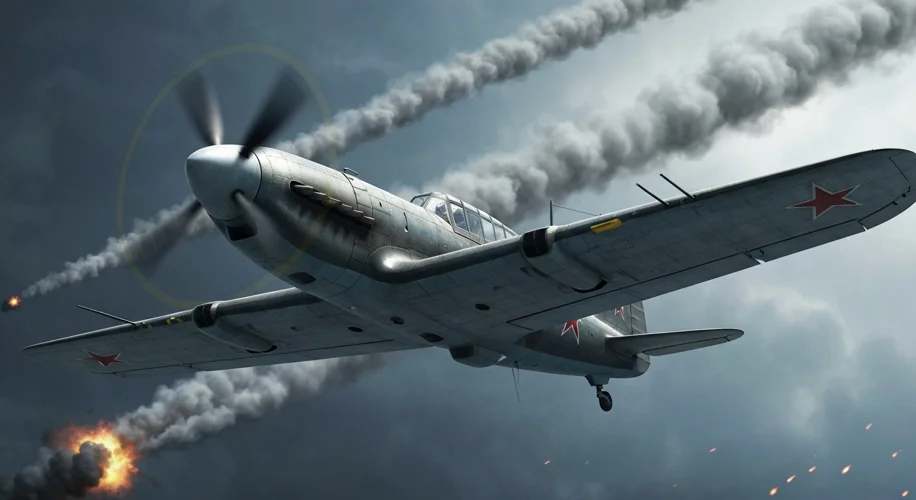
The Second World War proved to be a brutal proving ground. While facing immense losses, Soviet industry, relocated to the Urals to escape advancing German forces, churned out an astonishing number of aircraft and tanks. The resilience and sheer scale of Soviet production were crucial in turning the tide against Nazi Germany.
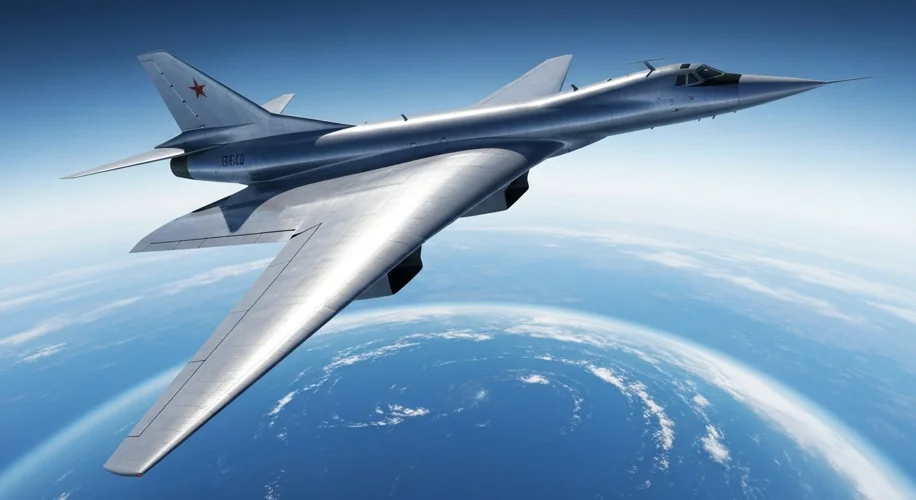
In the post-war era, the Cold War fueled an intense arms race, with aviation and shipbuilding at its forefront. The Soviet Union became a superpower, and its defense industry was a critical component of that status. The development of jet aircraft, from fighters like the MiG-15, which famously challenged American jets in the Korean War, to the supersonic Tu-144, a rival to the Anglo-French Concorde, showcased Soviet technological ambition.
Naval shipbuilding, too, underwent a massive expansion. The Soviet Union built a blue-water navy, including an ambitious nuclear submarine program that posed a significant challenge to the West. Shipyards like Severodvinsk became sprawling complexes dedicated to constructing everything from colossal aircraft carriers to stealthy diesel-electric submarines.
The collapse of the Soviet Union in 1991 cast a long shadow over these industries. Funding dried up, expertise scattered, and many facilities fell into disrepair. However, the story did not end there. In recent decades, Russia has striven to revitalize its aerospace and shipbuilding sectors. While facing economic challenges and international sanctions, there have been renewed efforts to develop advanced aircraft like the Sukhoi Su-57 stealth fighter and to modernize its naval fleet.
The legacy of Russian aviation and shipbuilding is one of remarkable innovation born from necessity and ambition. From Tsiolkovsky’s celestial dreams to the thunderous roar of jet engines and the silent power of nuclear submarines, Russia’s engineers and workers have consistently pushed the boundaries of what is possible. Their contributions have not only shaped military history but have also left an indelible mark on the global technological landscape, a testament to the enduring spirit of a nation that has always looked to the horizon with determined eyes.