
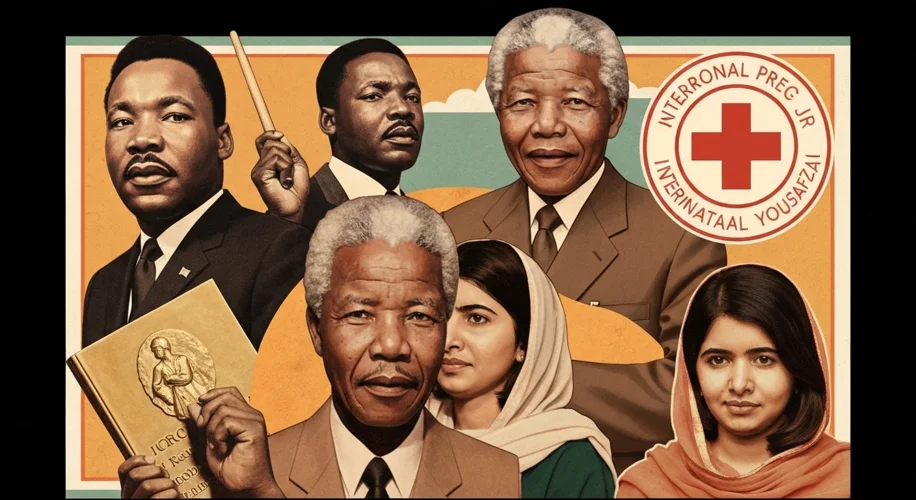
The world has a habit of turning its most profound sorrows into aspirations for a better future. Amidst the carnage of war and the clamor for power, a singular vision emerged, born from the ashes of conflict and the relentless pursuit of progress. This vision, embodied in the Nobel Peace Prize, has, for over a century, sought to illuminate the path towards global harmony, celebrating those who dare to tread it.
Alfred Nobel, the Swedish industrialist whose name is synonymous with explosives, harbored a complex legacy. His fortune, amassed through inventions like dynamite, was immense. Yet, as he approached his final years, a profound introspection seemed to grip him. Legend has it that reading his own obituary, mistakenly published after his brother’s death, painted him as a “merchant of death.” This jarring encounter, coupled with a deep-seated desire to leave a more benevolent mark on the world, spurred him to action. In his 1895 will, he bequeathed the bulk of his fortune to establish five annual prizes: for Physics, Chemistry, Physiology or Medicine, Literature, and, most famously, for Peace.
The intention was clear: to honor those who, during the preceding year, shall have conferred the greatest benefit on mankind. The Peace Prize, in particular, was to be awarded to the person who shall have done the most or the best work for fraternity between nations, for the abolition or reduction of standing armies and for the holding and promotion of peace congresses.
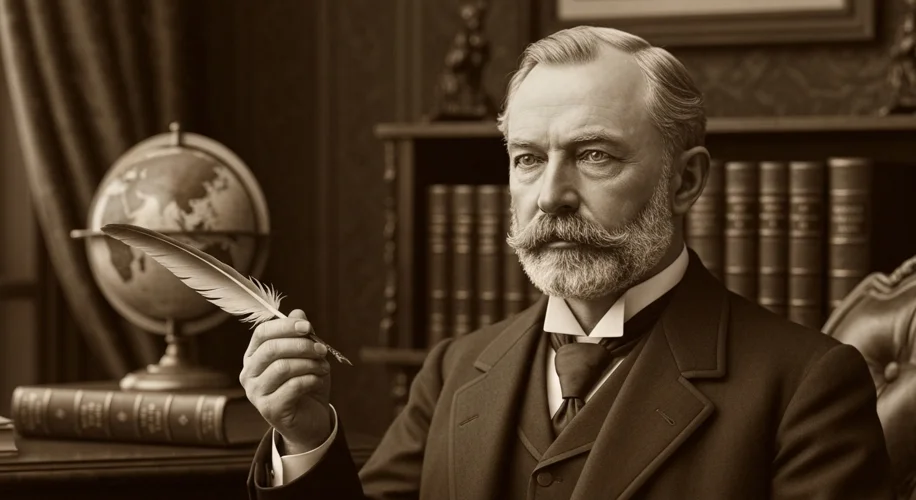
The first Nobel Peace Prize was awarded in 1901, a year after Nobel’s death. The recipients were Jean Henry Dunant, the founder of the Red Cross, and Frédéric Passy, a French peace activist. This inaugural award set a precedent, acknowledging the vital work of both humanitarian efforts and diplomatic endeavors in fostering peace.
Dunant’s selfless dedication stemmed from his harrowing experience witnessing the aftermath of the Battle of Solferino in 1859. The sheer scale of suffering, the lack of basic medical care for the wounded, ignited in him a fervor to create a neutral organization dedicated to aiding those afflicted by conflict. His brainchild, the International Committee of the Red Cross (ICRC), became a symbol of compassion in wartime, a testament to the idea that humanity’s needs transcend national boundaries.
Passy, meanwhile, was a tireless advocate for arbitration and disarmament. He believed that dialogue, not destruction, was the true currency of international relations. His founding of the first French peace society and his instrumental role in establishing the Inter-Parliamentary Union demonstrated a commitment to building bridges through persistent, reasoned advocacy.
The early years of the Peace Prize often reflected the prevailing anxieties of the time. The shadow of burgeoning nationalism and the arms race in Europe loomed large. Yet, the prize also sought to reward those who actively worked against these destructive forces.
As the 20th century unfolded, the world plunged into unprecedented levels of conflict. The Nobel Peace Prize became a more potent symbol, a beacon of hope in the darkest of times. It recognized figures like Theodore Roosevelt in 1906 for his role in mediating the end of the Russo-Japanese War, a move that earned him both admiration and criticism for his imperial ambitions. It honored Elihu Root for his contributions to international law and arbitration, and later, individuals like Bertha von Suttner, a prominent peace activist and friend of Nobel, who was awarded the prize in 1905 for her passionate anti-war novel, “Lay Down Your Arms!”
The interwar period saw the prize awarded to figures like the League of Nations itself in 1926 and 1944 (though the latter was delayed until after the war), and to conciliatory leaders who attempted to avert further catastrophe.
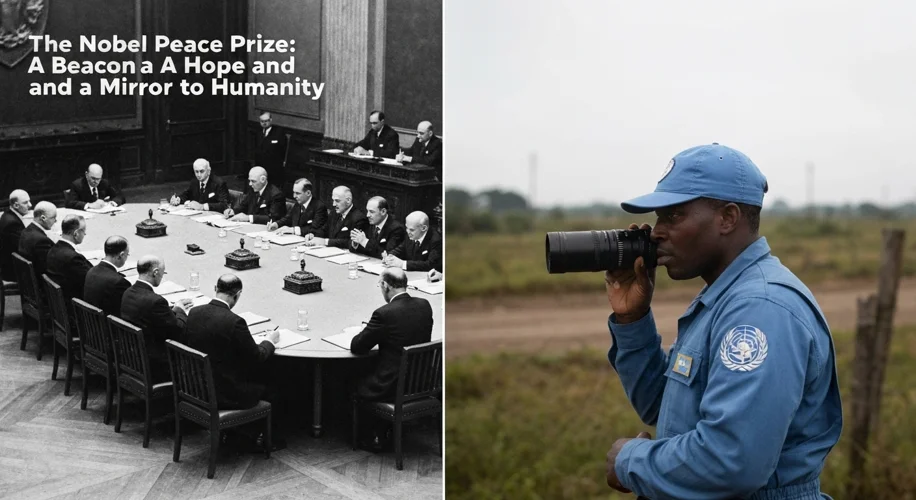
However, the true test for the Nobel Peace Prize, and indeed for humanity, arrived with World War II and its aftermath. The post-war era witnessed the Cold War, a tense standoff between two superpowers, and the terrifying specter of nuclear annihilation. The prize began to acknowledge the monumental efforts to manage these existential threats and to promote reconciliation.
Figures like Martin Luther King Jr. (1964) were celebrated for their non-violent struggle for civil rights, demonstrating that peace begins at home, within nations. The prize also recognized the architects of détente, such as Henry Kissinger and Le Duc Tho (1973, though Tho declined the award), for their roles in negotiating an end to the Vietnam War, a deeply divisive conflict that tested the very fabric of international relations.
The latter half of the 20th century saw the prize awarded to a diverse array of individuals and organizations working on various fronts of peace: human rights advocates like Andrei Sakharov (1975) and Aung San Suu Kyi (1991), international bodies like the UNHCR (1954, 1981) and UNICEF (1965), and leaders who brokered historic peace agreements, such as Anwar Sadat and Menachem Begin (1978) for their efforts to bring peace between Egypt and Israel.
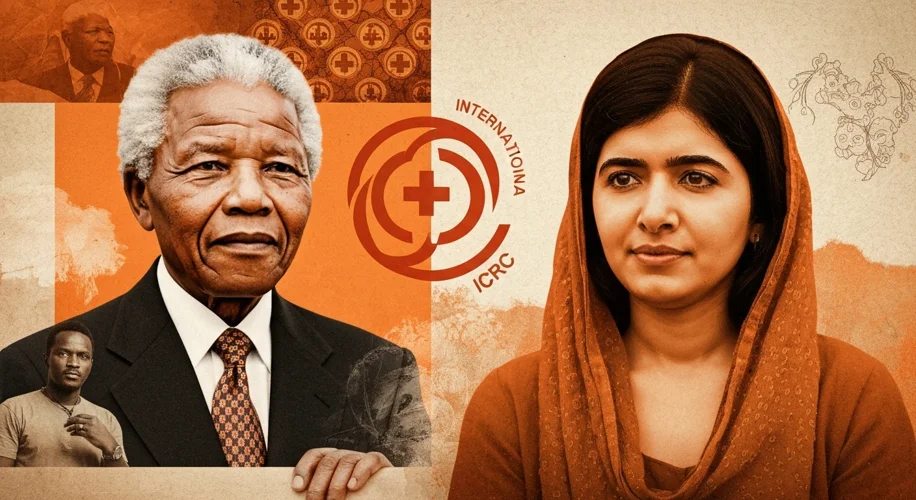
More recently, the prize has continued to reflect the evolving landscape of global challenges. It has honored those combating poverty and disease, such as Muhammad Yunus (2006) for his pioneering microcredit initiatives, and activists working to prevent the use of sexual violence as a weapon of war, like Denis Mukwege and Nadia Murad (2018).
However, the Nobel Peace Prize is not without its controversies. The awarding of the prize to figures who are later seen to have fallen short of its ideals, or to those involved in complex geopolitical situations, has often sparked intense debate. The prize can be a powerful tool for highlighting important causes, but it can also be seen as a political statement, subject to the shifting tides of global opinion and the inherent complexities of achieving lasting peace.
Ultimately, the Nobel Peace Prize stands as a powerful testament to the enduring human yearning for peace. It is more than just an award; it is a global conversation, a perpetual call to action. It reminds us that peace is not merely the absence of war, but the presence of justice, equality, and compassion. As we navigate the challenges of the 21st century, the vision of Alfred Nobel continues to inspire, urging us to seek out and celebrate the peacemakers, the bridge-builders, and the champions of humanity, for in their efforts lies our collective hope for a more harmonious future.