
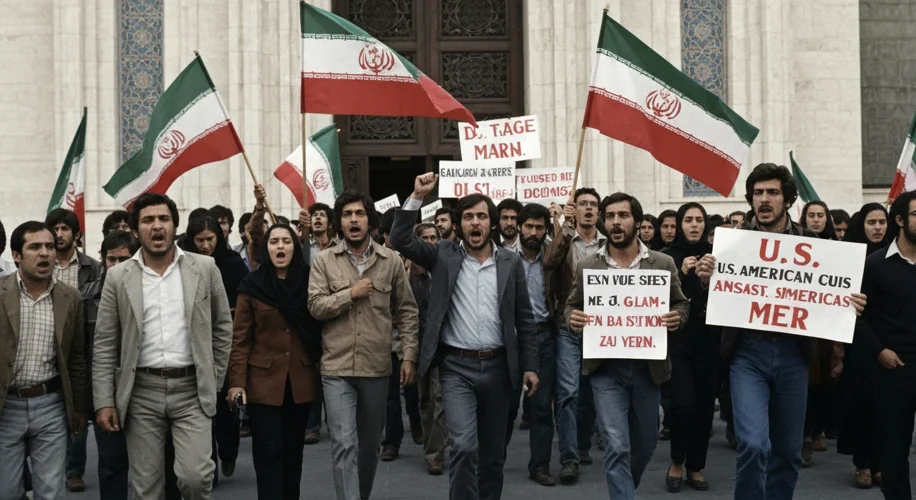
The crisp autumn air of Tehran on November 4, 1979, carried not just the scent of changing seasons, but also the volatile fumes of revolution. For the United States, it was the start of an agonizing 444-day ordeal that would redefine diplomatic crises and leave an indelible scar on the psyche of a nation.
The Tectonic Shift in Iran
To understand the storming of the U.S. Embassy, one must first grasp the seismic shift that had recently occurred in Iran. For decades, the Shah, Mohammad Reza Pahlavi, had ruled with an iron fist, propped up by American support. His regime, while modernizing the country, also suppressed dissent with brutal efficiency. This created a deep well of resentment, which found its voice in the Ayatollah Ruhollah Khomeini, a charismatic cleric exiled by the Shah.
Khomeini’s return in February 1979, after the Shah’s ouster, marked the dawn of the Islamic Republic. The revolution was fueled by a potent mix of religious fervor, anti-Western sentiment, and a deep-seated desire for self-determination. Central to this anti-American feeling was the memory of the 1953 coup, orchestrated by the CIA, which had reinstated the Shah after he’d been briefly overthrown. Many Iranians saw America as the puppet master, controlling their destiny for its own geopolitical gain.
The Spark Ignites
The immediate catalyst for the embassy takeover was the Shah’s admission into a New York hospital for treatment of cancer. To the revolutionaries in Iran, this was an unforgivable act, a sign that the U.S. was harboring their deposed leader and plotting his return to power. They saw it as a direct insult to the revolution and a threat to their hard-won sovereignty.
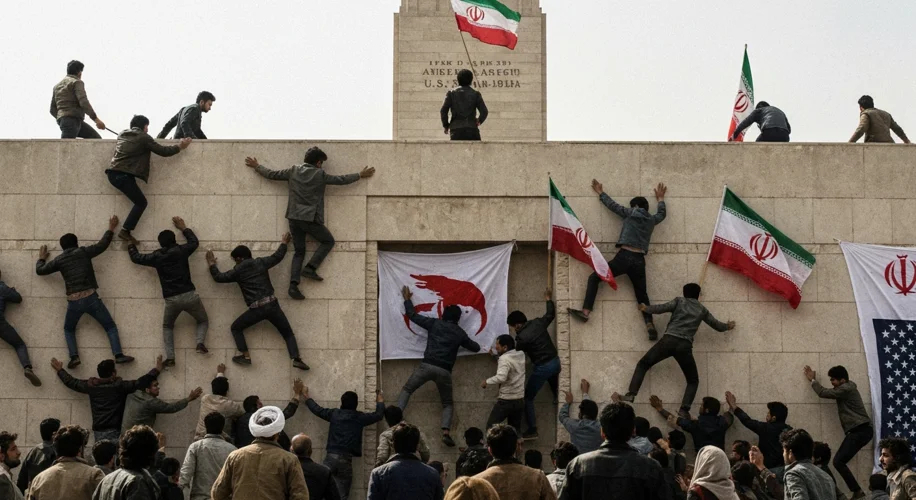
On that fateful November day, a group of Iranian university students, calling themselves the Muslim Student Followers of the Imam’s Line, stormed the U.S. Embassy in Tehran. Their demands were clear: the extradition of the Shah to face trial in Iran. What began as a protest quickly escalated into a full-blown hostage crisis. Sixty-six Americans – diplomats, Marine guards, and other staff – found themselves prisoners within the embassy walls.
A Nation Held Captive
For the hostages, the days blurred into weeks, then months. They were subjected to intense interrogations, confined to small rooms, and faced constant uncertainty. Some were paraded before cameras, their faces etched with fear and defiance. The world watched, transfixed, as images of defiant Iranian students chanting slogans like “Death to America” and holding American flags aloft flickered across television screens.
The crisis cast a long shadow over American politics and society. President Jimmy Carter, already facing economic woes and a struggling re-election campaign, was thrown into a diplomatic quagmire. His administration grappled with every conceivable option: diplomatic negotiations, economic sanctions, even the threat of military intervention. Each avenue seemed fraught with peril, with the risk of escalating the situation or jeopardizing the lives of the hostages.
The Rescue Attempt and the Long Wait
In April 1980, a daring rescue mission, dubbed Operation Eagle Claw, was launched. Under the cover of darkness, a team of U.S. Army commandos was dispatched to Iran. However, the mission was plagued by a series of catastrophic failures. A helicopter malfunctioned, a dust storm created treacherous flying conditions, and a devastating collision between a helicopter and a transport aircraft resulted in the deaths of eight American servicemen.
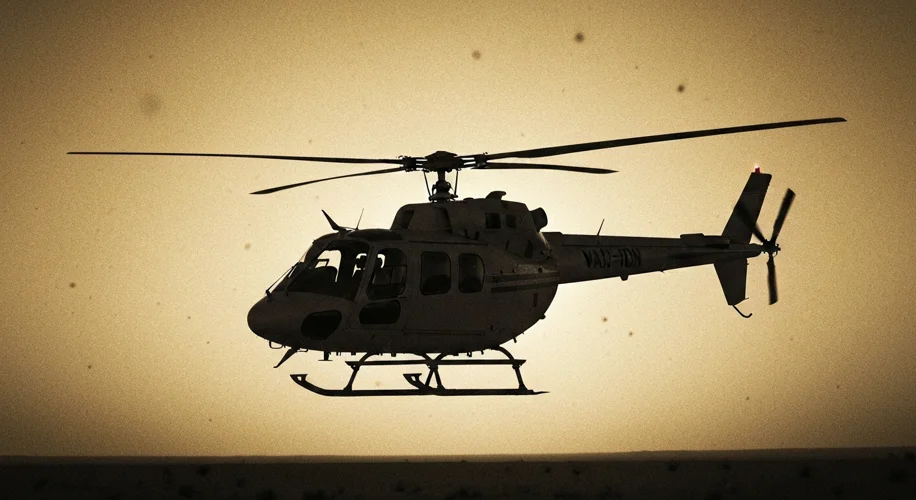
The botched rescue attempt only deepened the despair and frustration in both Iran and the United States. The remaining hostages endured another agonizing nine months. The crisis became a defining feature of the 1980 presidential election, with Ronald Reagan’s promises to resolve the situation resonating with a public weary of the prolonged standoff.
The Algiers Accord and a Bitter End
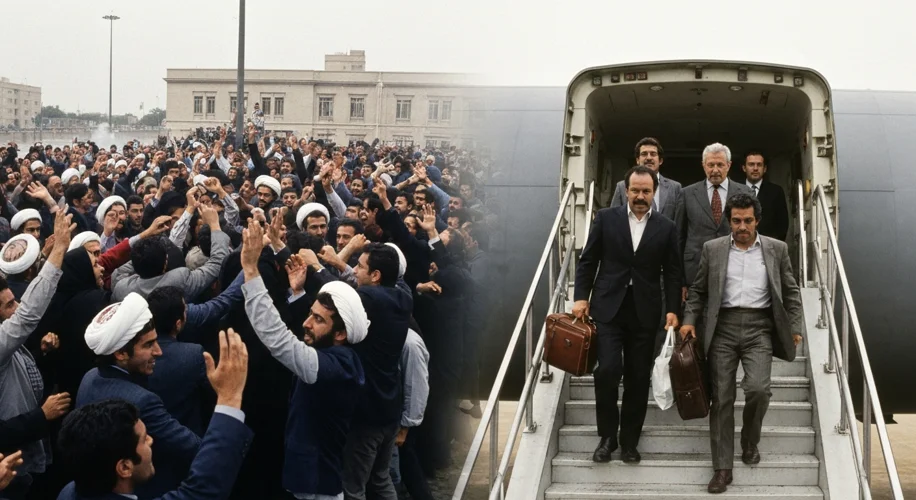
Finally, on January 20, 1981, the very day Ronald Reagan was inaugurated as president, the crisis came to an end. Under the terms of the Algiers Accord, the United States agreed to unfreeze Iranian assets totaling $8 billion, and Iran pledged to release the 52 American hostages. The hostages, gaunt and weary, walked free, returning to a nation that had been holding its breath for 444 days.
The Lingering Echoes
The Iran hostage crisis was more than just a diplomatic standoff; it was a watershed moment that fundamentally altered U.S.-Iran relations and left a lasting impact on international diplomacy. It exposed the fragility of American power in the face of rising anti-Western sentiment and demonstrated the potent force of revolutionary fervor.
For Iran, the crisis solidified its revolutionary identity and served as a powerful symbol of defiance against perceived Western interference. It emboldened hardliners and contributed to an atmosphere of perpetual confrontation with the United States.
For America, the humiliation of the crisis fueled a national introspection about its foreign policy and its perceived decline. It contributed to a more assertive and interventionist foreign policy stance in the years that followed. The memory of those 444 days continues to shape perceptions and influence diplomatic strategies to this day, a stark reminder of how a single event can reverberate across decades, forever altering the course of nations.