
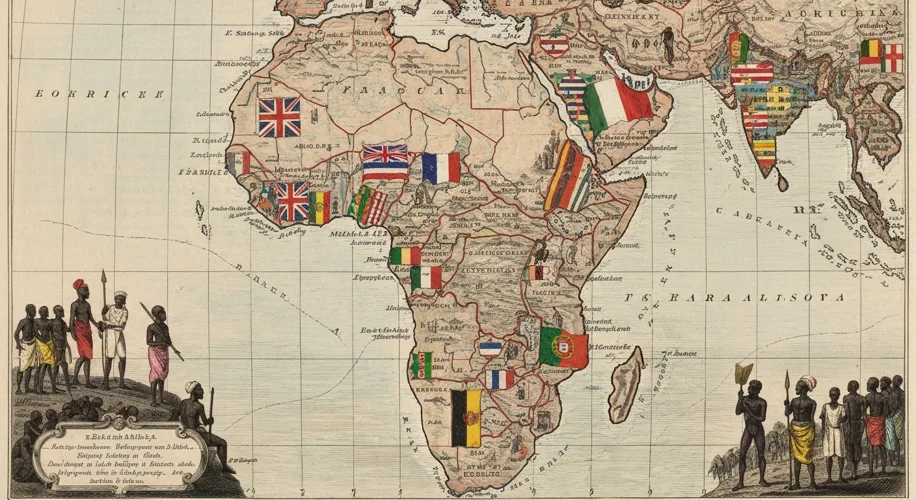
The late 19th century. A continent of vibrant cultures, ancient kingdoms, and diverse peoples lay largely untouched by the industrial might of Europe. But within a mere three decades, this vast land would be irrevocably reshaped, its destiny parceled out in treaties signed in foreign capitals, its peoples subjected to a new, often brutal, colonial order. This was the era of the Scramble for Africa.
For centuries, European engagement with Africa had been largely coastal. Trade posts dotted the shores, and exploration into the interior was perilous and sporadic. However, by the 1880s, a confluence of factors ignited an unprecedented rush for colonial possessions. The air in Europe was thick with a potent mix of economic ambition, nationalistic fervor, and a paternalistic belief in European superiority.
Economically, the Industrial Revolution had created an insatiable appetite for raw materials. Africa, with its vast reserves of rubber, diamonds, gold, ivory, and timber, represented an enticing prize. European industrialists envisioned vast plantations and mines, churning out wealth that would fuel their burgeoning economies. Simultaneously, newly industrialized nations like Germany and Italy sought to assert their power on the global stage, viewing colonies as a measure of a nation’s prestige and strength.
The political landscape was equally charged. Britain, already a dominant colonial power, sought to consolidate its empire, famously aiming to link its territories from ‘Cape to Cairo.’ France, smarting from its defeat in the Franco-Prussian War, was eager to re-establish its colonial dominance, particularly in West Africa. Belgium’s King Leopold II, driven by personal avarice, established his own brutal regime in the Congo Free State. Portugal, an older colonial power, sought to reassert its claims in Angola and Mozambique.
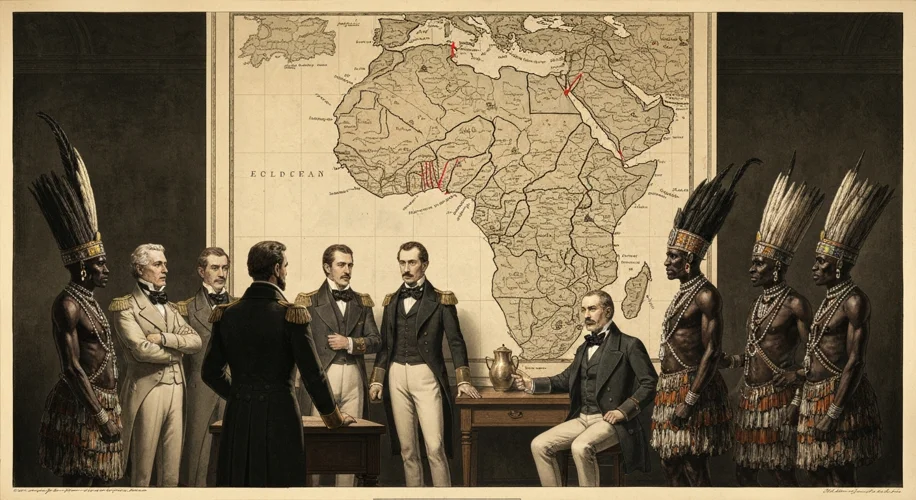
This intense rivalry and the fear of being left behind led to a critical moment: the Berlin Conference of 1884-1885. Convened by Otto von Bismarck of Germany, this conference brought together European powers to lay down the ‘rules’ for claiming African territory. Crucially, no African representatives were invited. The continent was to be divided based on ‘effective occupation,’ meaning that European powers had to demonstrate control on the ground to legitimize their claims. This principle, however, led to a frantic, often violent, rush to plant flags and establish administrative presence, disregarding existing political boundaries and ethnic divisions.
Consider the arbitrary lines drawn across the map of Africa. The Yoruba people, a vibrant cultural group in what is now Nigeria and Benin, found themselves split between British and French colonial rule. The Lunda Empire, once a powerful force in Central Africa, was carved up by Belgium, Portugal, and Britain. These artificial borders, drawn with little regard for the complex tapestry of African societies, would sow the seeds of future conflict and instability.
The motivations weren’t purely economic or political. A powerful religious and cultural undercurrent fueled the scramble. Many Europeans believed they had a ‘civilizing mission,’ a duty to bring Christianity, Western education, and their concept of ‘progress’ to what they perceived as ‘backward’ societies. Missionaries flocked to Africa, often working alongside or even preceding colonial administrators, eager to convert souls and establish churches and schools. While some missionaries genuinely sought to improve the lives of Africans, their efforts were often intertwined with the broader colonial agenda, eroding indigenous beliefs and practices.
The consequences of the Scramble for Africa were profound and devastating. African societies were forcibly integrated into the global capitalist system, often in subservient roles. Indigenous economies were disrupted, geared towards the export of raw materials for European benefit. Forced labor, taxation, and brutal suppression of resistance became commonplace. The imposition of European legal and administrative systems often undermined traditional forms of governance, leading to a loss of autonomy and identity.
The legacy of this period continues to shape Africa today. The artificial borders drawn in Berlin continue to be sources of ethnic tension and conflict. The economic structures established during the colonial era often perpetuated dependency. While African nations have made tremendous strides in post-colonial development, the long shadow of the Scramble for Africa remains a critical element in understanding the continent’s complex present and future.
The Scramble for Africa was not merely a historical event; it was a turning point that redrew the map of the world and fundamentally altered the trajectory of millions of lives. It stands as a stark reminder of the destructive potential of unchecked ambition and the enduring human cost of imperialism.